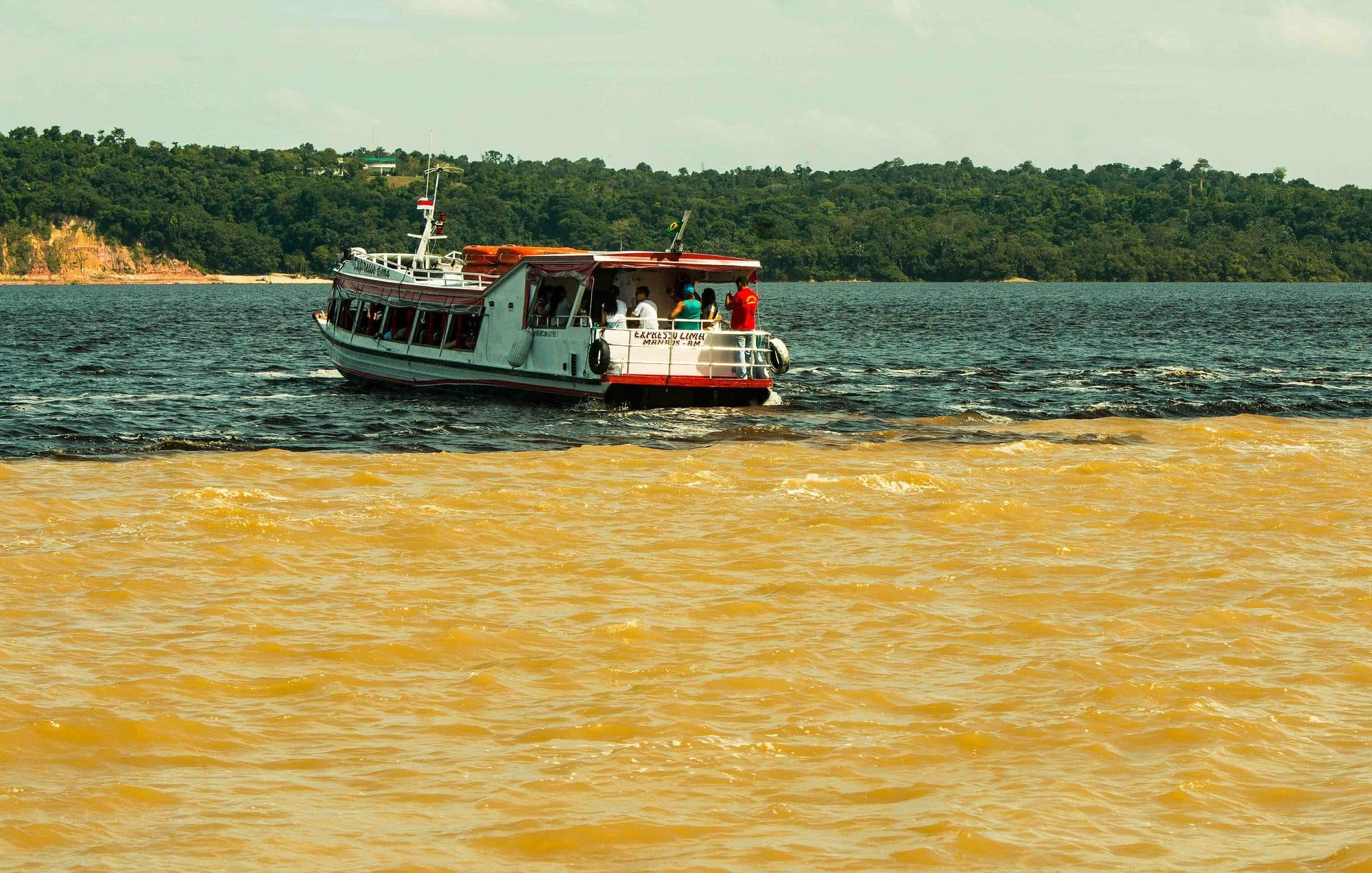
The Meeting of Waters near Manaus: the black water of the Rio Negro (top) runs along the sediment-laden white water of the Solimões.
Photo: Ana Claudia Jatahy - MTUR, CC0, via Wikimedia Commons
Black water
Rio Negro, the black waters of the Amazon
Brazil, Colombia, Venezuela
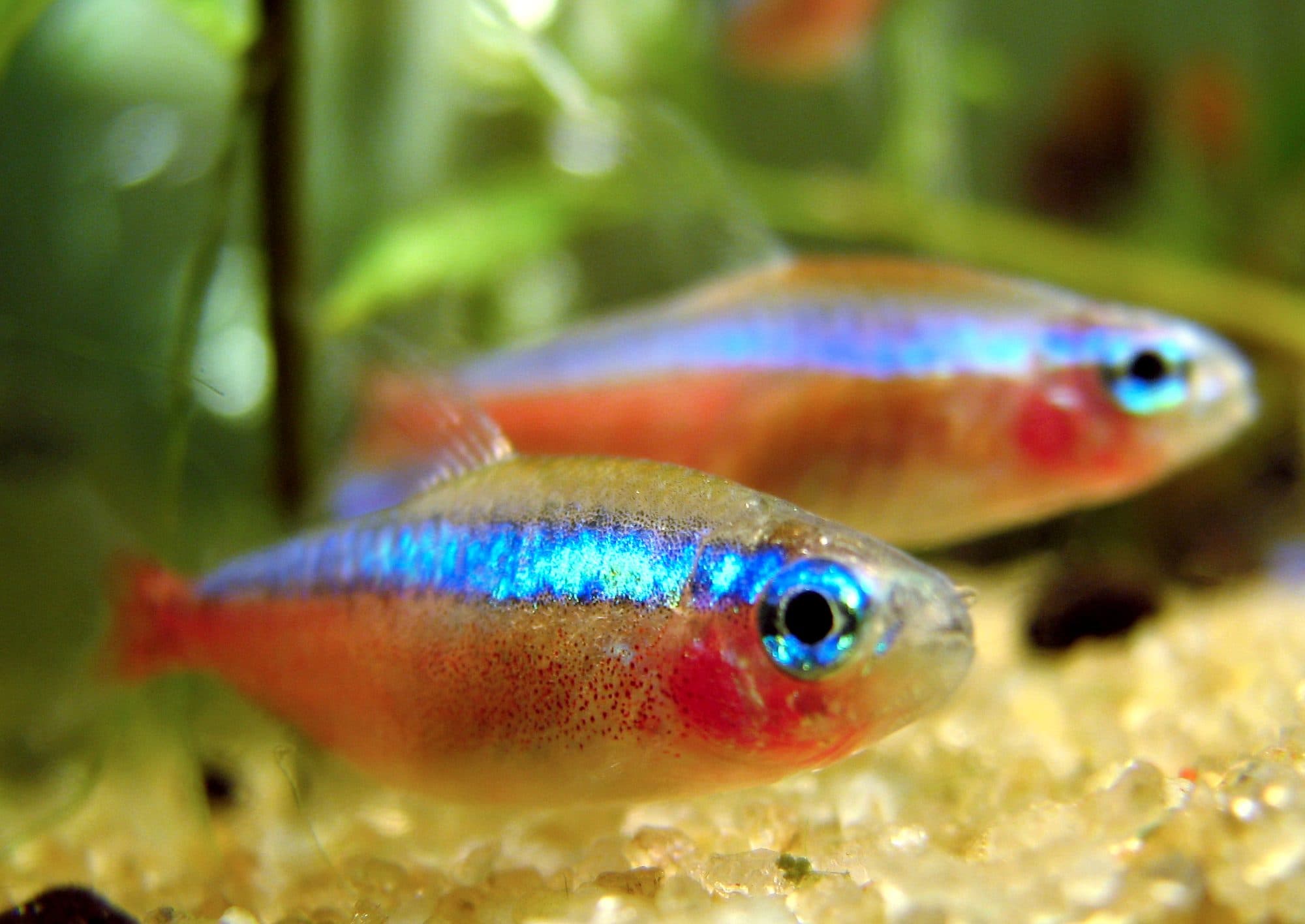
An Amazon tributary with tea-coloured water, very acidic and almost free of minerals, home to the cardinal tetra, pencilfish and hatchetfish.
The habitat
The Rio Negro drains forests growing on deeply leached sandy soils. Rainwater seeps through a thick litter of leaves and picks up humic substances that stain it dark brown to black; the river erodes little and carries almost no sediment. It is the model of Amazonian black water, as opposed to the muddy white water of the Solimões and the clear water of rivers such as the Tapajós.
At Manaus, the Rio Negro meets the Solimões to form the Amazon: the two waters flow side by side before mixing over about a hundred kilometres downstream. Every year the flood submerges the riverside forest, the igapó, and fish spread out among trunks, roots and dead leaves.
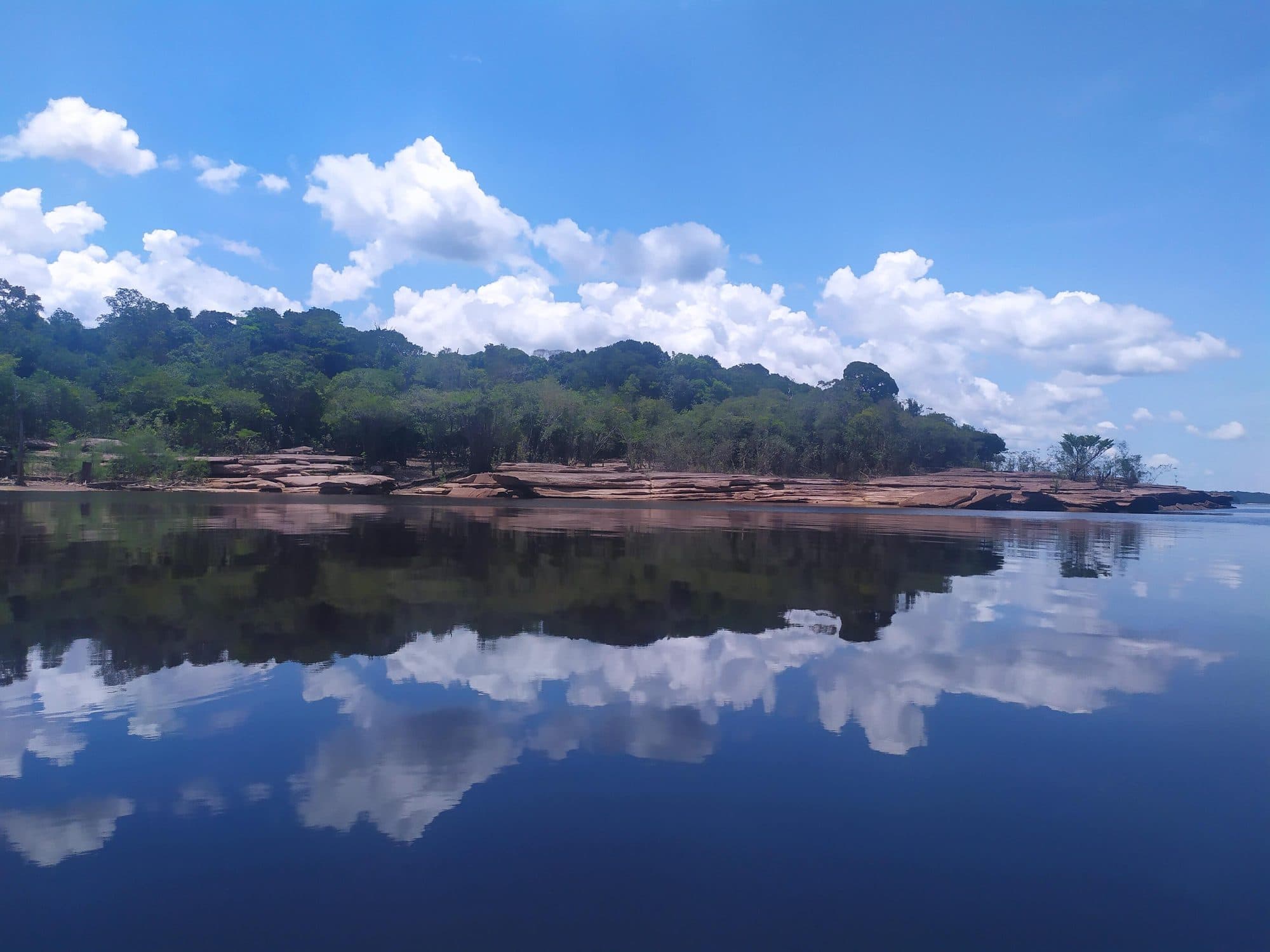
Anavilhanas National Park (Novo Airão, Amazonas): forest and sandstone on the dark waters of the Rio Negro.
Photo: GuilhonAmazonia, CC BY-SA 4.0, via Wikimedia Commons
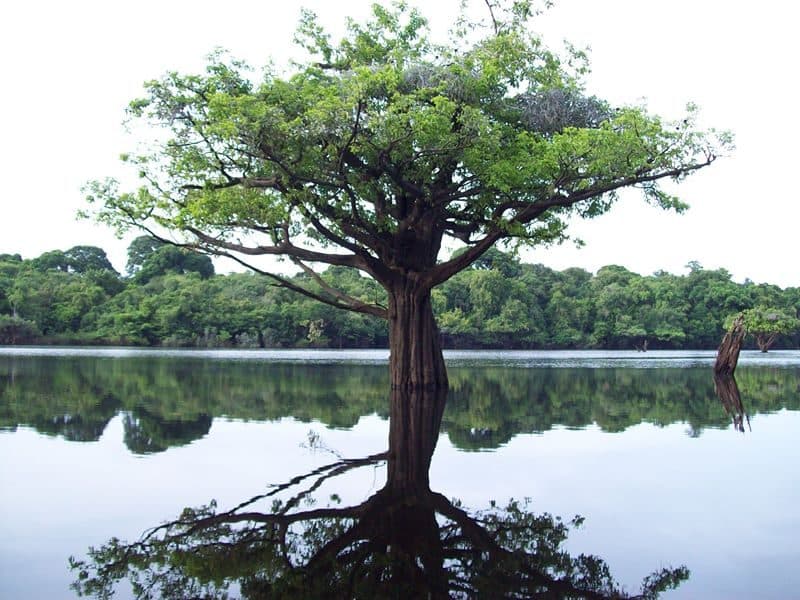
A tree standing in water at Anavilhanas: in the rainy season the riverside forest is flooded.
Photo: Carine Emer, CC BY-SA 4.0, via Wikimedia Commons
The water
Küchler and colleagues measured a pH of 3.9 to 6.1 in the Negro basin (3.89 in the Rio Téa), against 6.9 to 7 in the Solimões, and a conductivity of 9 to 29 µS/cm, three to ten times lower. The acidity comes mostly from dissolved humic and fulvic acids; calcium and magnesium are almost absent.
Such poor water feeds little aquatic life. In aquariums, the species of this biotope tolerate somewhat harder water, but most of them breed only in soft, acidic water.
Who lives here
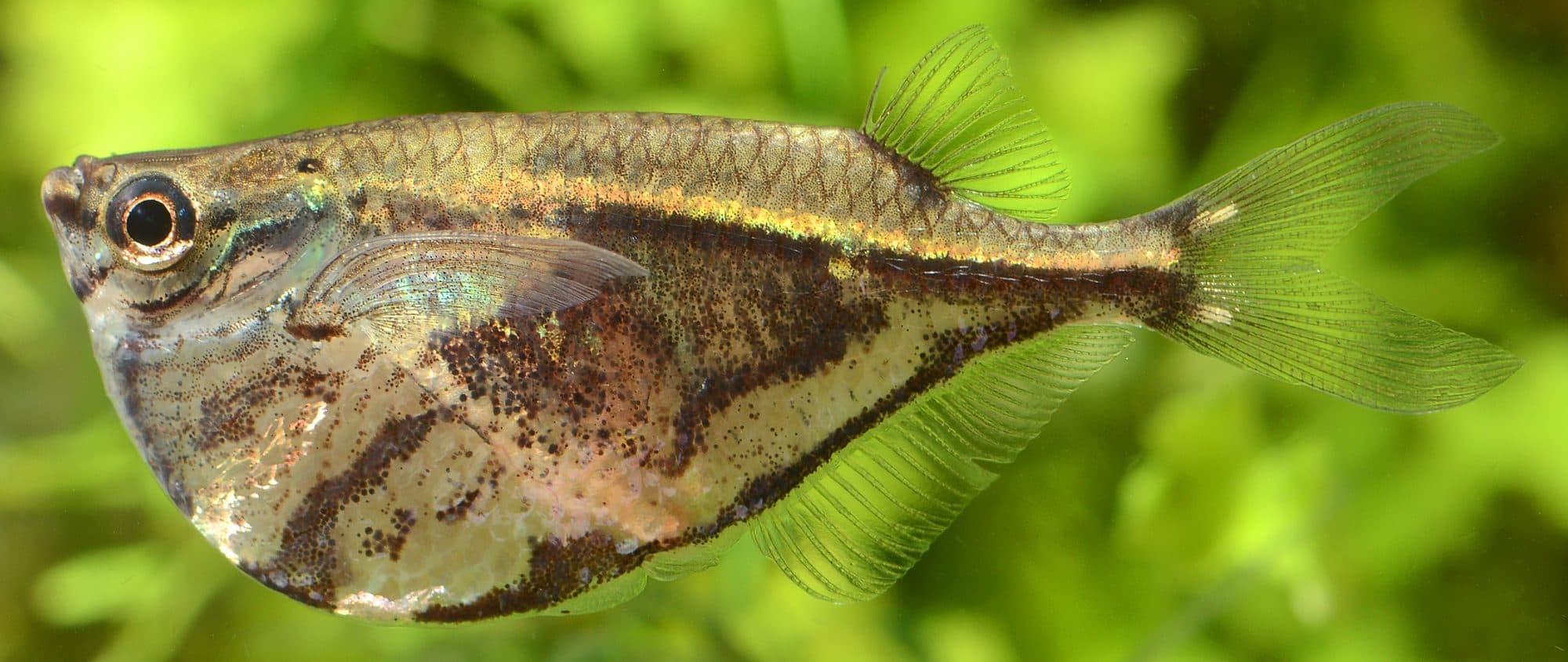
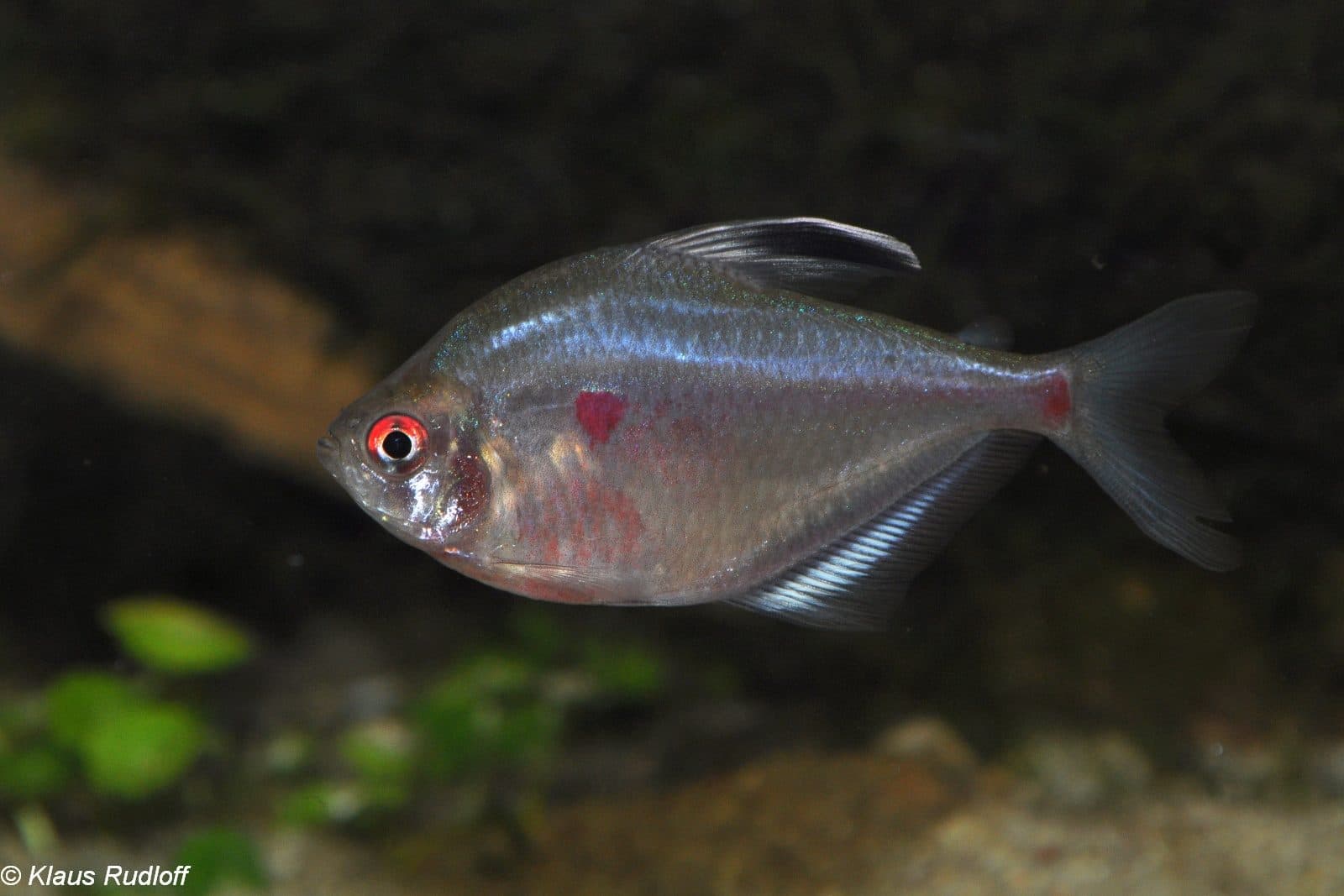
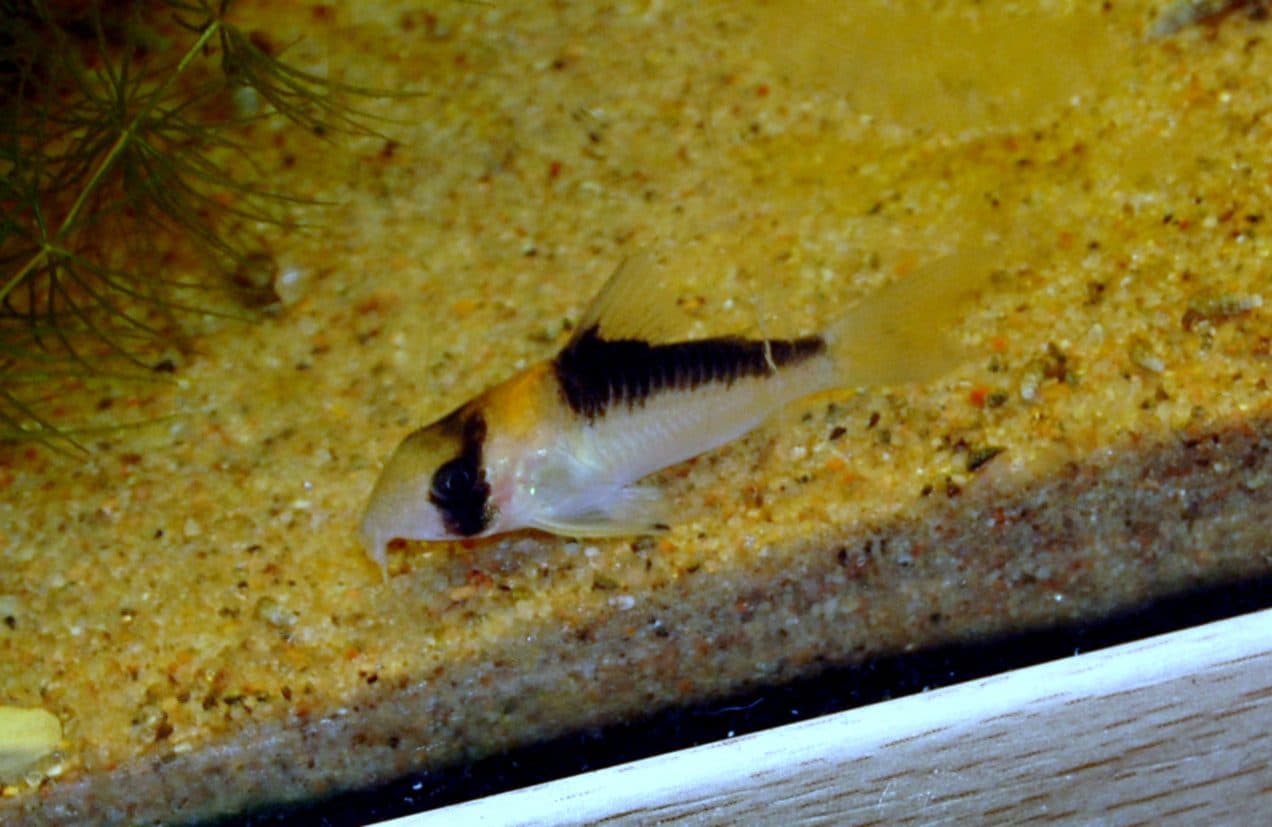
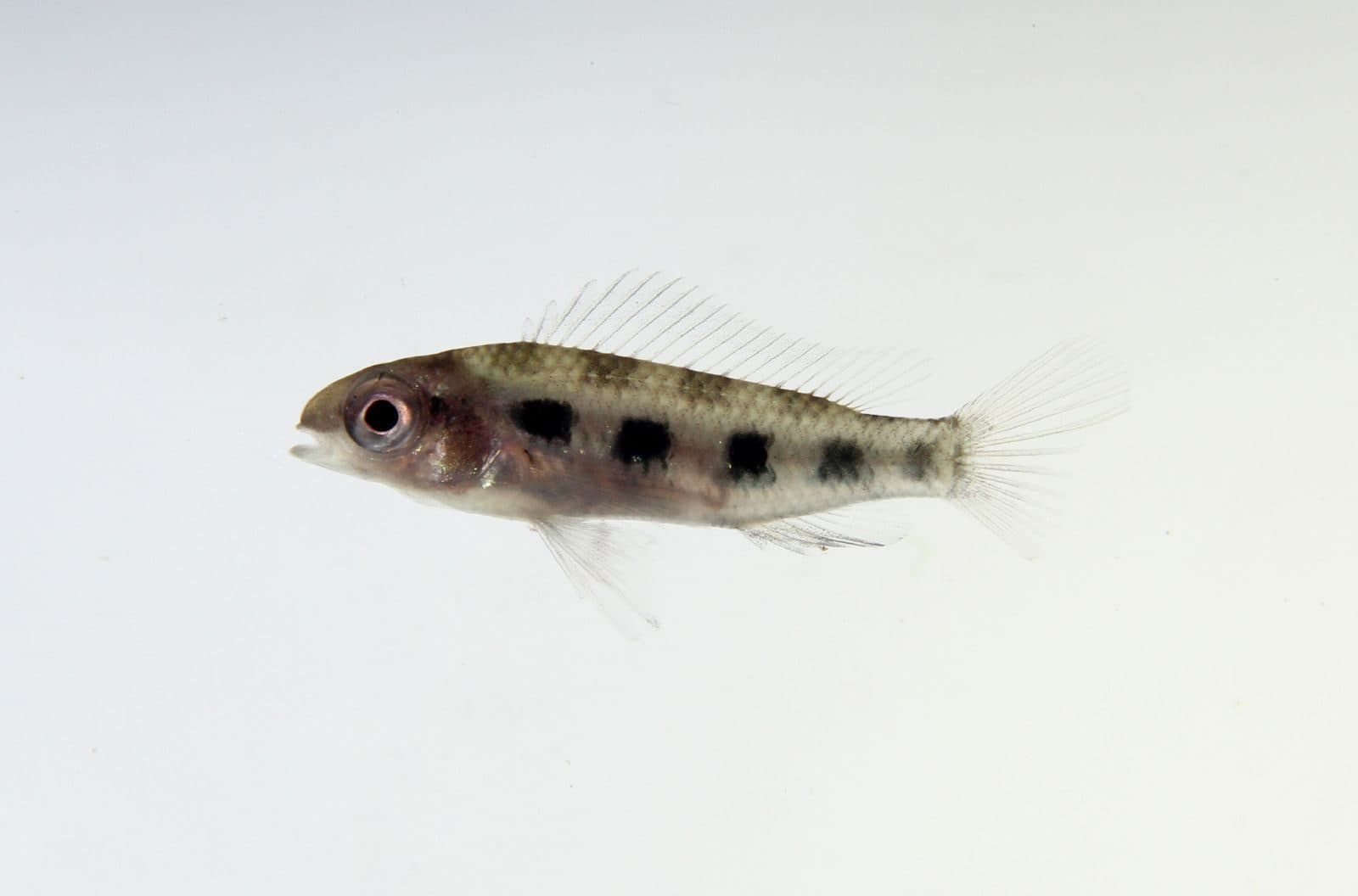
It is home mainly to small shoaling characins (cardinal tetras, rummy-nose tetras, Socolof's tetras), pencilfish and hatchetfish that hunt insects at the surface, Corydoras on the leaf litter, and cichlids: the chessboard cichlid, the altum angelfish of the upper Rio Negro and Satanoperca daemon over sand.
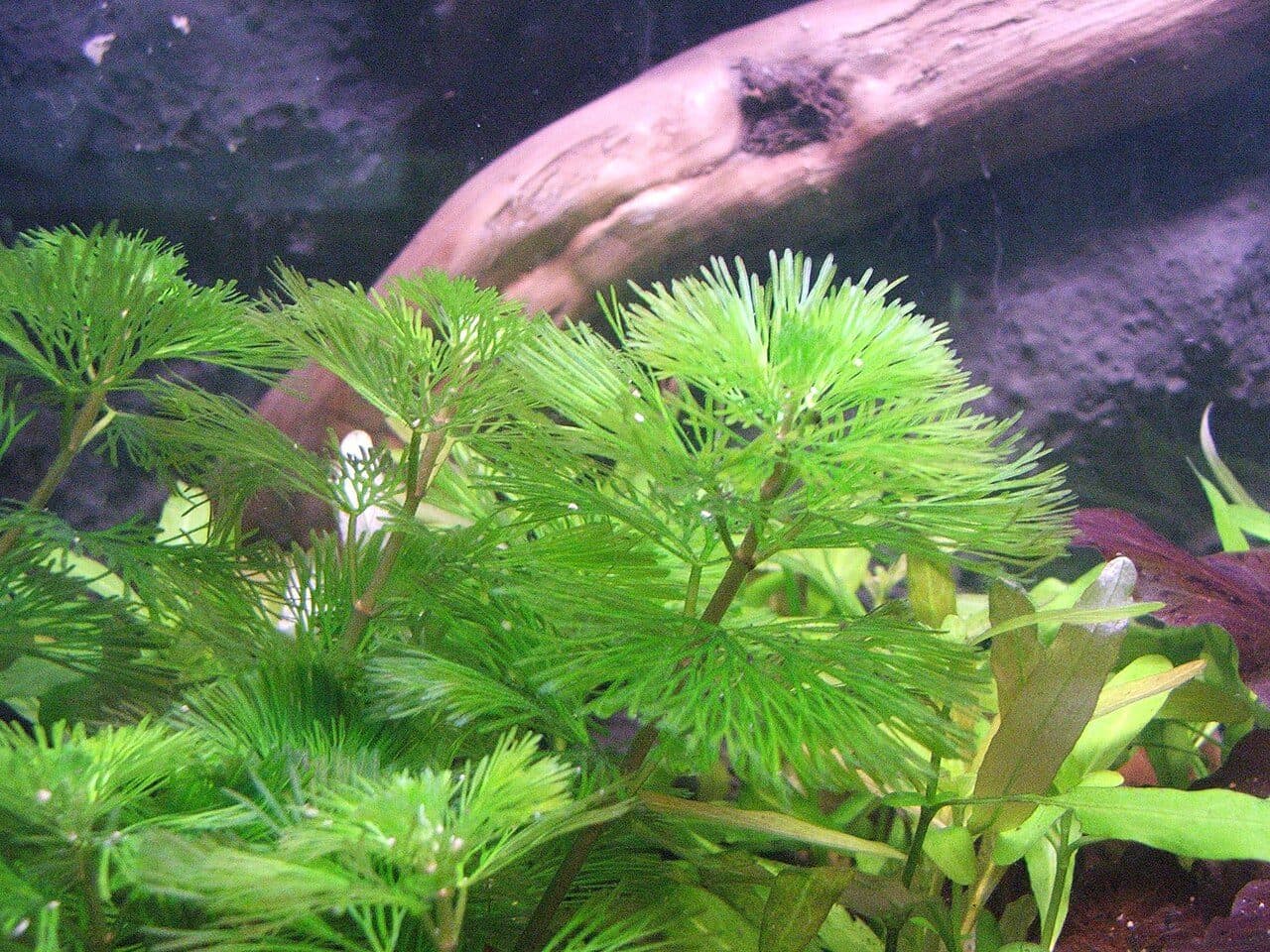
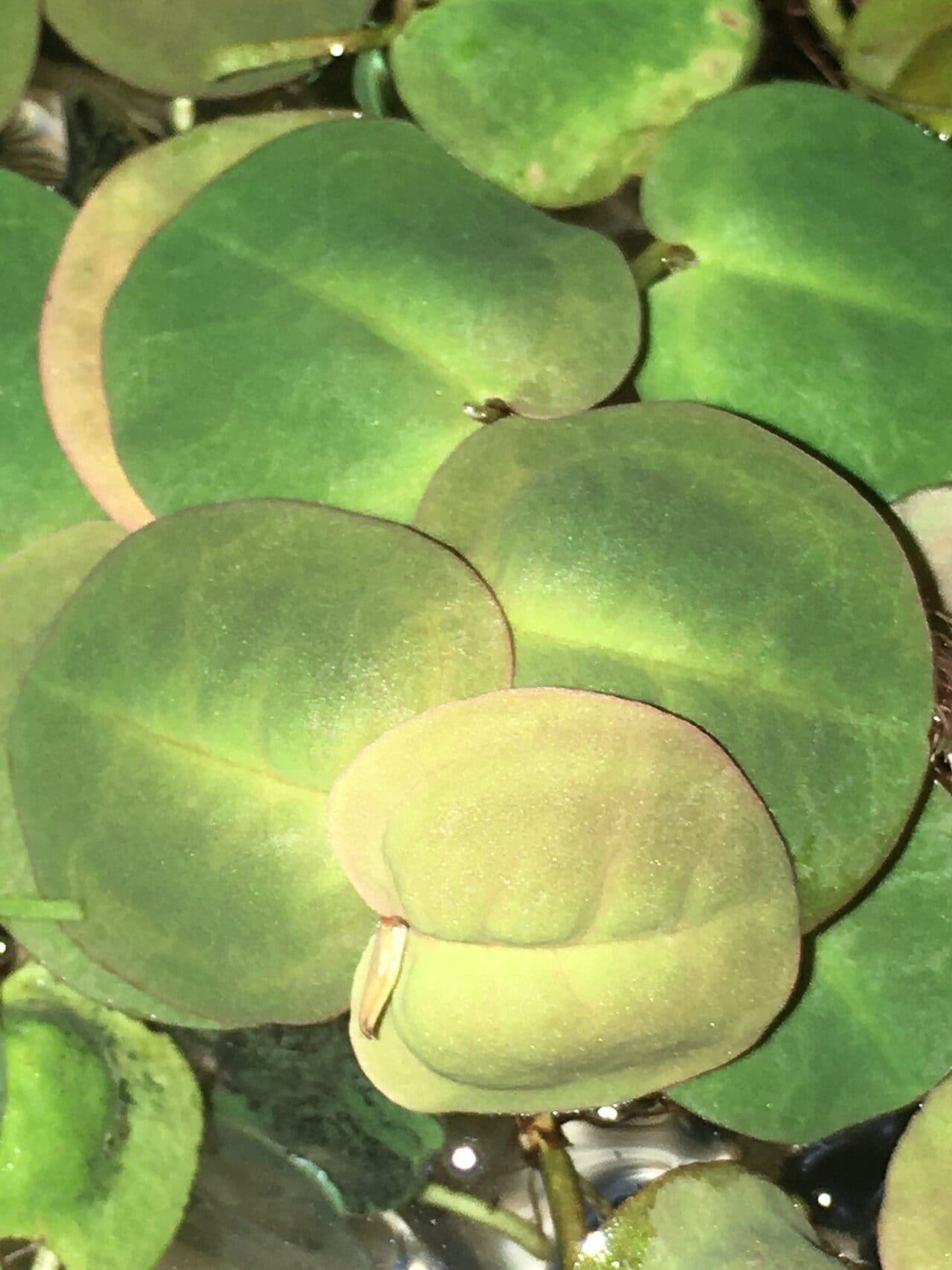
Submerged plants are scarce: the canopy, the dark water and the lack of minerals hold them back. Where light gets through grow floating plants and a few species of soft, acidic water such as Tonina fluviatilis, Mayaca fluviatilis or Cabomba aquatica, all recorded in the basin according to GBIF. No invertebrate of the catalogue lives there.
Fish (11)
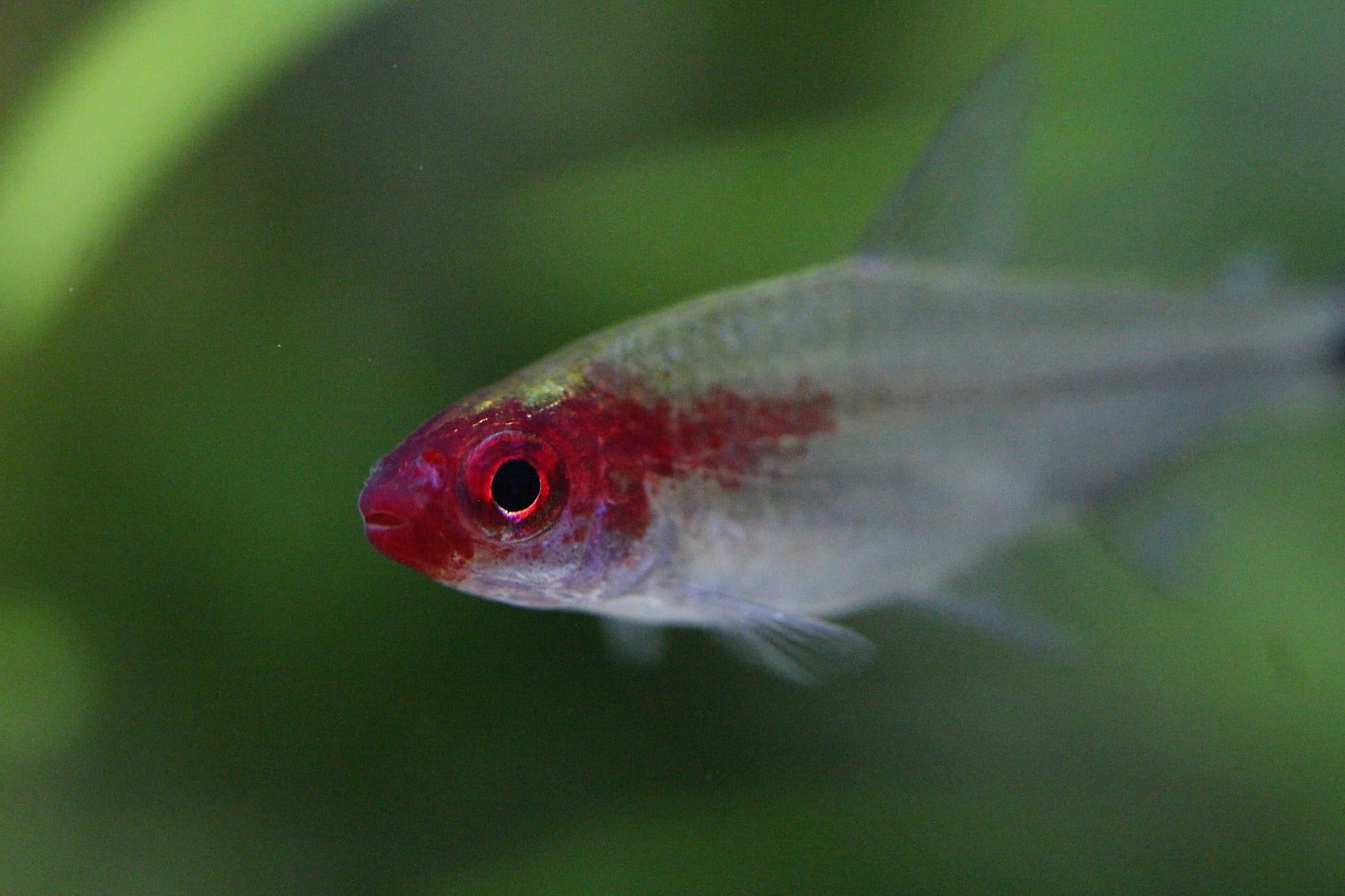
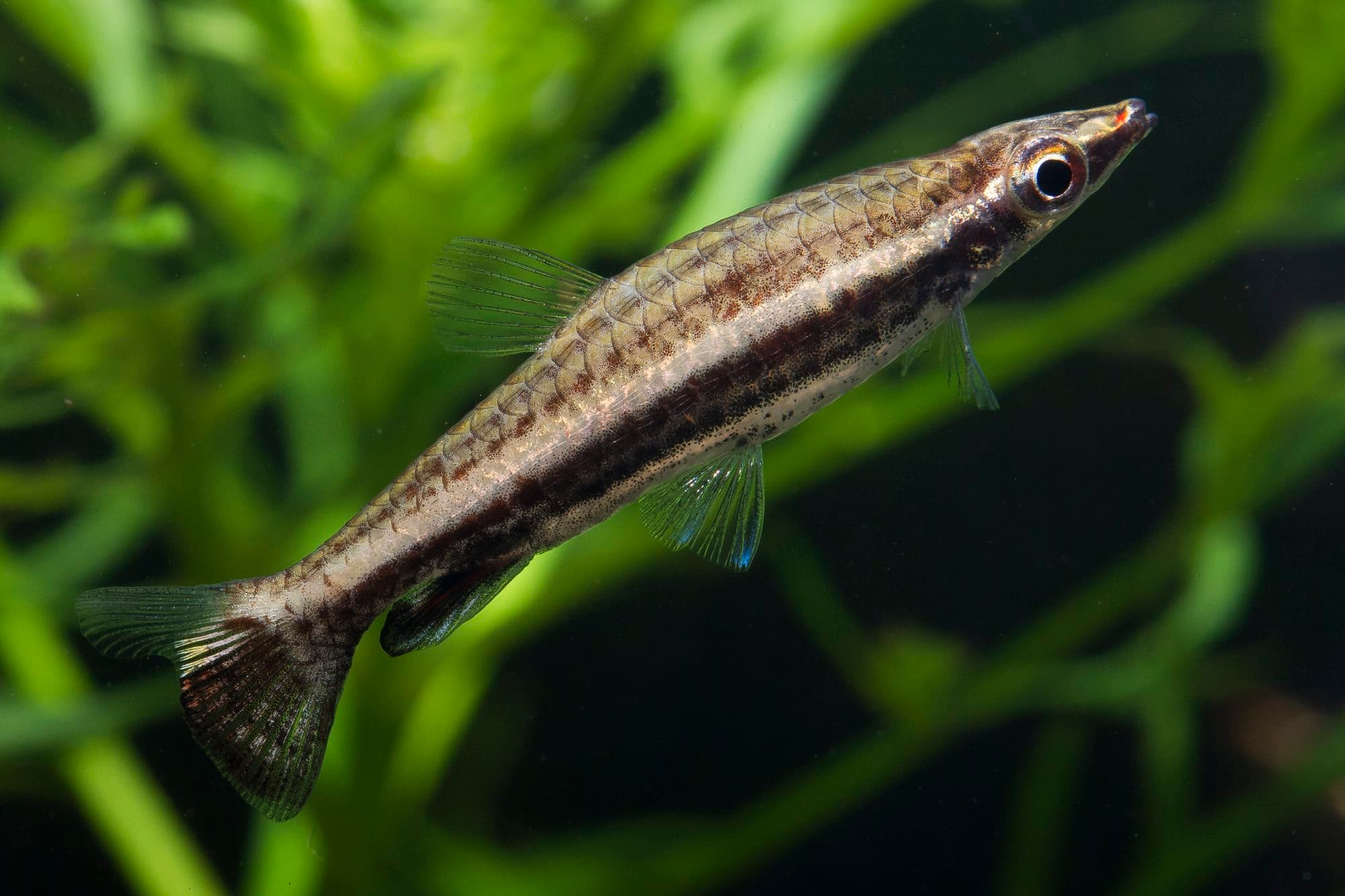
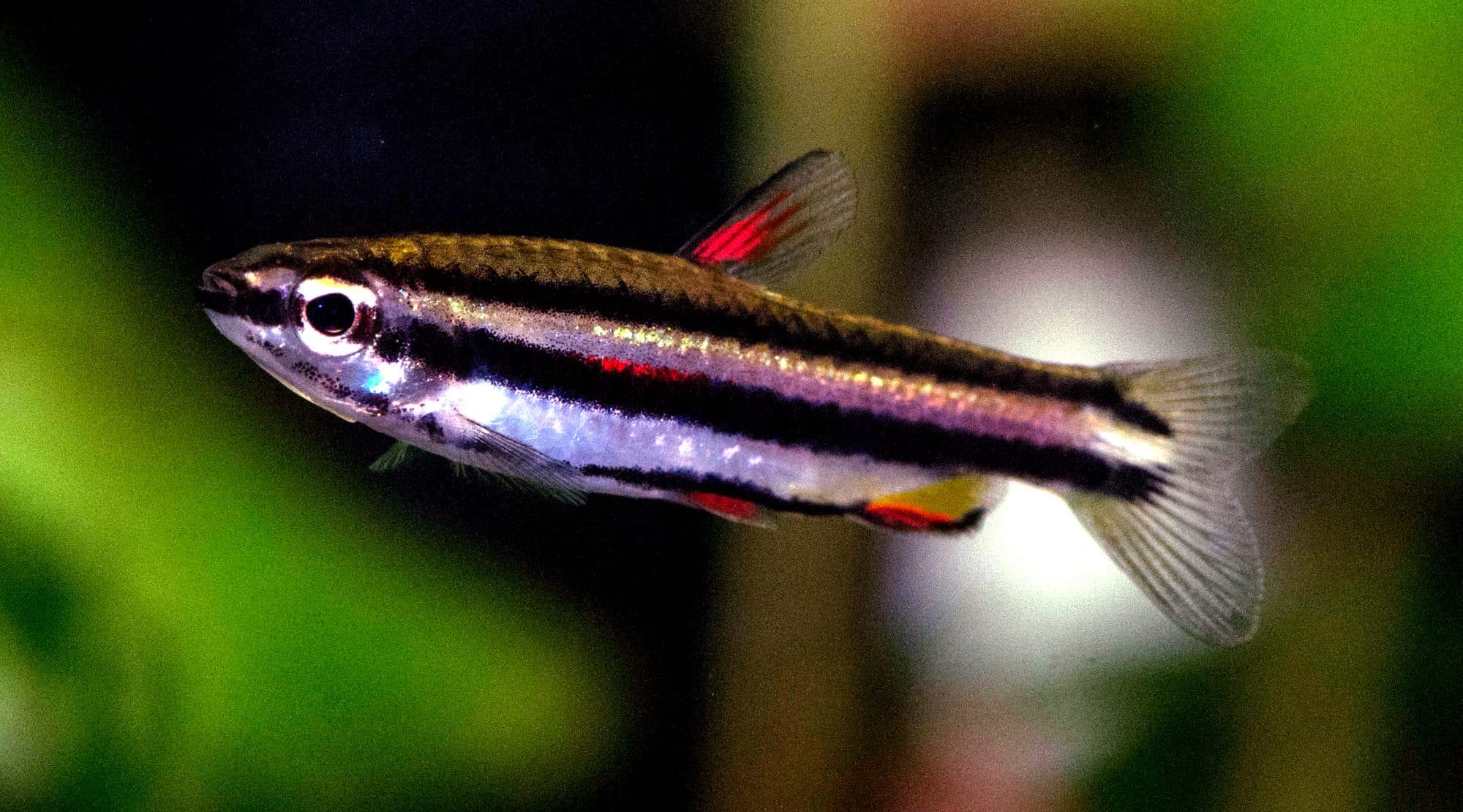
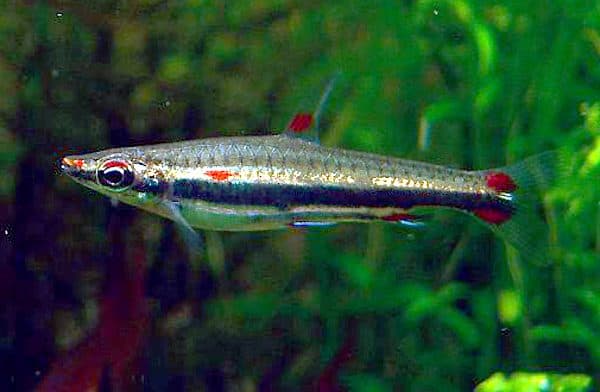
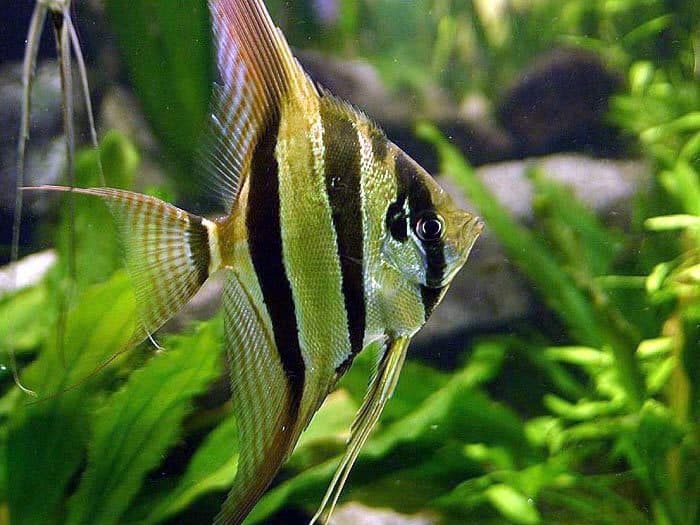
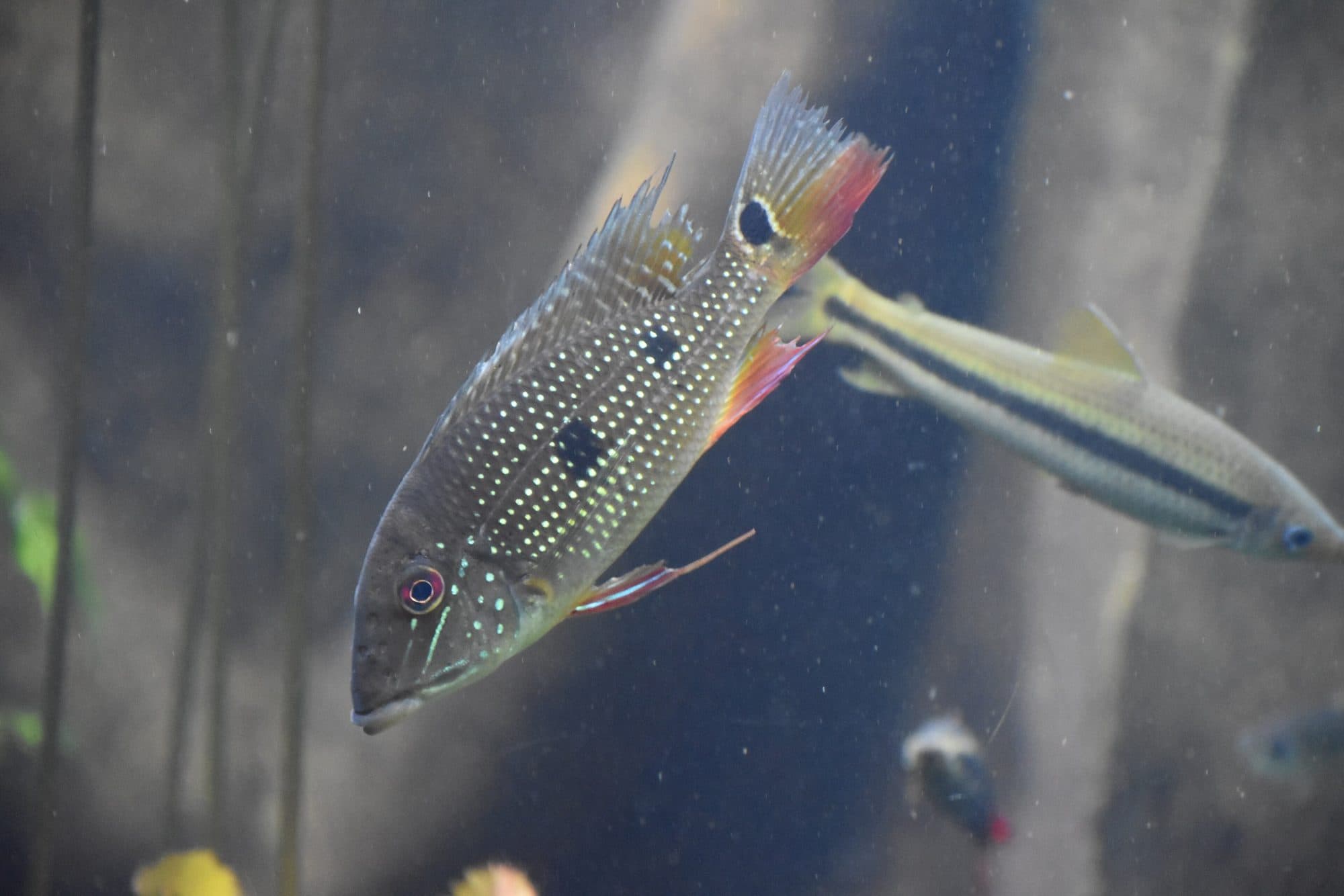
Plants (4)
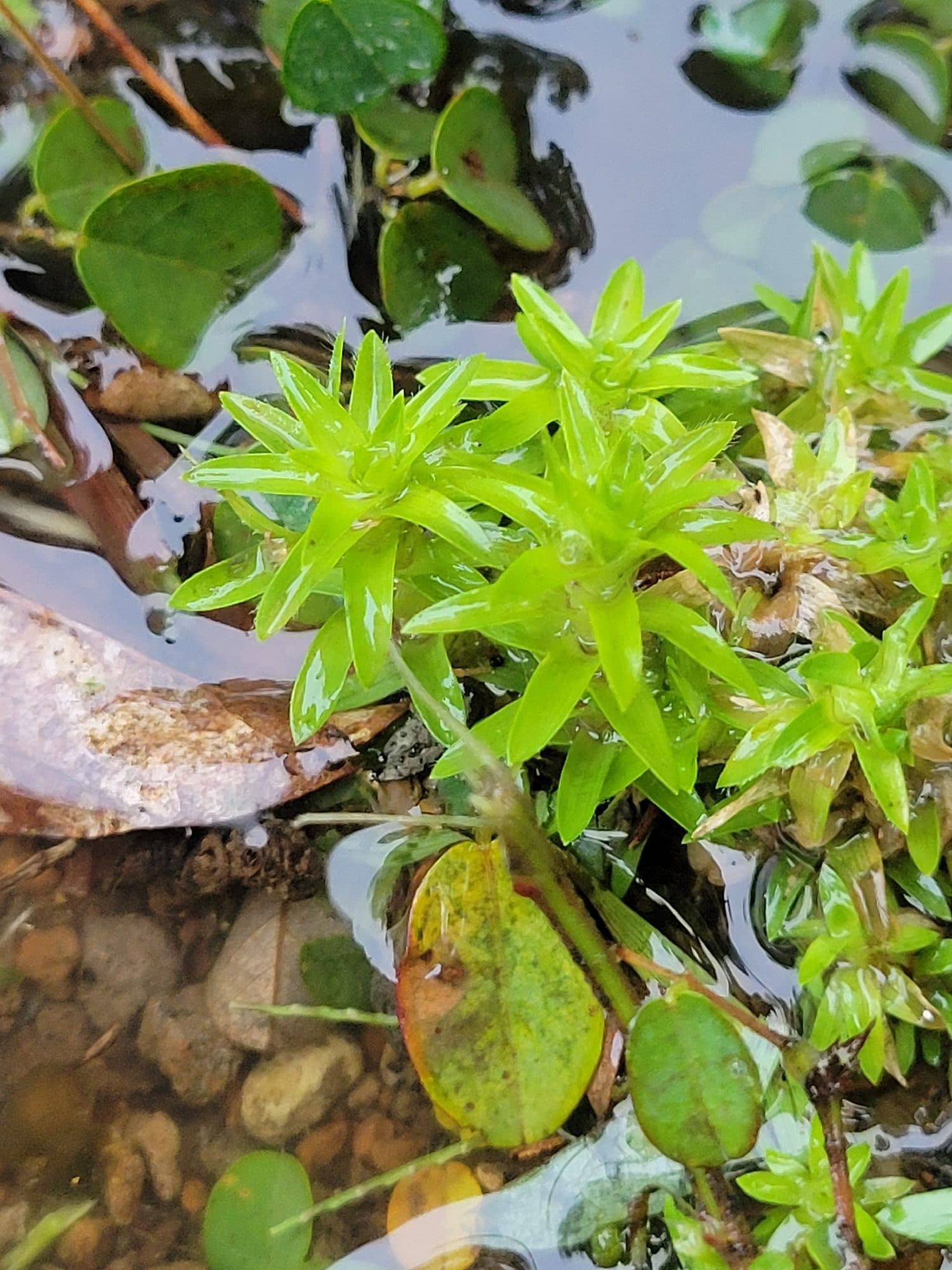
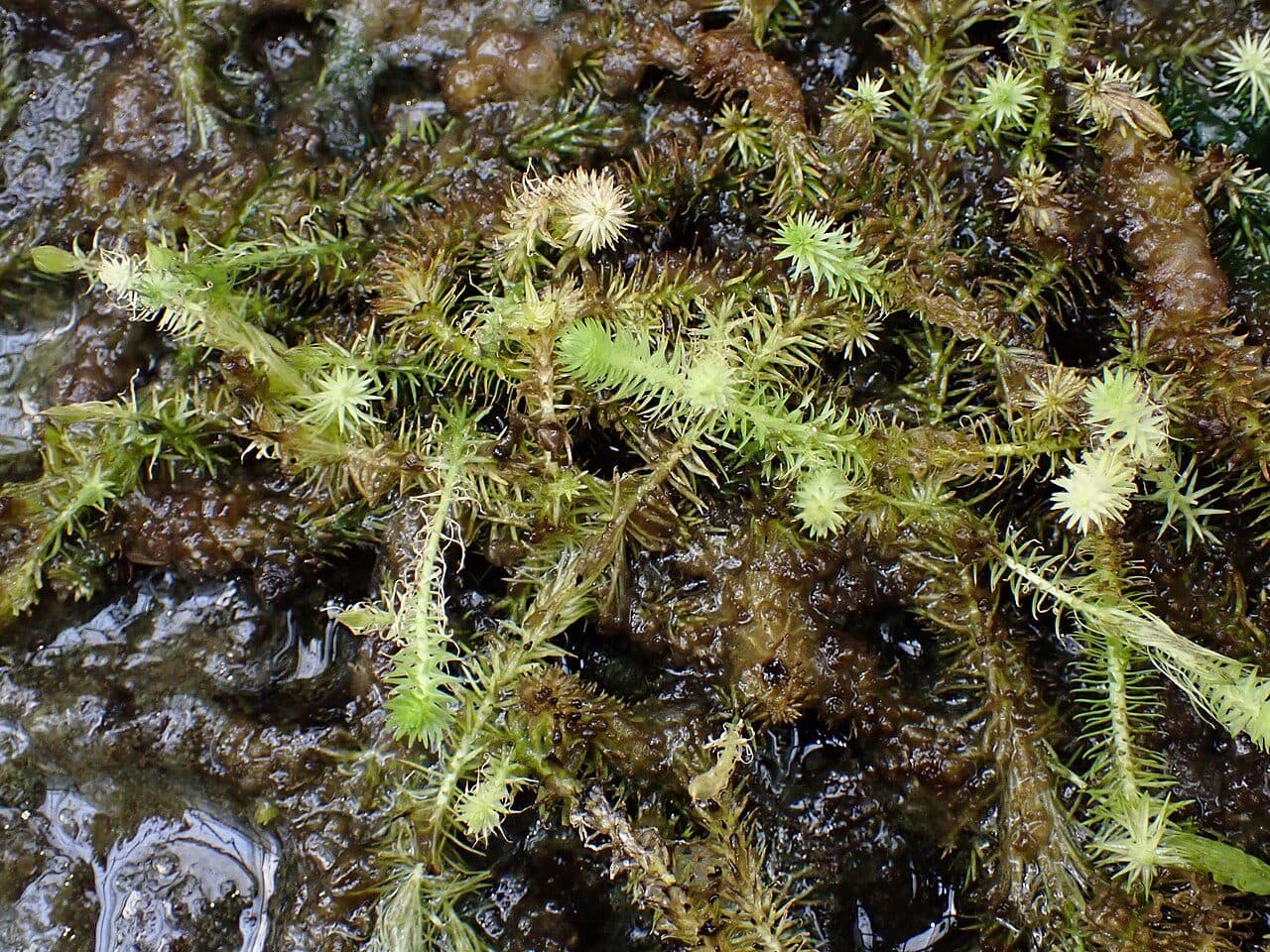
Recreating it in an aquarium
- Very soft water: reverse-osmosis or filtered rainwater, pH 5 to 6.5 and conductivity as low as possible, water changes included.
- A fine sand bottom, roots and branches, and a layer of dead leaves (catappa, oak) that release tannins and stain the water.
- Dim light, filtered by floating plants. Tonina, on the contrary, needs strong light and CO₂: it belongs in a brighter tank.
- A tight lid: hatchetfish jump.
- Warm water (25 to 28 °C) and gentle filtration; a stable pH matters more than an exact value.
Example tank
- Volume
- 240 L
- pH
- 5.5
- GH
- 3°
- Temp.
- 26 °C
- 15 × Cardinal tetra
- 8 × Marbled hatchetfish
- 8 × Dwarf pencilfish
- 8 × Adolfo's catfish
- 2 × Chessboard cichlid
- Red root floater
A 240 L tank for a shoal of cardinal tetras, hatchetfish, dwarf pencilfish, Adolfo's Corydoras and a pair of chessboard cichlids, under floating plants. Adolfo's Corydoras cap the temperature at 26 °C.
Compatible stocking
Water shared by all species
- pH
- 5–6.5
- GH
- 3–4°
- Temp.
- 25–26 °C
Good to know
- Biotope tank: every species comes from South America.
Tanks recreating it
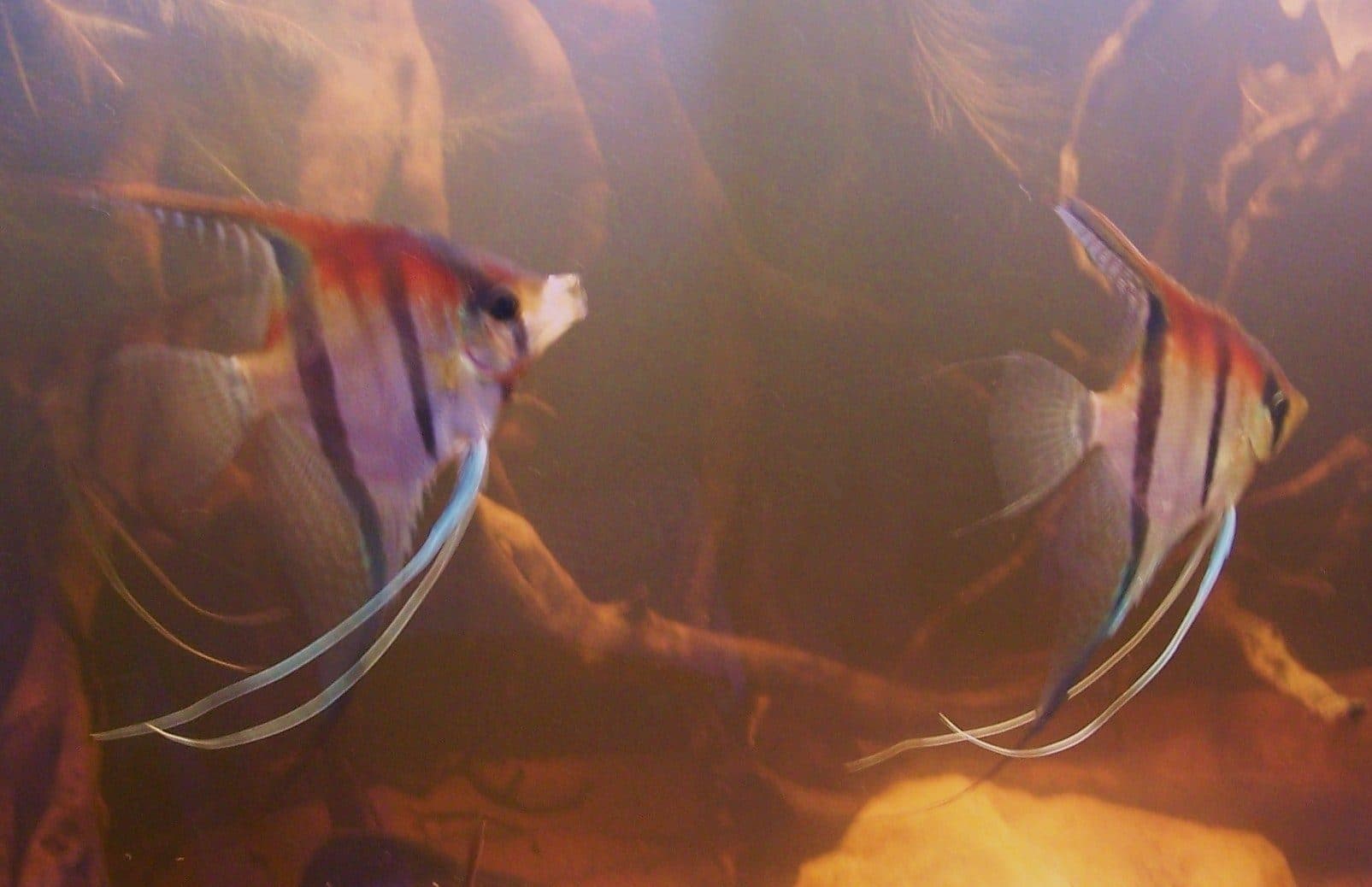
Amazon black-water biotope tank at Warsaw Zoo, with a pair of angelfish (Pterophyllum sp. "Manacapuru").
Photo: Ewkaa, CC BY-SA 4.0, via Wikimedia Commons
Aquarists present their tanks on video, often modelled on one precise site. The videos are hosted by YouTube, and the player only loads when you click.
Biotope Aquarium · YouTube
AlexB_aquatics · YouTube
Sources
Species are listed from their profiles (FishBase, Seriously Fish) or, for plants, from GBIF records in the region; the example tank is checked by the simulator's rules.
- Küchler, Miekeley & Forsberg (2000), A contribution to the chemical characterization of rivers in the Rio Negro Basin, Brazil. Journal of the Brazilian Chemical Society 11(3): 286-292
- Seriously Fish: Paracheirodon axelrodi
- Seriously Fish: Carnegiella strigata
- GBIF occurrences: Tonina fluviatilis (Paepalanthus fluviatilis), Rio Negro basin