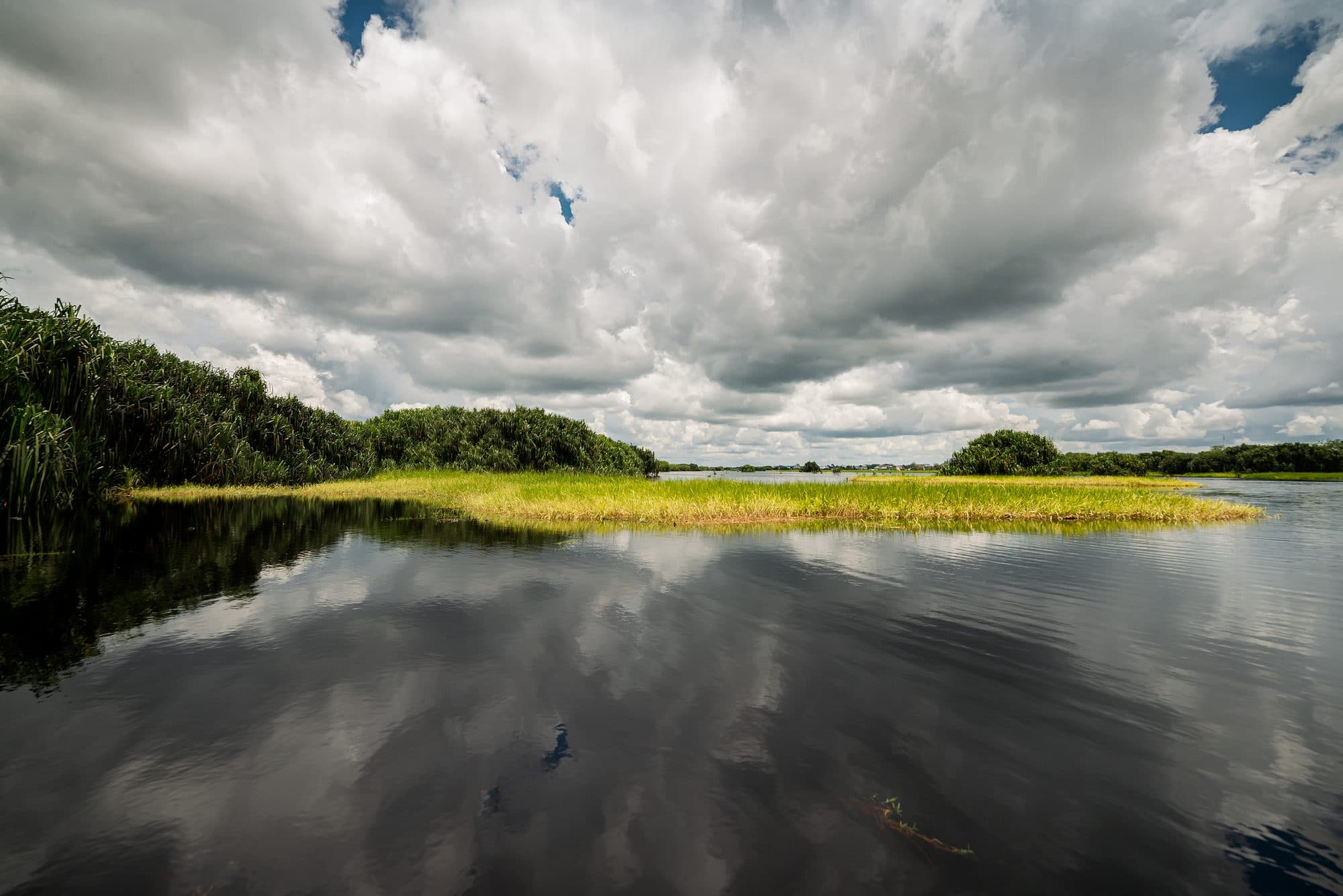
The Sebangau River and its riverside peat forest near Palangka Raya (Central Kalimantan, Borneo).
Photo: Mankdhay rahman, CC BY-SA 4.0, via Wikimedia Commons
Peat swamps
Black-water peat swamps of Southeast Asia
Malaysia, Sumatra, Borneo
Under the swamp forest, brown, very acidic water almost free of minerals, home to tiny rasboras, chocolate gouramis and kuhli loaches.
The habitat
In the lowlands of the Malay Peninsula, Sumatra and Borneo, the forest grows on a thick bed of peat: wood and leaves that do not decay in stagnant water. The streams and pools crossing it flow slowly under a dense canopy, over a bed of leaves, branches and roots.
These forests are giving way to oil palm and rubber plantations, drainage and peat fires: several fish of this biotope now survive only in degraded forest remnants.
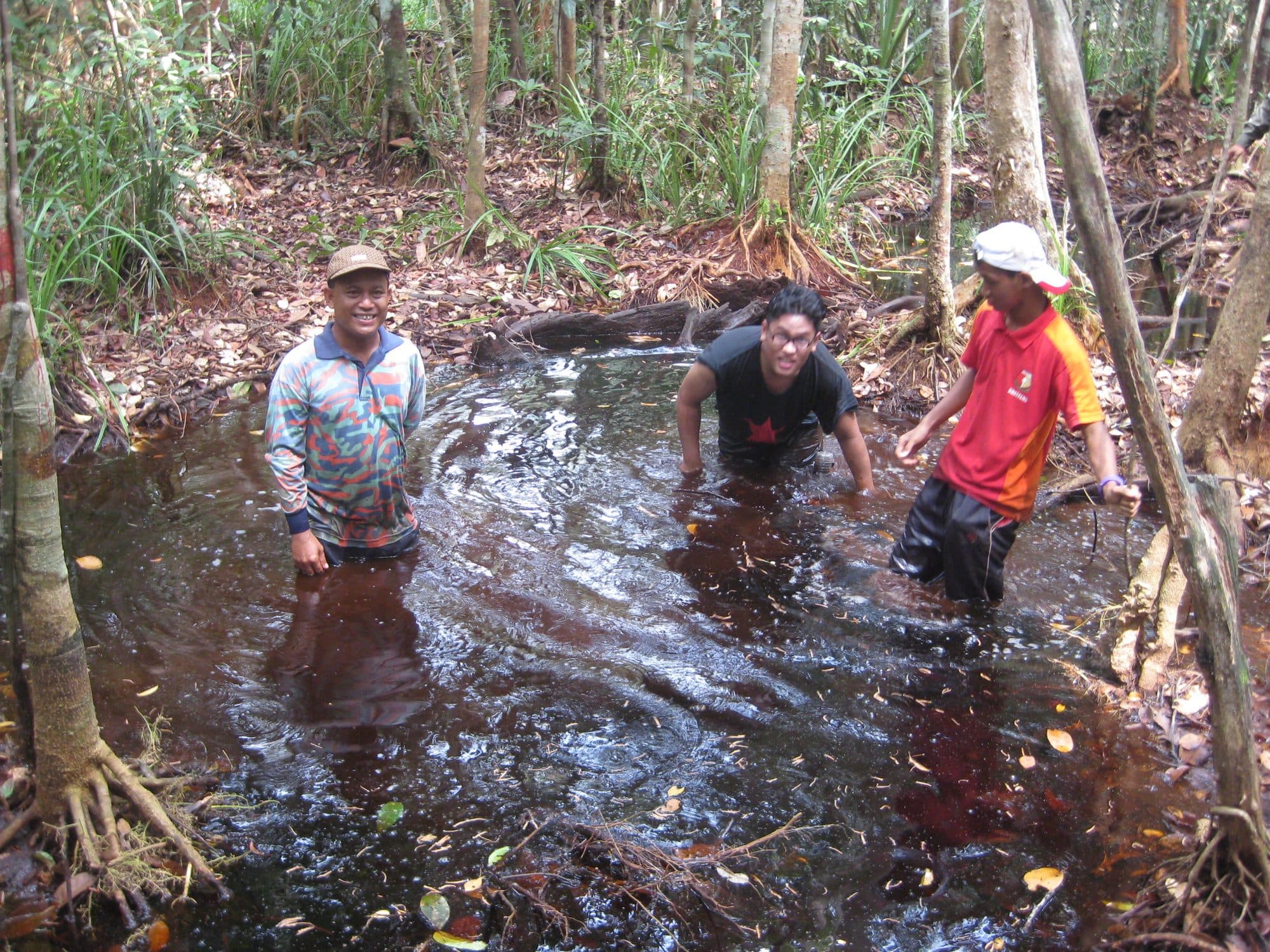
Black water in a peat swamp forest in Selangor, Malaysia.
Photo: Tan Yi Han, CC BY-SA 3.0, via Wikimedia Commons
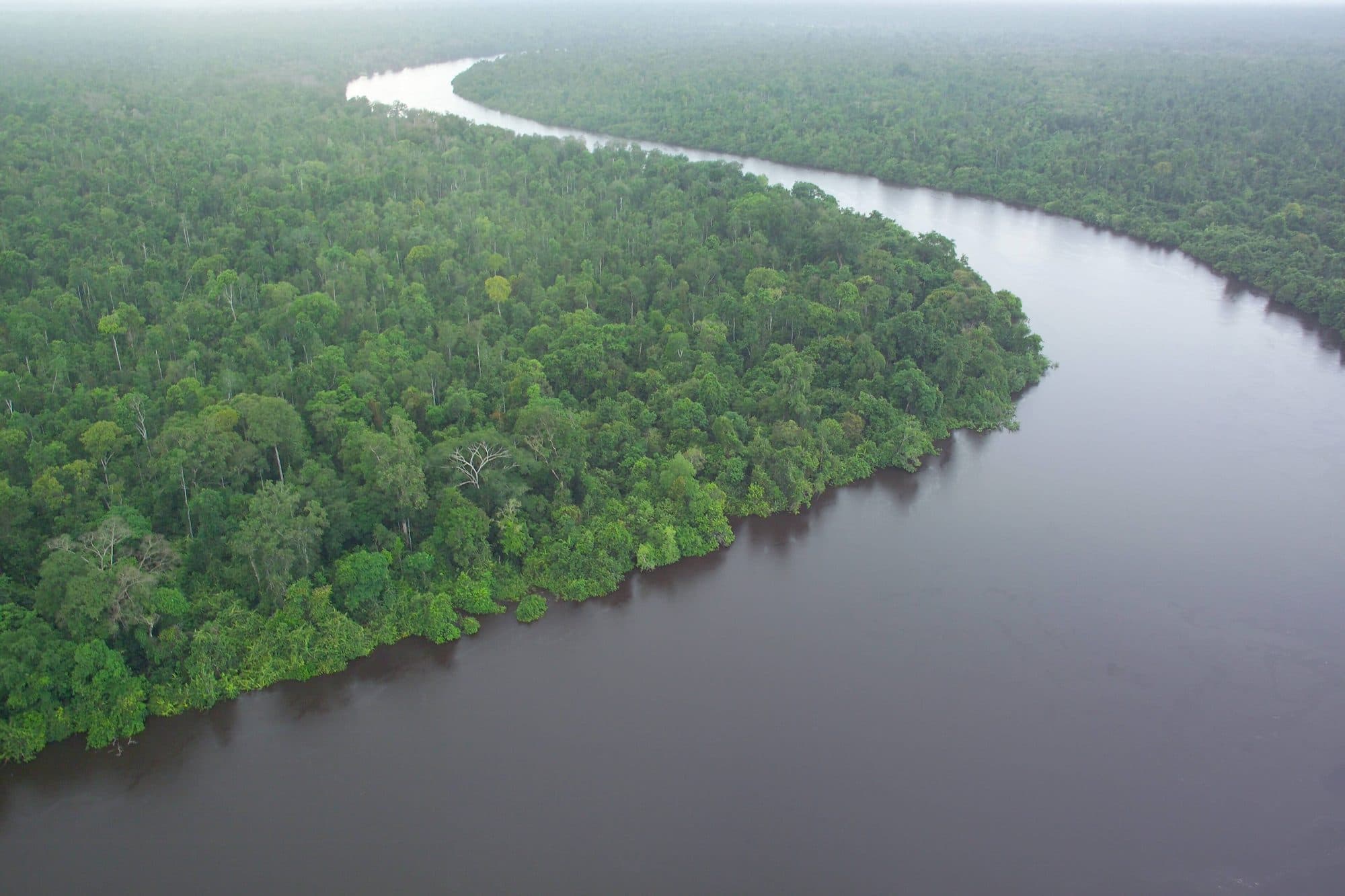
A black-water river winds through the peat forest in Kalimantan.
Photo: Ruanda Agung Sugardiman/AusAID, CC BY 2.0, via Wikimedia Commons
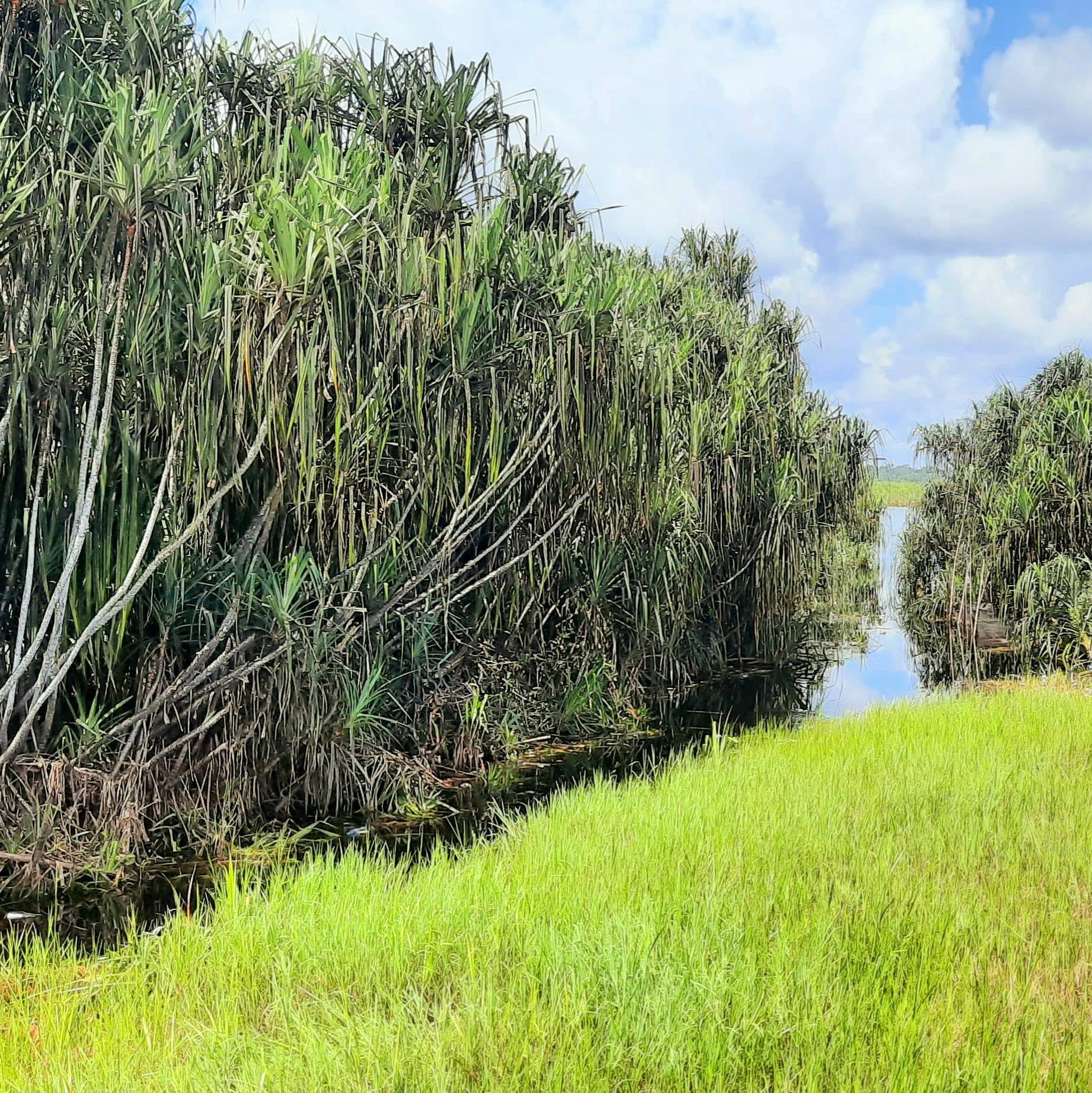
Pandanus (rasau) on the black water in Sebangau National Park.
Photo: Ariesandy0812, CC BY-SA 4.0, via Wikimedia Commons
The water
Ng and Kottelat (1994) recorded a pH of 3.5 to 3.7 in the peat swamps of Selangor, Malaysia, and of 4 to 5.5 in black-water streams with thick leaf litter. Stained by humic acids, the water is almost free of minerals, and the canopy lets hardly any light through.
In aquariums these species often accept slightly less acidic water, but it must stay very soft, above all for the delicate chocolate gourami.
Who lives here
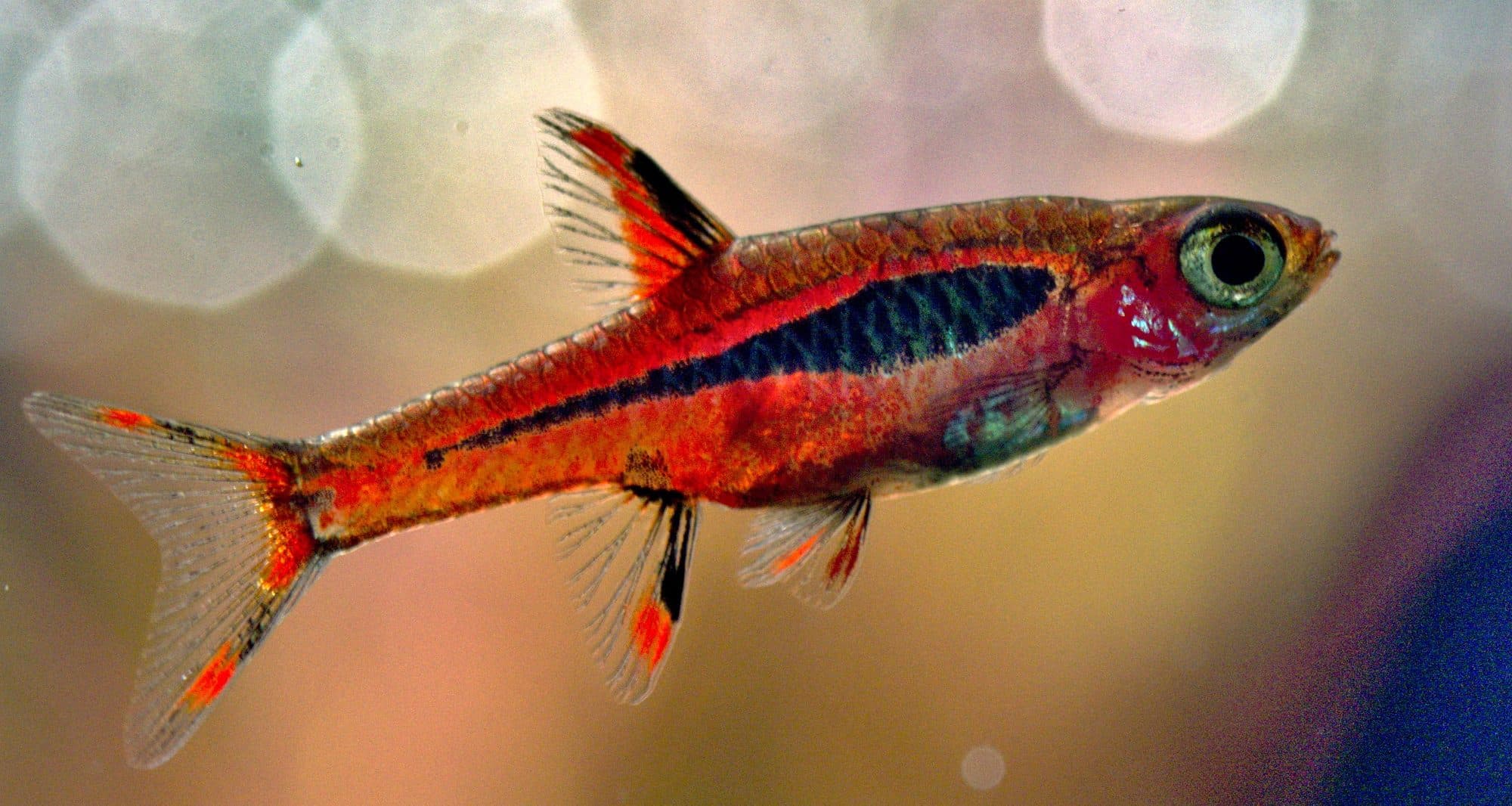
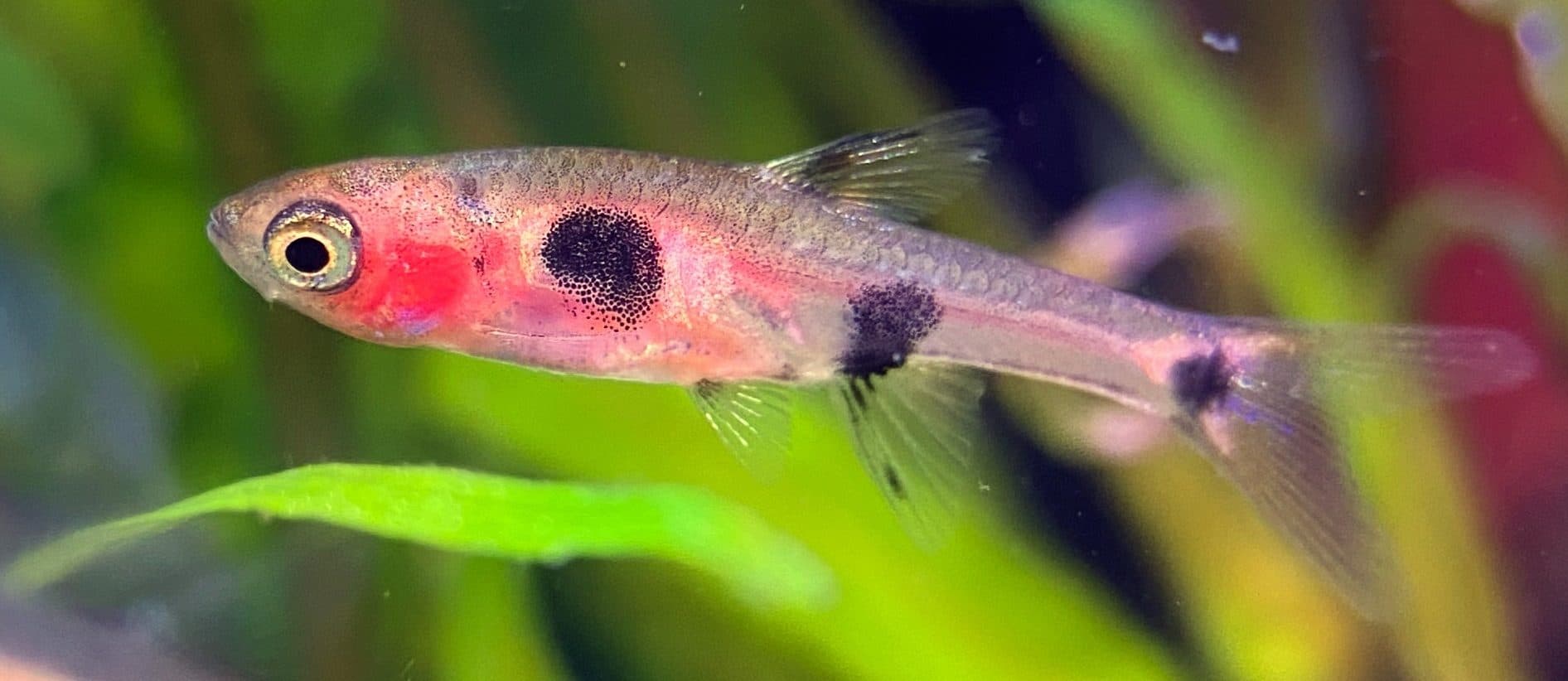
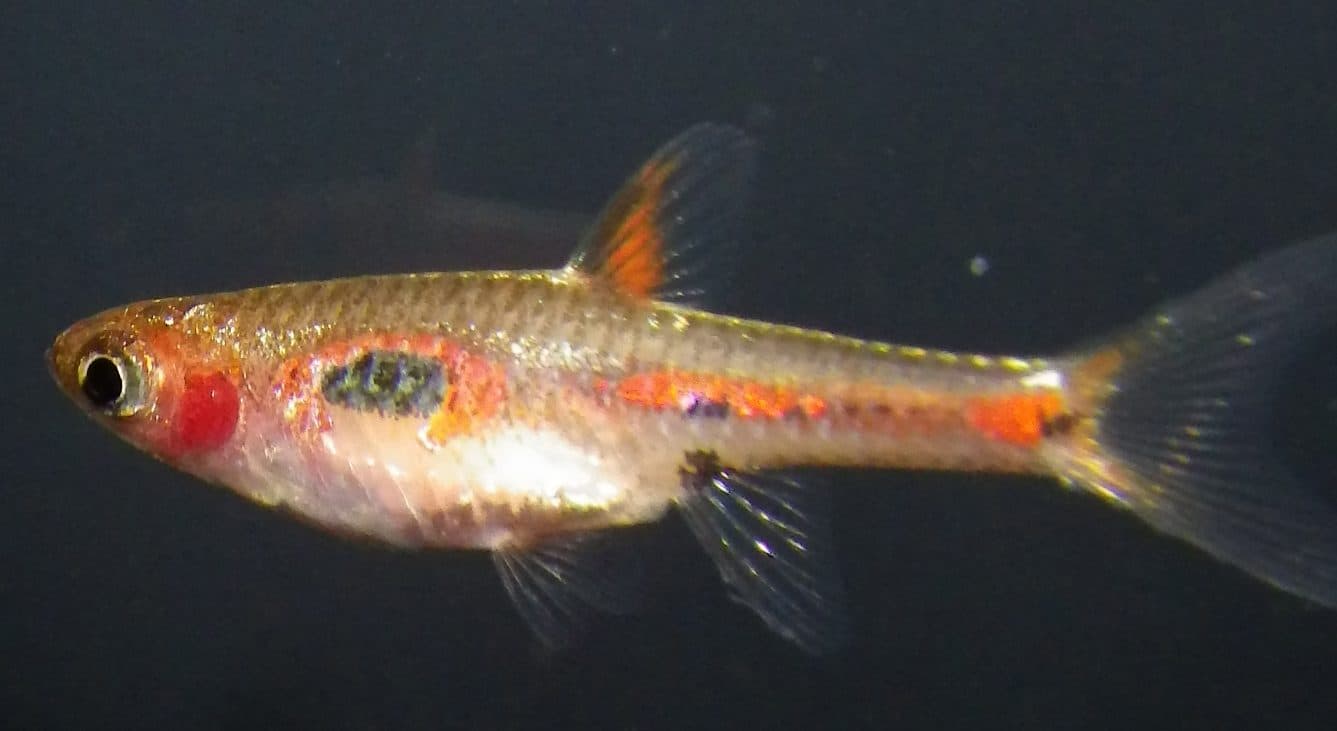
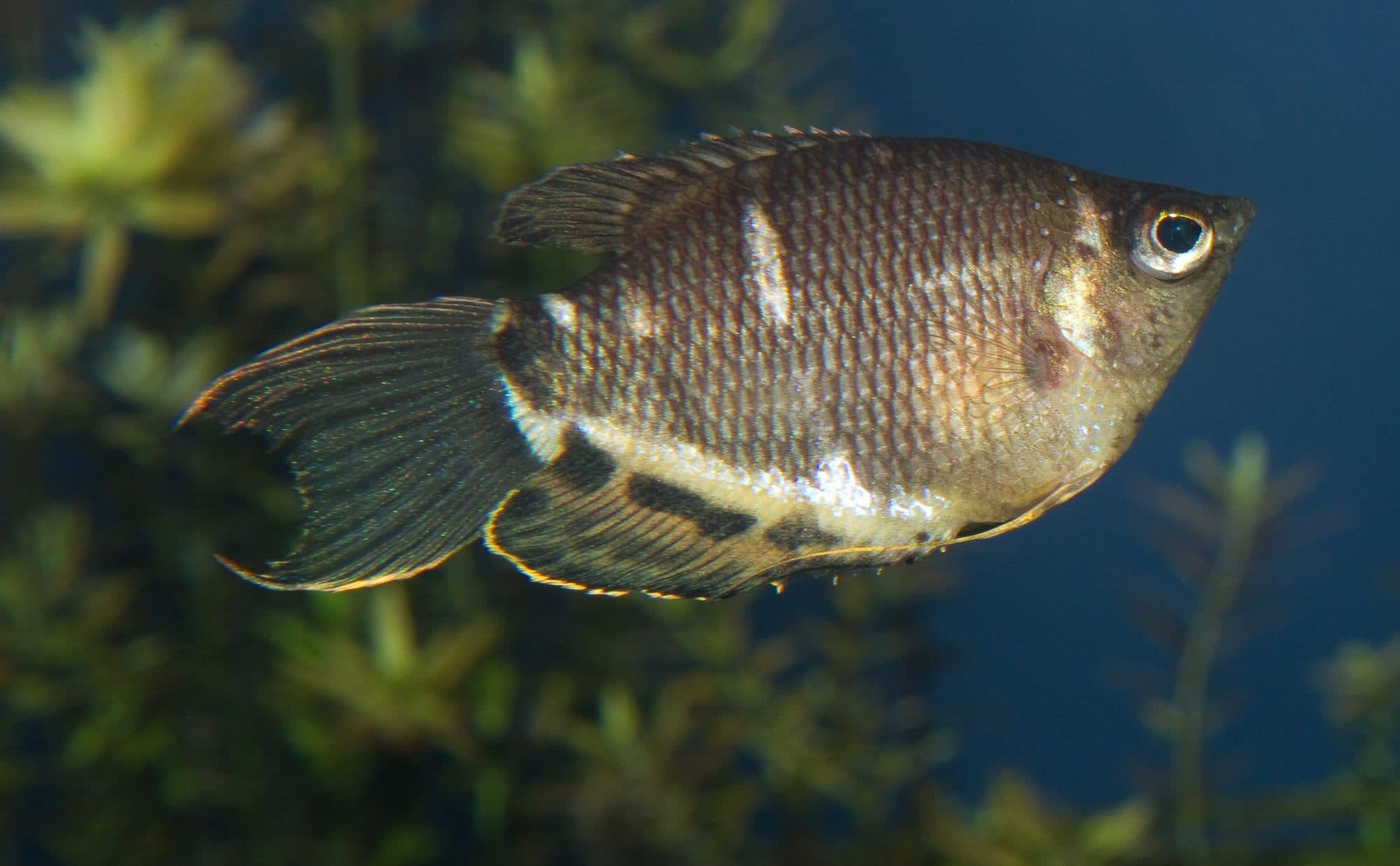
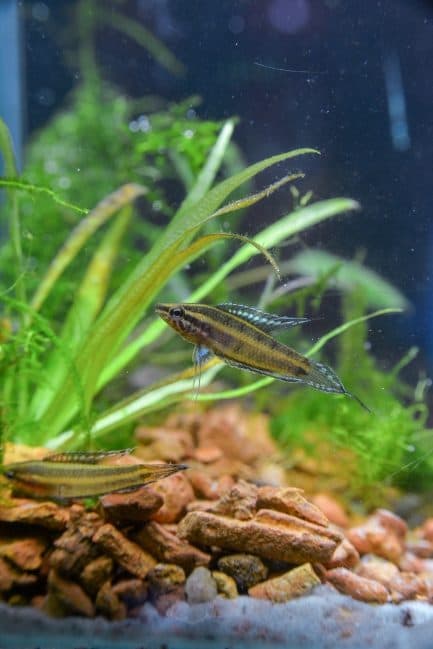
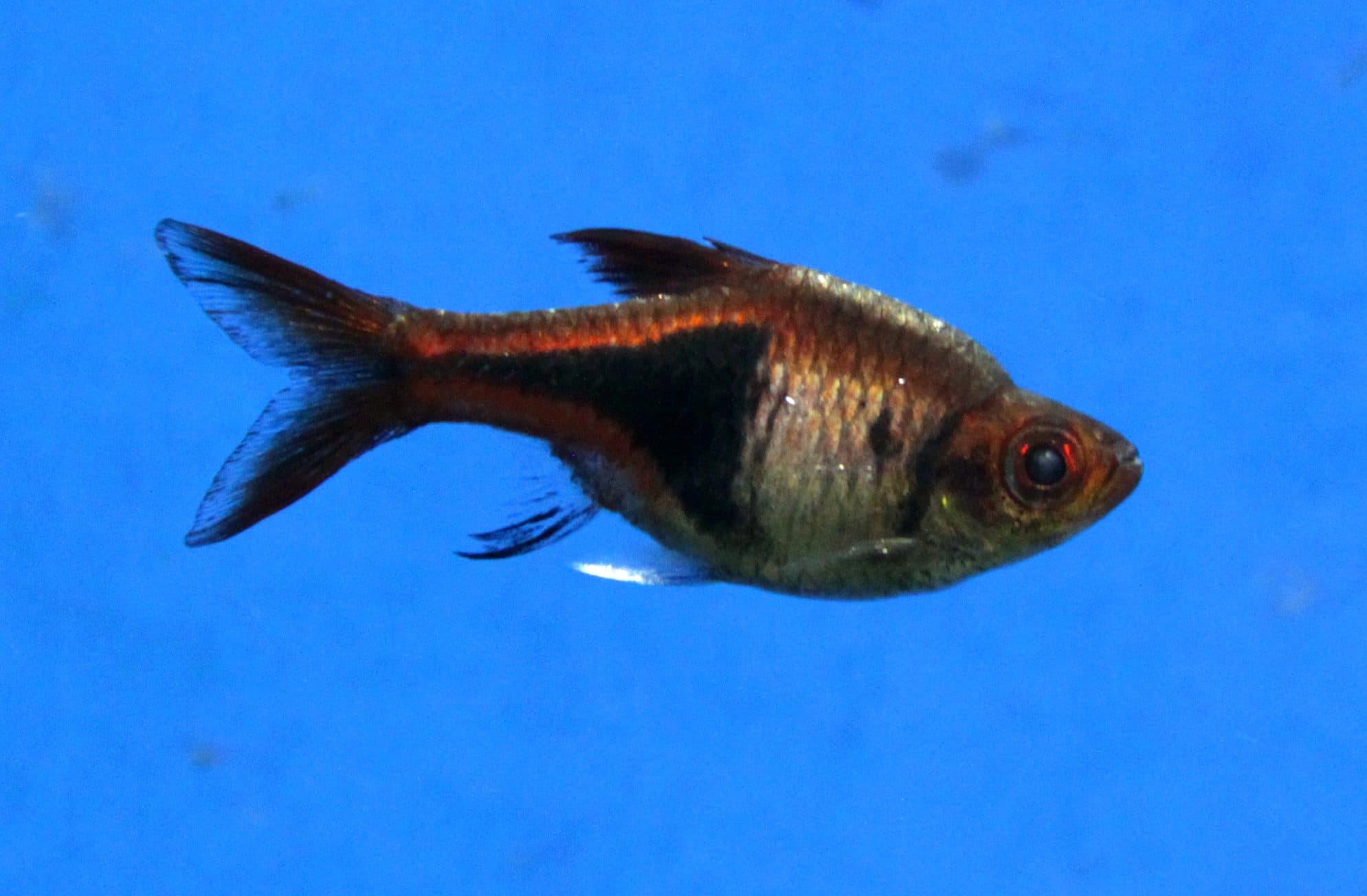
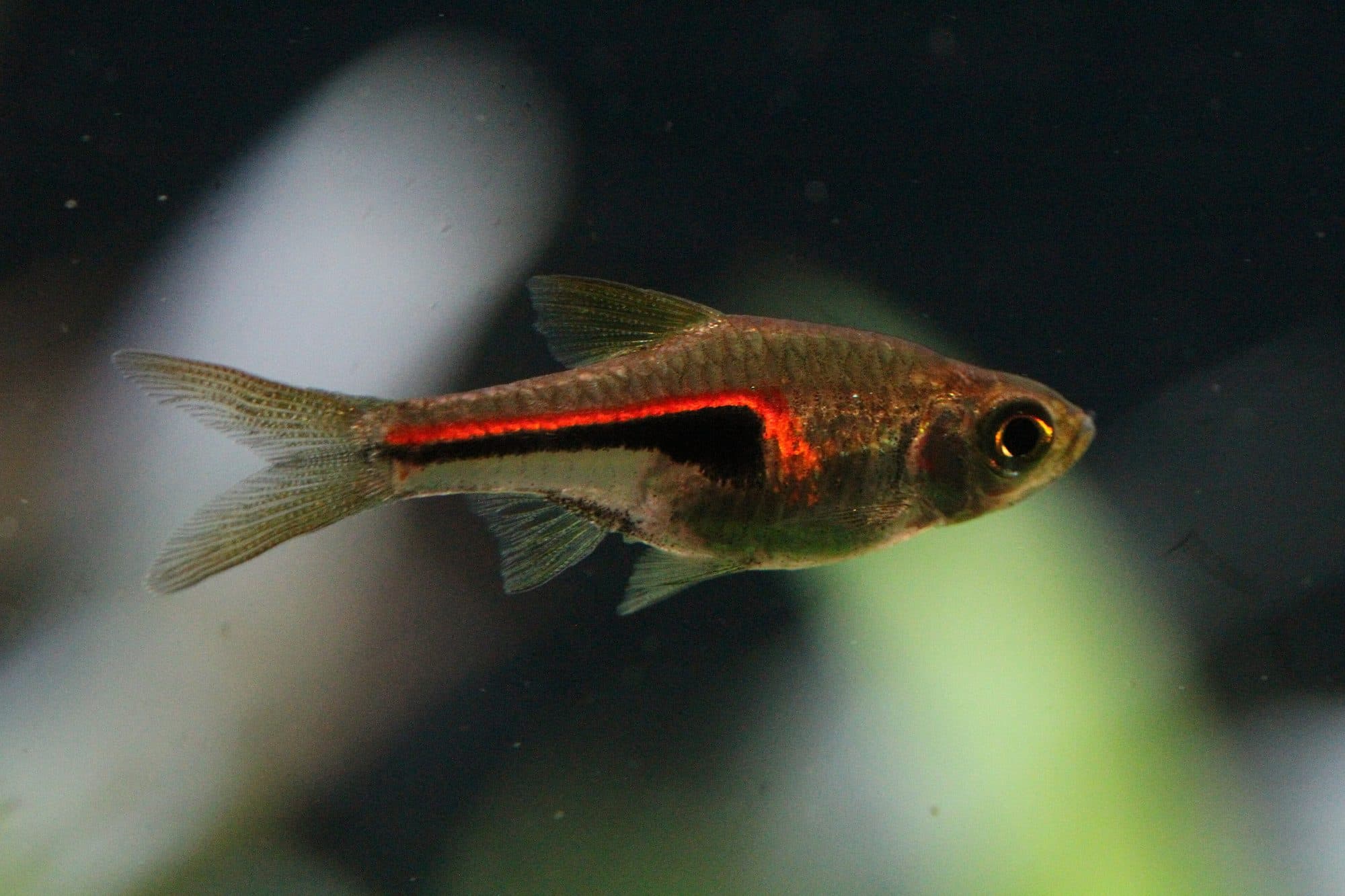
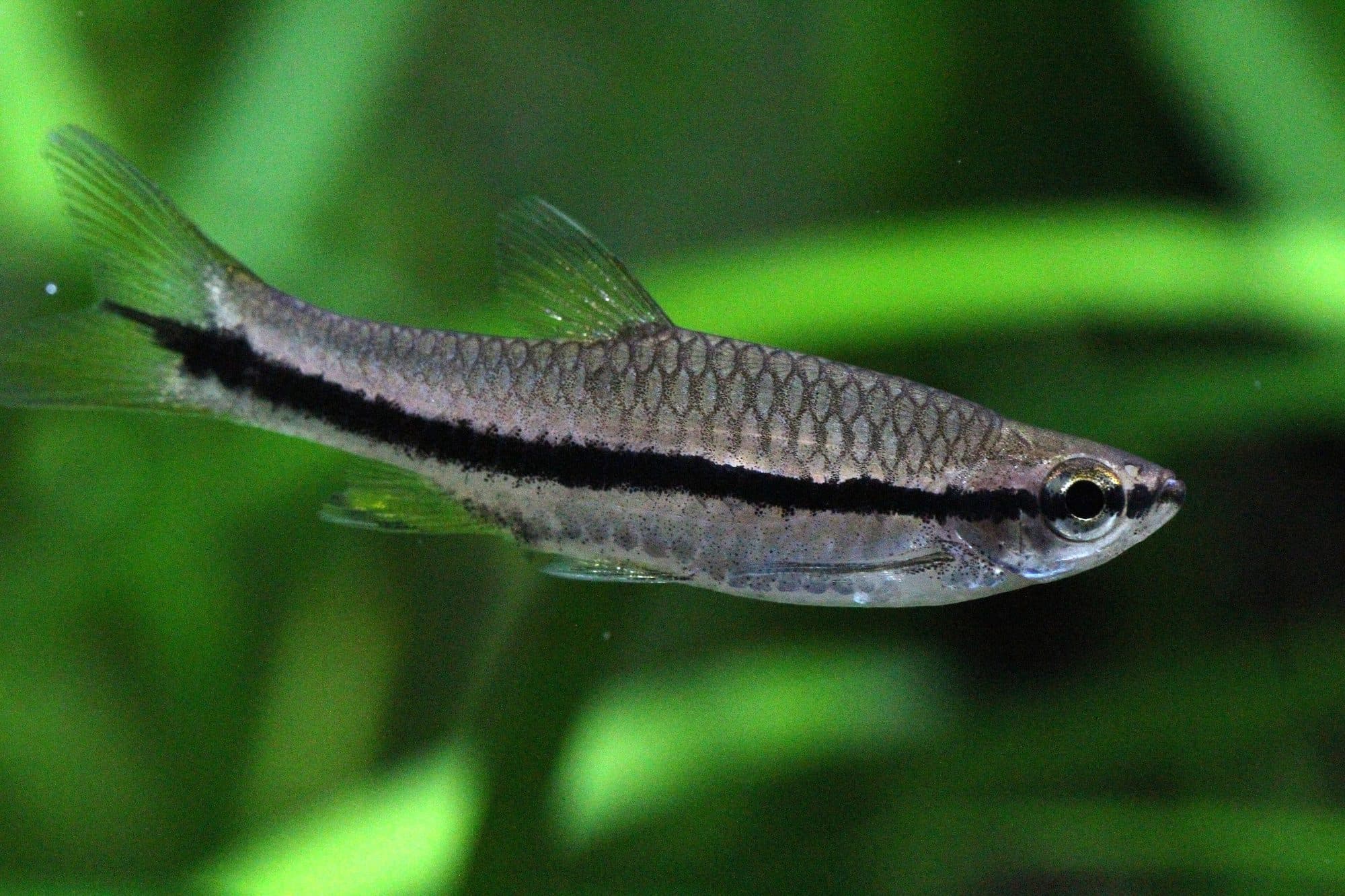
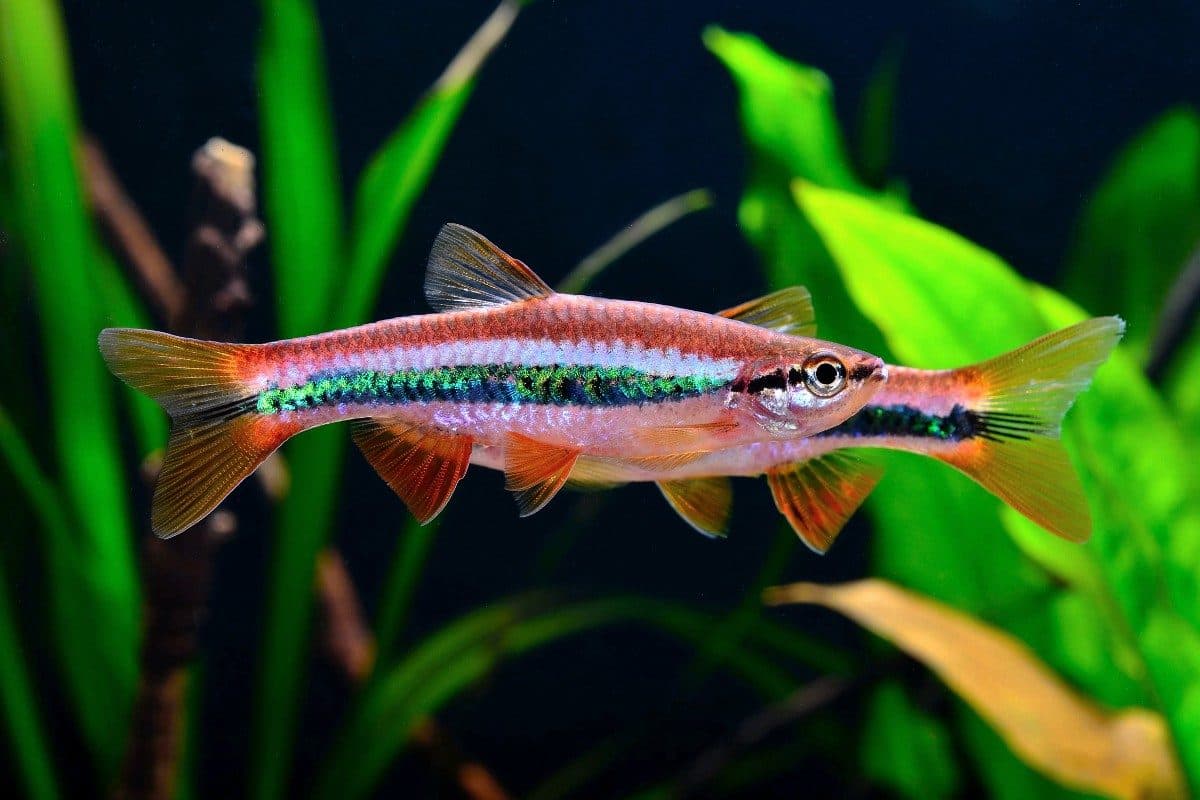
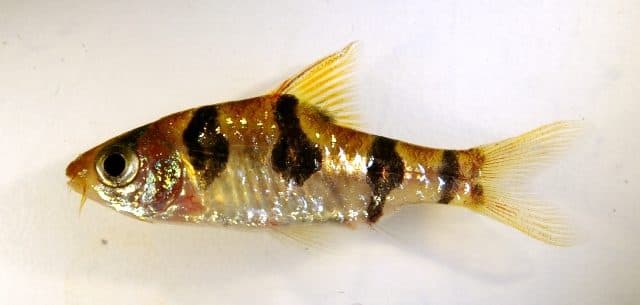
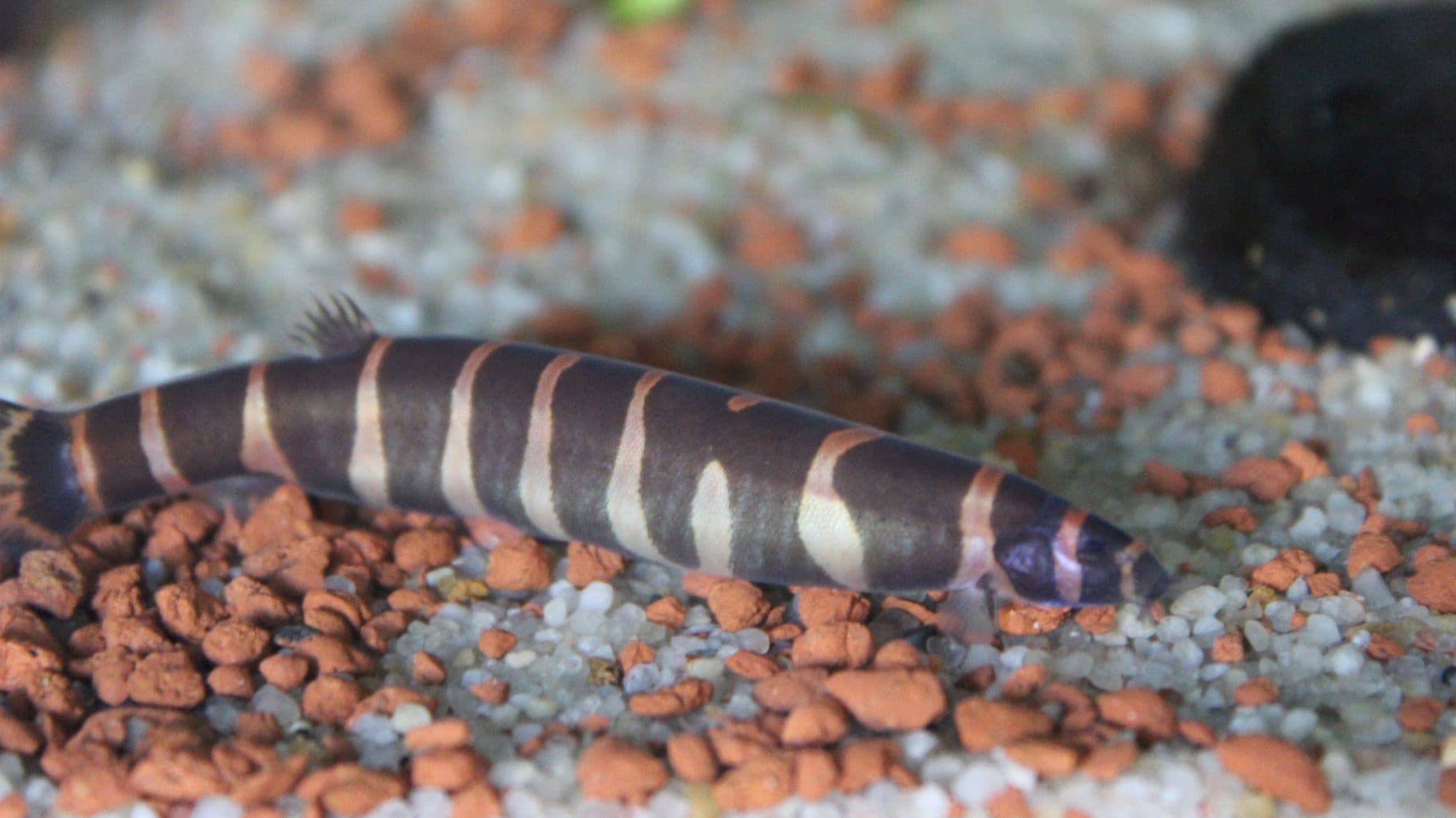
Boraras, which do not exceed 2 cm, and harlequin rasboras shoal among the roots. The chocolate gourami, which broods its eggs in its mouth, and the licorice gourami of Bangka Island stay in the vegetation; kuhli loaches gather by the dozen in the leaf litter. Gouramis breathe air at the surface.
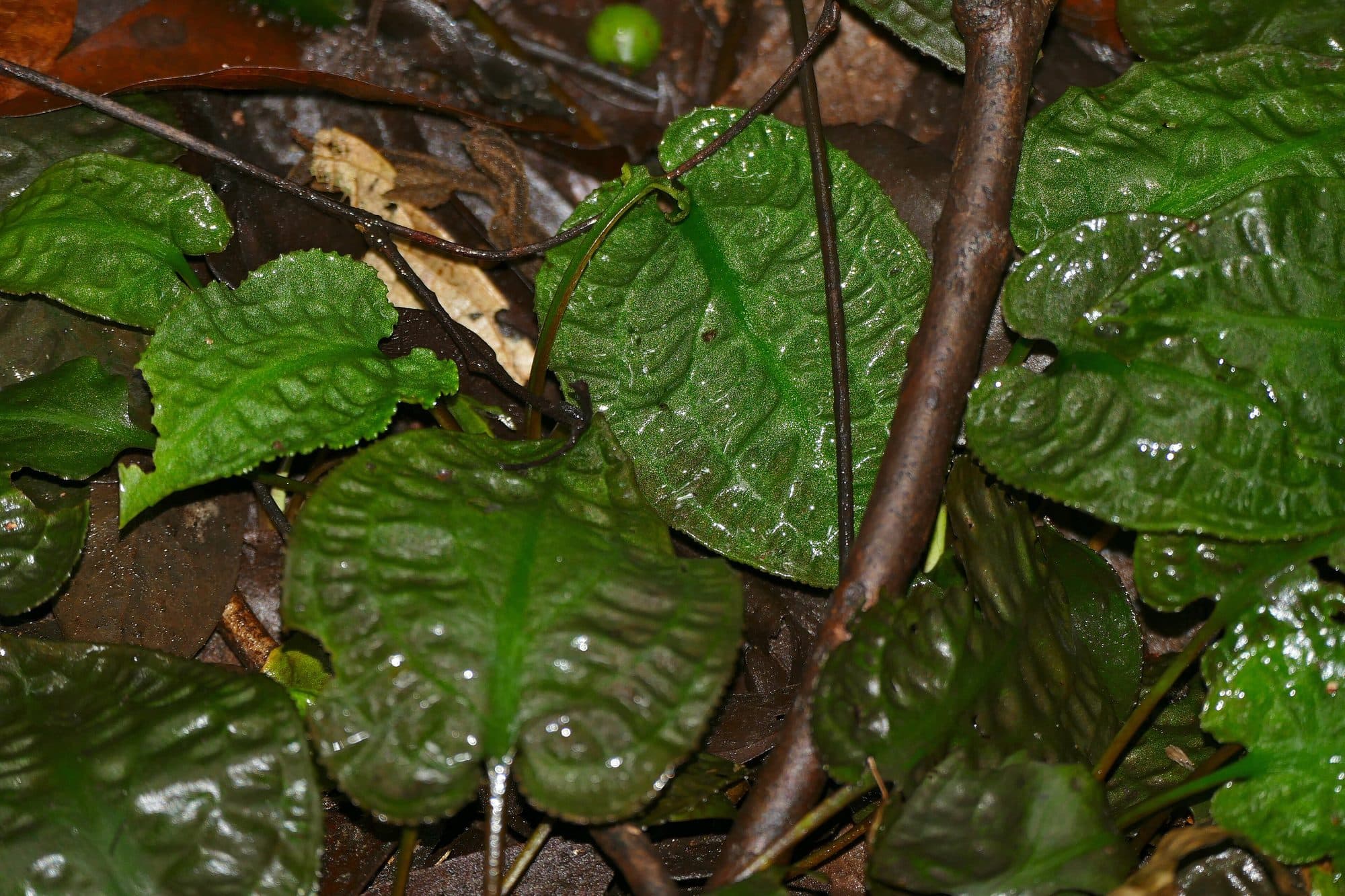
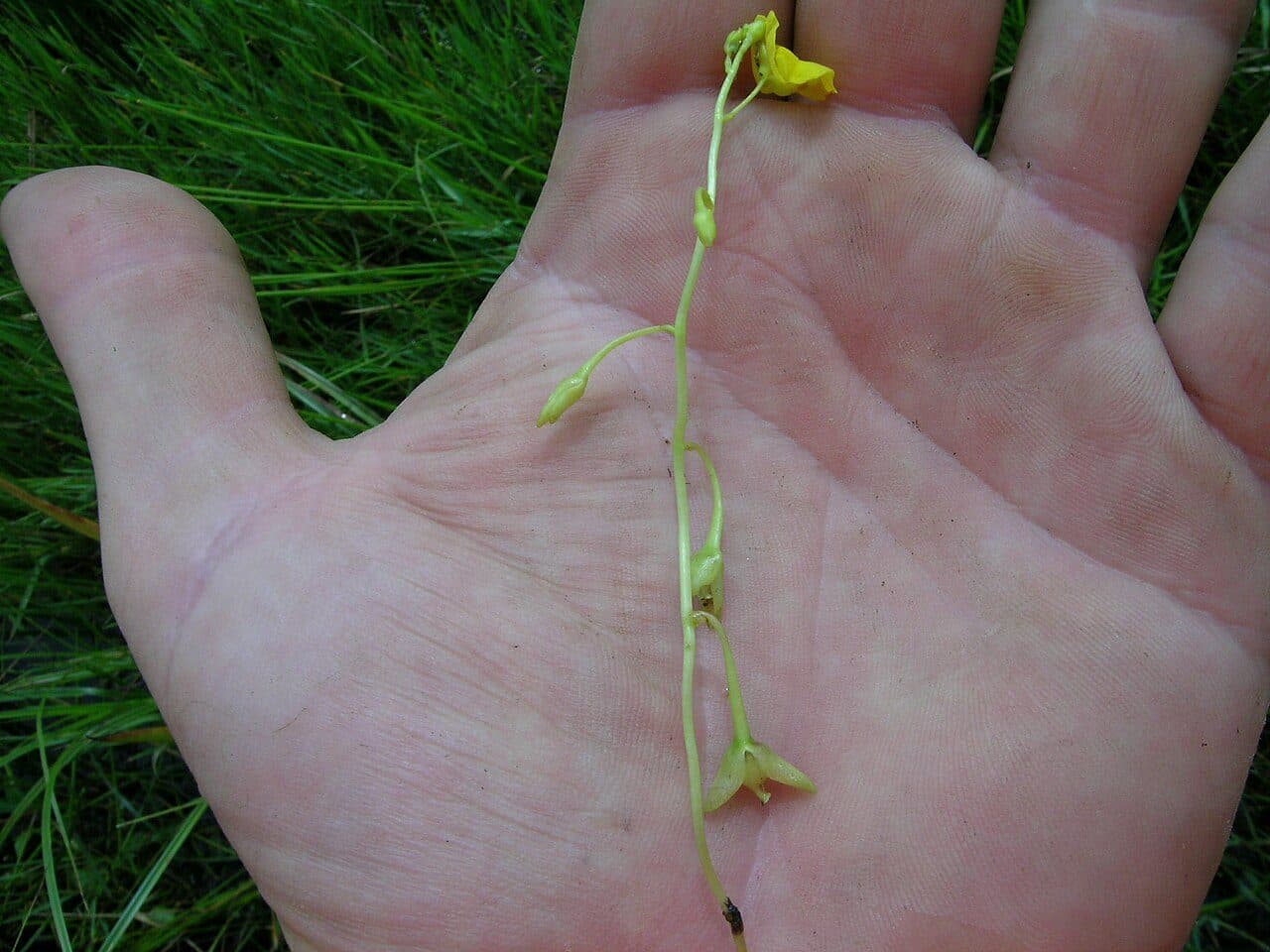
Plants are mostly Cryptocoryne adapted to shade and acidity, such as C. longicauda, recorded in the forest streams of Borneo according to GBIF; the bladderwort Utricularia aurea, a rootless carnivorous plant, floats in still water. No invertebrate of the catalogue lives there.
Fish (11)
Recreating it in an aquarium
- Very soft reverse-osmosis water, pH 5 to 6.5; catappa leaves and a little peat for colour and acidity.
- A fine sand bottom covered with dead leaves, roots and branches where kuhlis and Boraras find shelter.
- Dim light and floating plants; shade plants (Cryptocoryne, ferns) if you want some green.
- A stable, well-run-in tank without strong current, with a lid keeping warm, humid air above the water for the gouramis.
Example tank
- Volume
- 120 L
- pH
- 5.8
- GH
- 2°
- Temp.
- 27 °C
- 12 × Phoenix rasbora
- 6 × Chocolate gourami
- 6 × Kuhli loach
- Cryptocoryne longicauda
A 120 L tank: a shoal of Boraras merah, a group of chocolate gouramis, kuhli loaches and a Cryptocoryne longicauda, in water at pH 5.8 and 2 °dGH. Kuhlis need at least 120 L, and chocolate gouramis very soft water and a well-established tank.
Compatible stocking
Water shared by all species
- pH
- 5.5–6
- GH
- 1–3°
- Temp.
- 26–28 °C
Good to know
- Biotope tank: every species comes from Asia.
Tanks recreating it
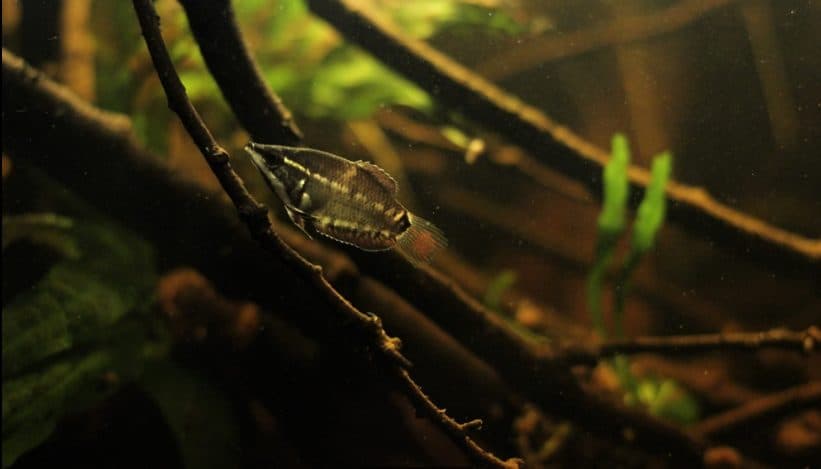
Asian black-water biotope tank with a samurai gourami (Sphaerichthys vaillanti), a cousin of the chocolate gourami.
Aquarists present their tanks on video, often modelled on one precise site. The videos are hosted by YouTube, and the player only loads when you click.
Biotope Aquarium · YouTube
Tropical Fish Hub · YouTube
Sources
Species are listed from their profiles (FishBase, Seriously Fish) or, for plants, from GBIF records in the region; the example tank is checked by the simulator's rules.