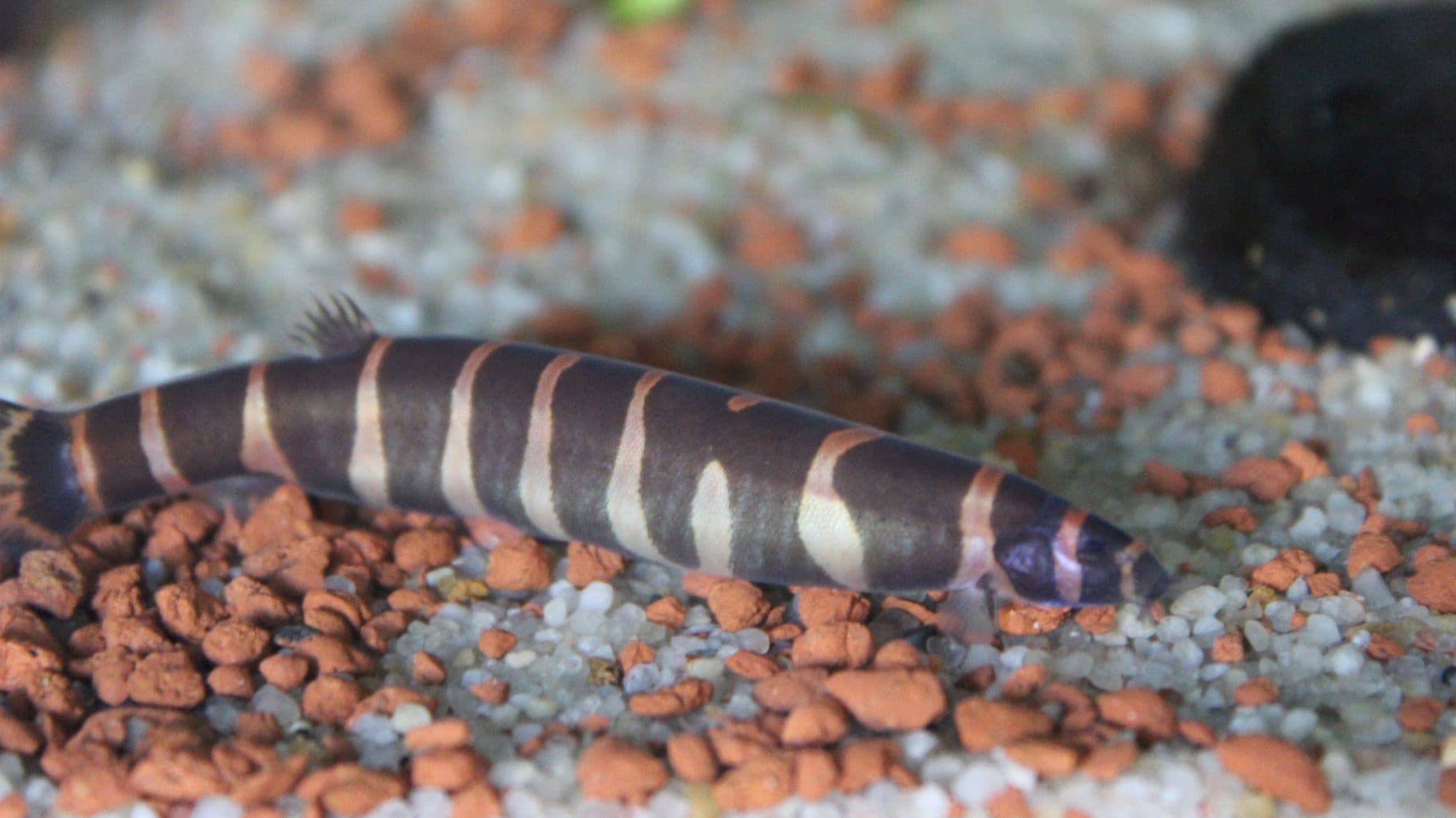
Photo: Iidkk, CC BY-SA 4.0, via Wikimedia Commons
Kuhli loach
Pangio kuhlii
10 cm
Adult size
120 L
Minimum volume
6
Minimum group
16 years
Lifespan
Water parameters
Understand these values- Genus
- Pangio
- Diet
- omnivore
- Social life
- small group
In the wild
Overview
Described in 1846 by Achille Valenciennes, the kuhli (or “coolie loach”) is a small, eel-like, orange-yellow loach barred with dark bands. Its name honours the German naturalist Heinrich Kuhl, who died on Java in 1821.
Its identity is muddled: the true P. kuhlii is thought to come from Java, while most “kuhlis” sold are P. semicincta, from Malaysia, Sumatra and Borneo. This group is probably a complex of closely related species, with at least three genetic lineages identified.
- Scientific name
- Pangio kuhlii (Valenciennes, 1846)
- Classification
- Cypriniformes › Cobitidae
- IUCN Red List
- Least concern (LC)
Natural habitat
Sunda Islands (Java, Sumatra, Borneo) and Malay Peninsula
Observations (GBIF) and localities Native countries Rivers and lakes
These loaches live in calm, shallow parts of forest streams, marshes, oxbows and canals, often linked to peat forests, in black or clear water.
The water there is shaded, almost free of minerals and sometimes very acidic (pH as low as 3 or 4). The bottom of peat, mud or sand is covered in dead leaves, where kuhlis gather in large numbers.
Behaviour
Totally peaceful, it never bothers its companions, but may eat eggs and fry. Gregarious, it gathers in the same hiding place to rest: a group of at least 5 to 6 is recommended.
Nocturnal and discreet, it sifts the fine sand through its mouth and gills to extract larvae and small crustaceans. It escapes through the smallest gap and must be kept in a covered tank. Its breeding in the aquarium remains poorly documented.
Sources:FishBase Seriously Fish GBIF · Base map: Natural Earth