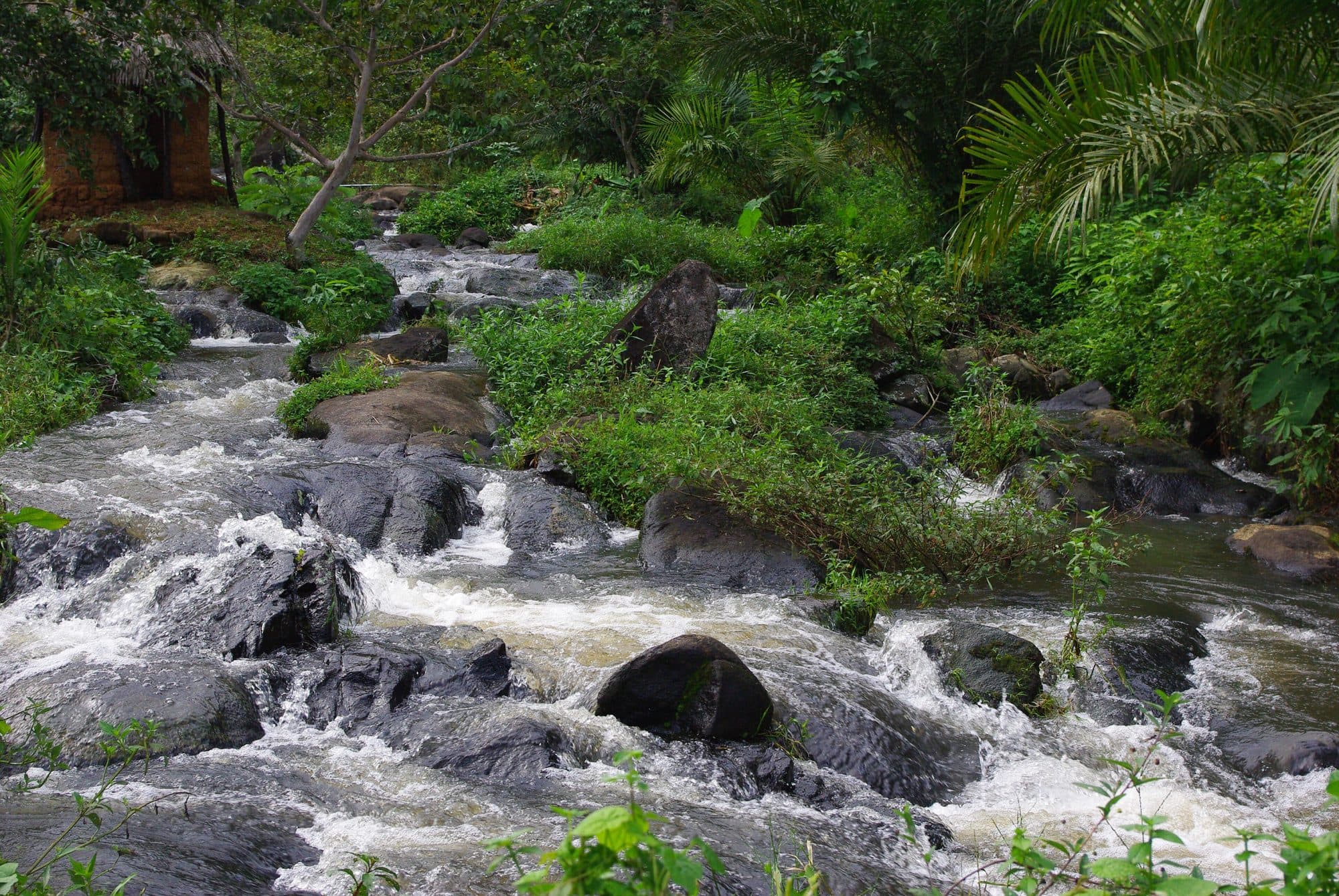
A rocky stream near the Mboué falls, Cameroon.
Photo: Florettesokeng, CC BY-SA 4.0, via Wikimedia Commons
Forest streams
Forest streams of the Gulf of Guinea
Nigeria, Cameroon, Gabon
Creeks, swamps and streams under the coastal rainforest, from the Niger Delta to Gabon: the home of the kribensis, Fundulopanchax killifish and dwarf anubias.
The habitat
Along the Gulf of Guinea, the coastal rainforest is crossed by creeks, streams and swamps. In the lowlands the water is calm and overgrown with plants; some pools and raffia swamps dry out from time to time. On slopes, such as around Mount Cameroon, streams run over stones.
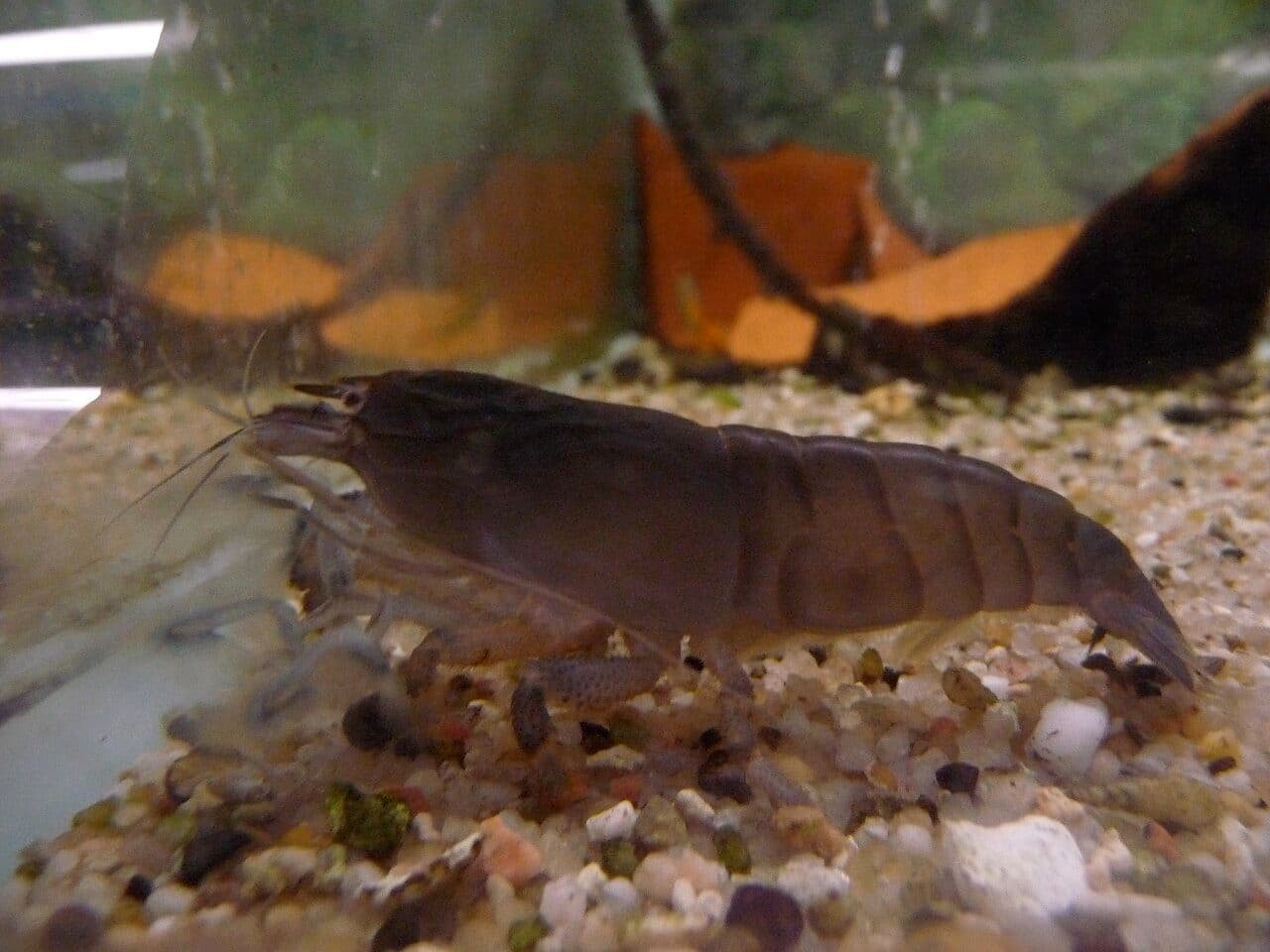
Two habitats thus sit side by side: calm, shallow water where Pelvicachromis and killifish live, and streams with a steady current, where dwarf anubias and the fern Bolbitis cling to stones and wood, and where the African fan shrimp feeds on particles carried by the current.
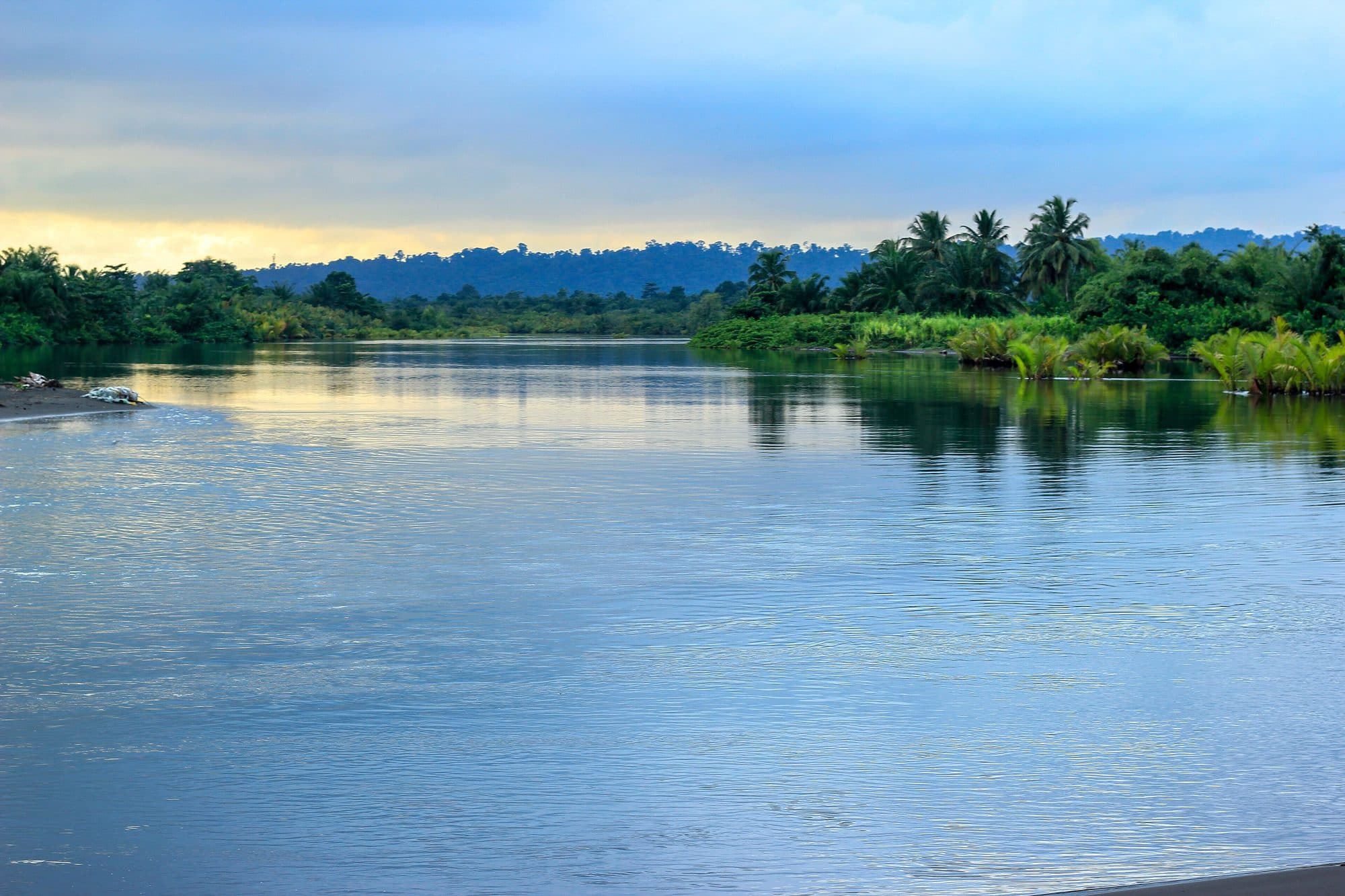
A creek at Idenau, in the South-West Region of Cameroon, at the foot of Mount Cameroon.
Photo: Kekiwiyi, CC BY-SA 4.0, via Wikimedia Commons
The water
The profiles of these species, drawn from FishBase and Seriously Fish, describe soft, slightly acidic to neutral and warm water: 22 to 26 °C for Fundulopanchax killifish, near-neutral water at 24 to 30 °C for the fan shrimp.
Near the coast, some kribensis populations live in brackish water. The fan shrimp needs it for its larvae, which develop in brackish water or at sea: it does not breed in fresh water.
Who lives here
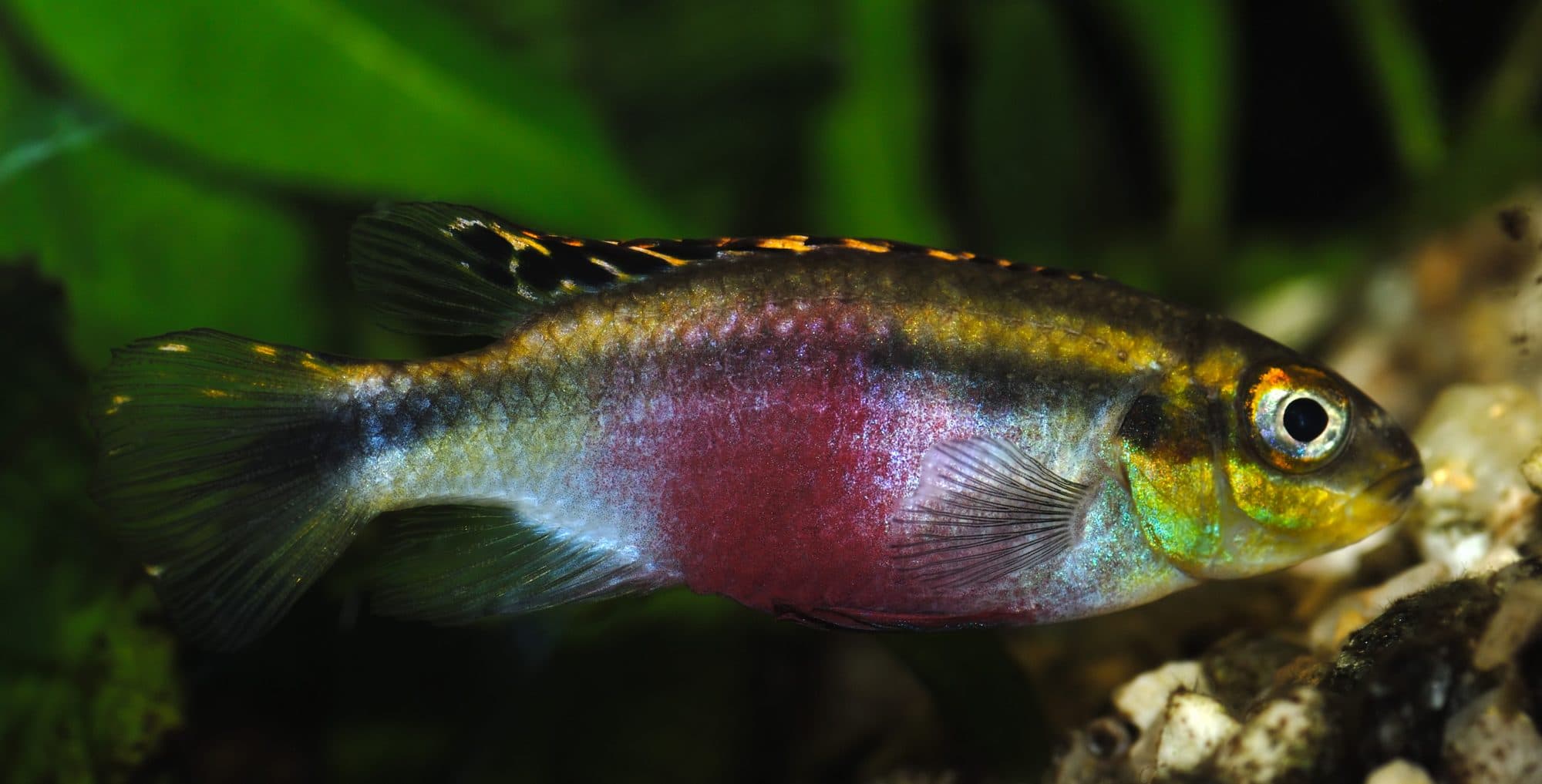
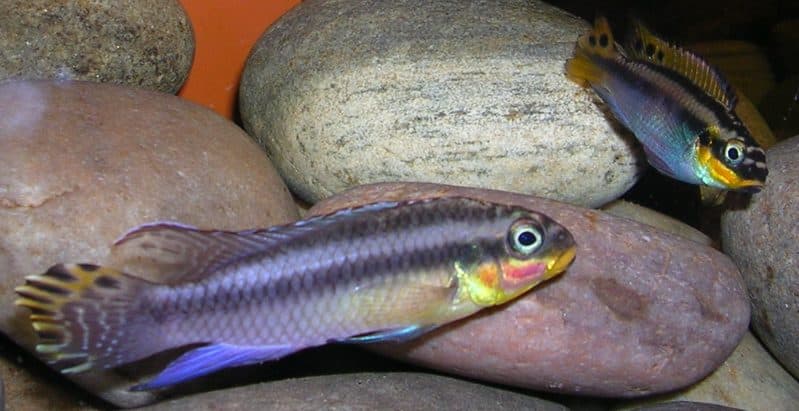
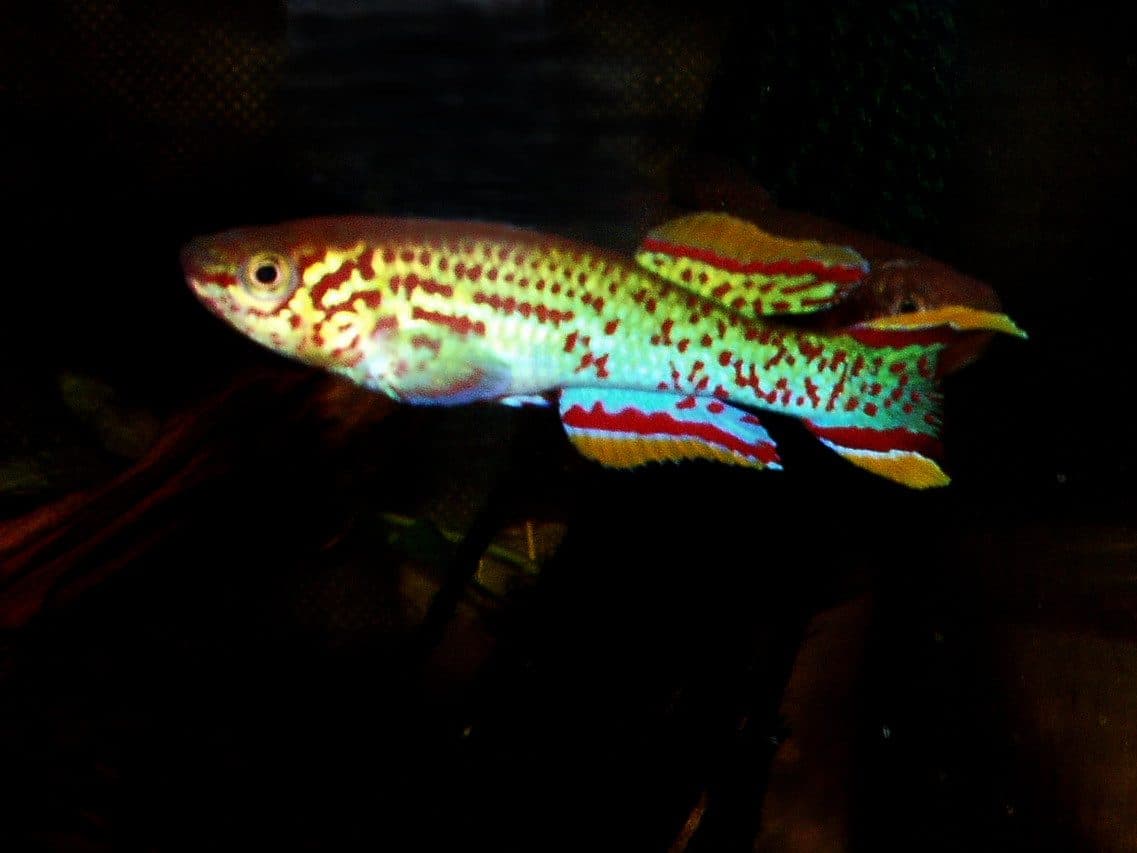
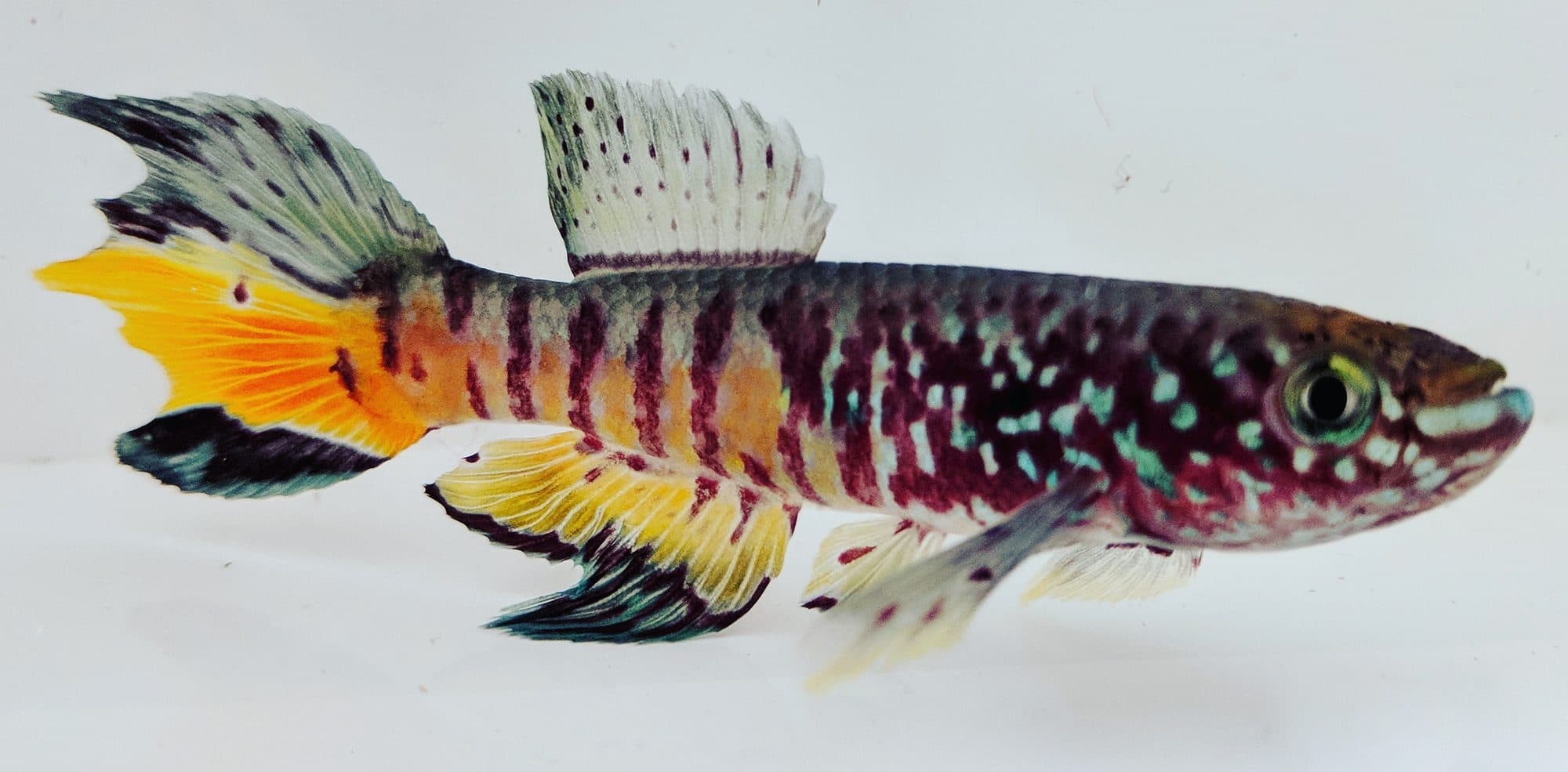
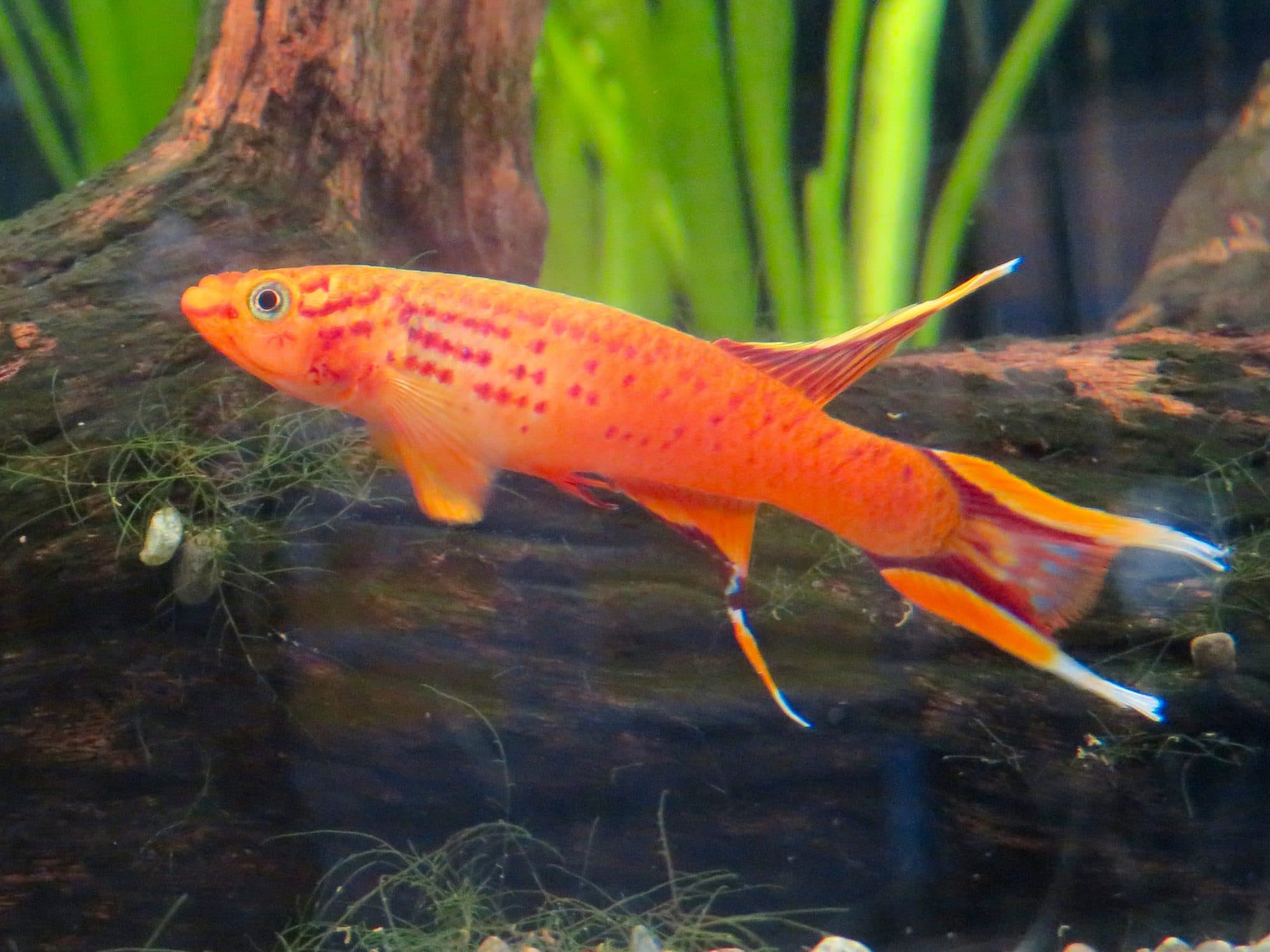
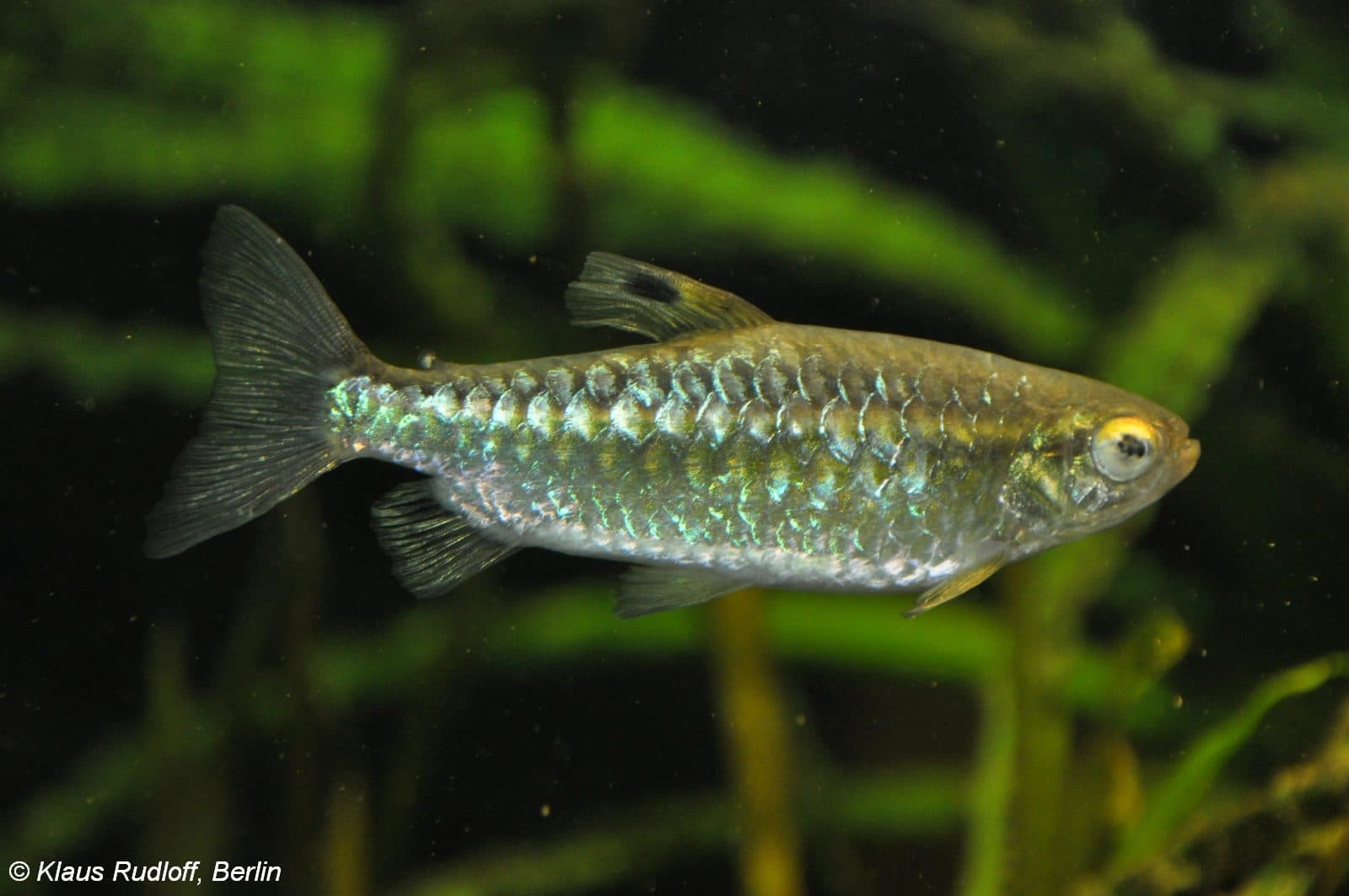
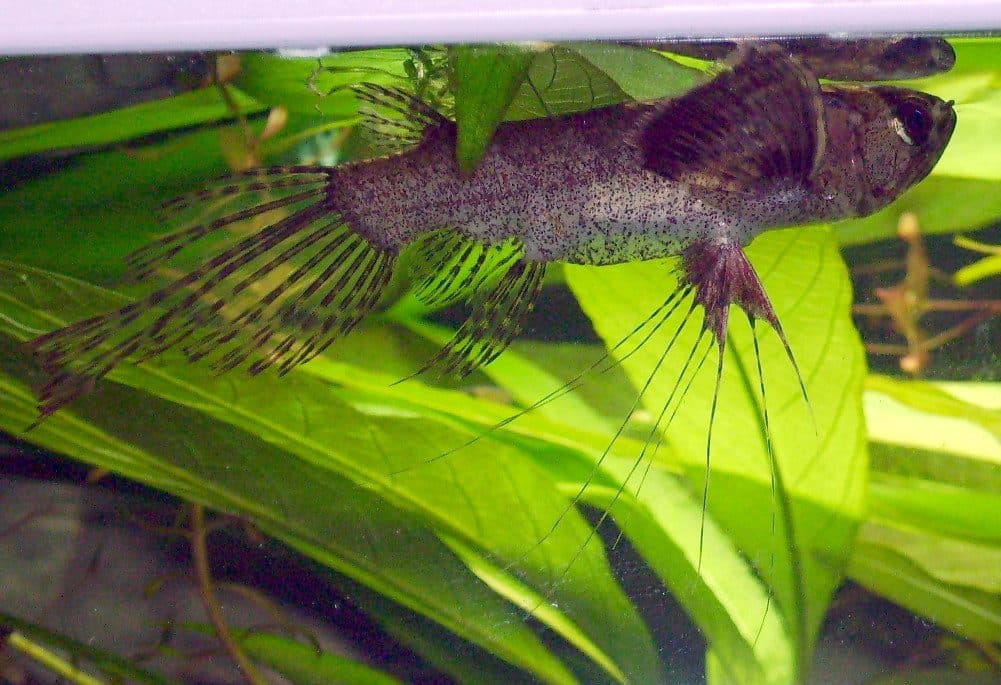
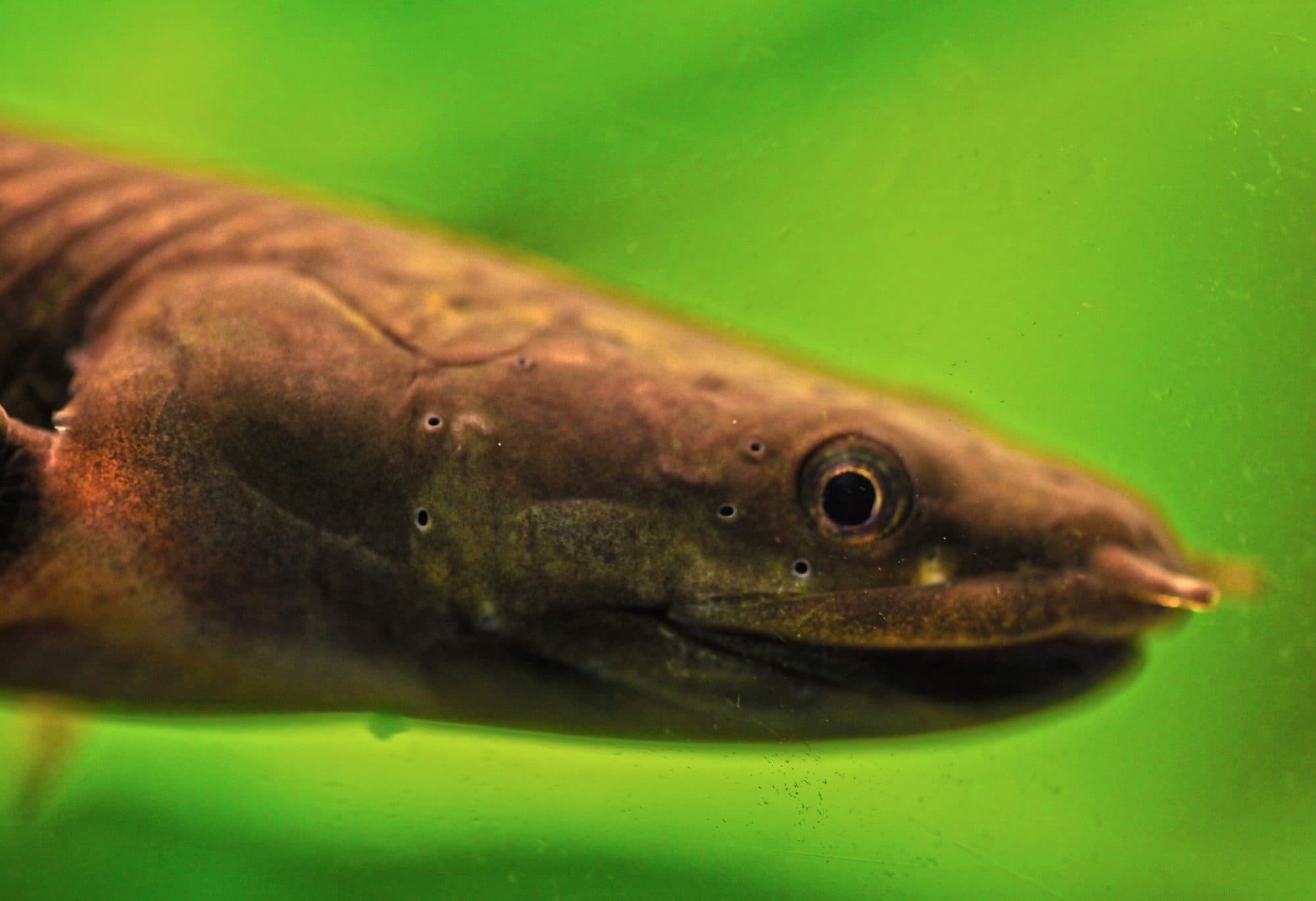
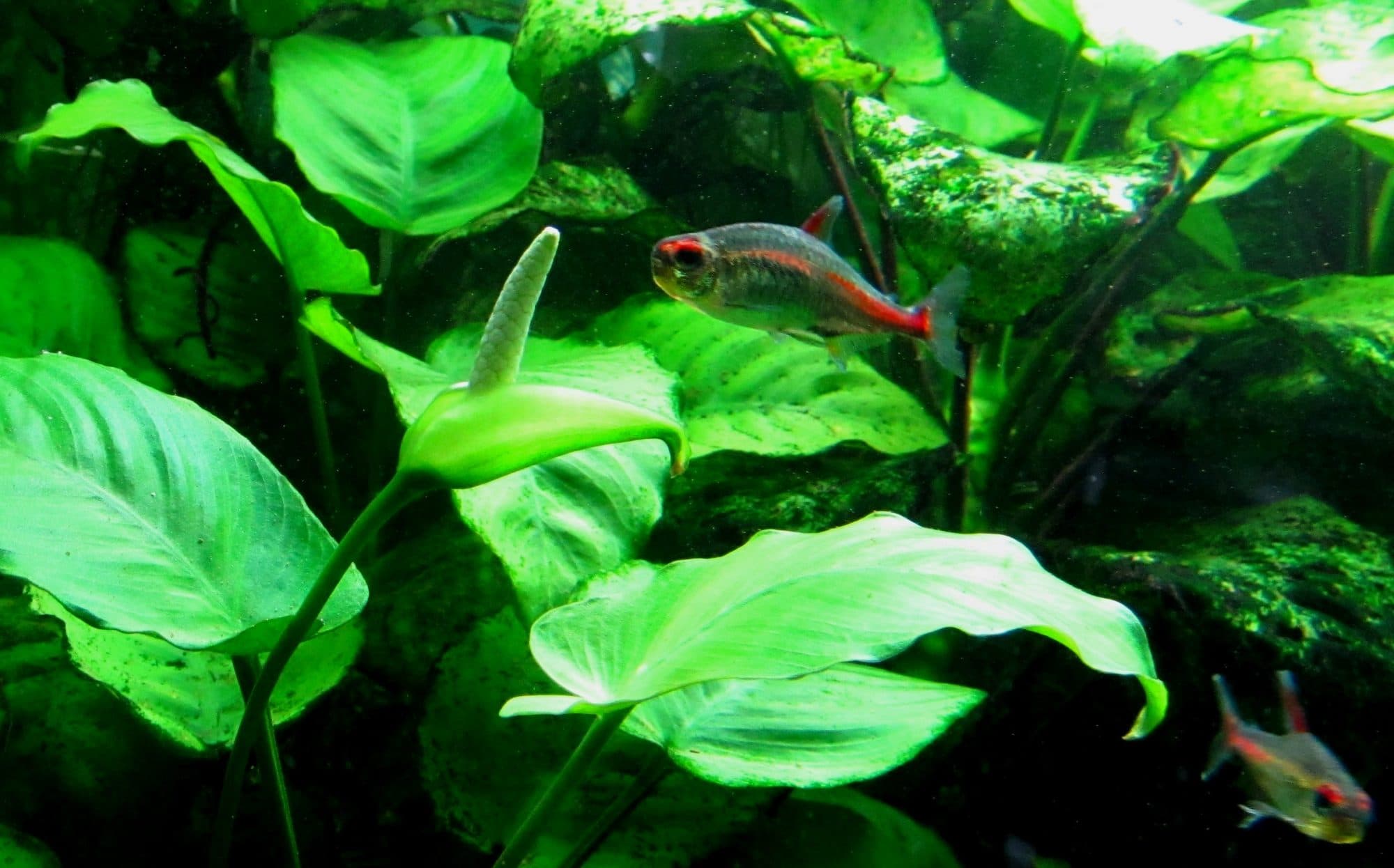
The kribensis (Pelvicachromis pulcher) and its cousin P. taeniatus spawn in caves and guard their fry. The killifish Fundulopanchax gardneri and F. sjostedti, and Aphyosemion australe further south, live in the calm forest waters. The African red-eyed tetra shoals in the streams of south-western Nigeria, the butterflyfish lies in wait for insects at the surface, and the reedfish, an elongated bichir, searches vegetated bottoms.
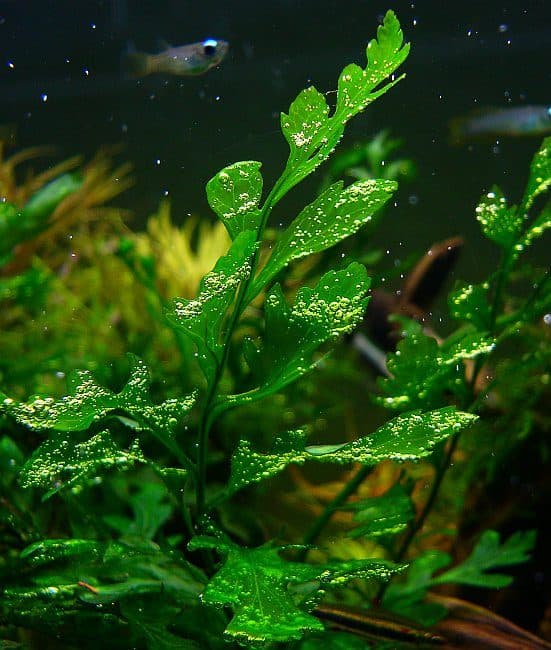
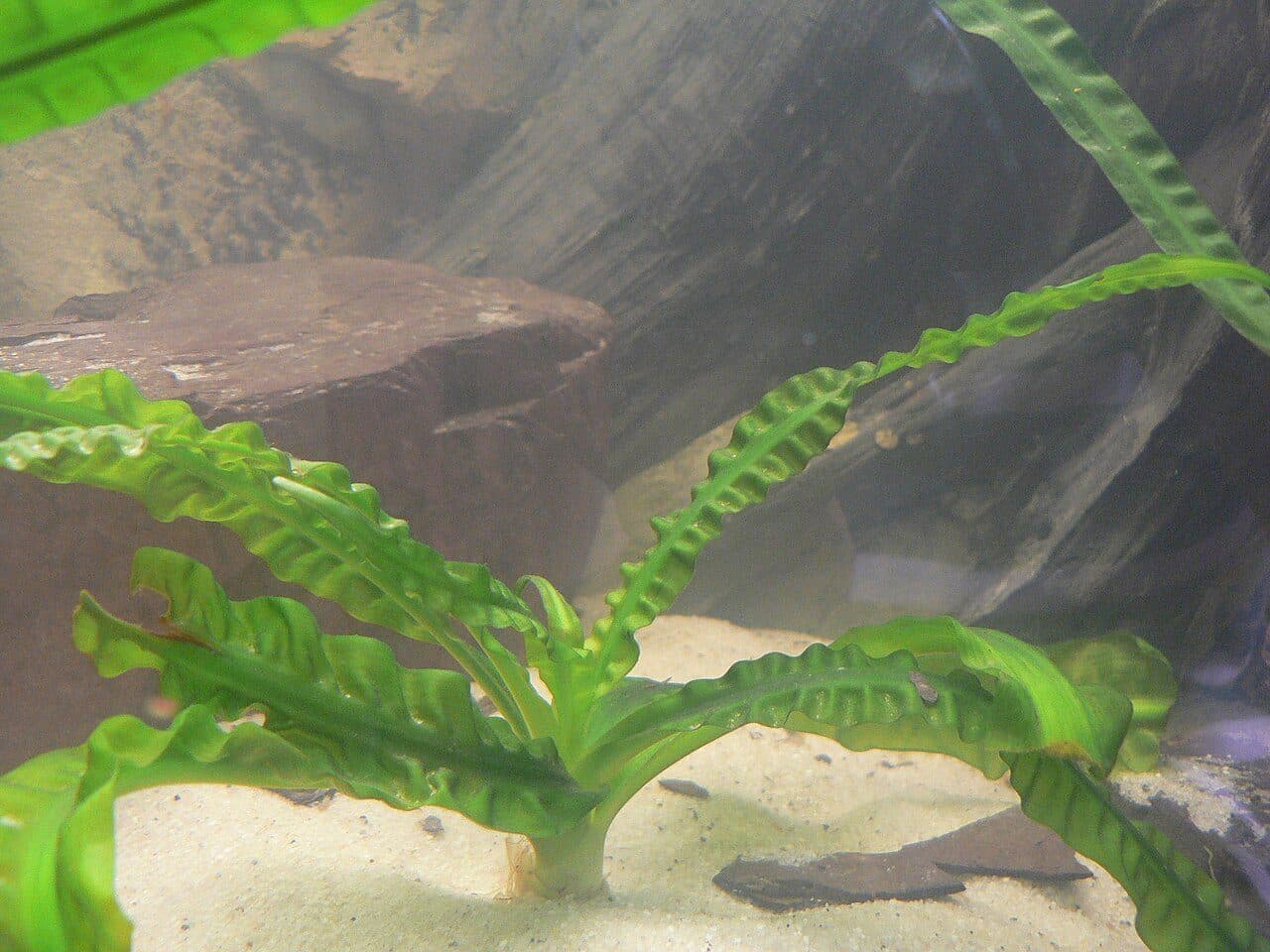
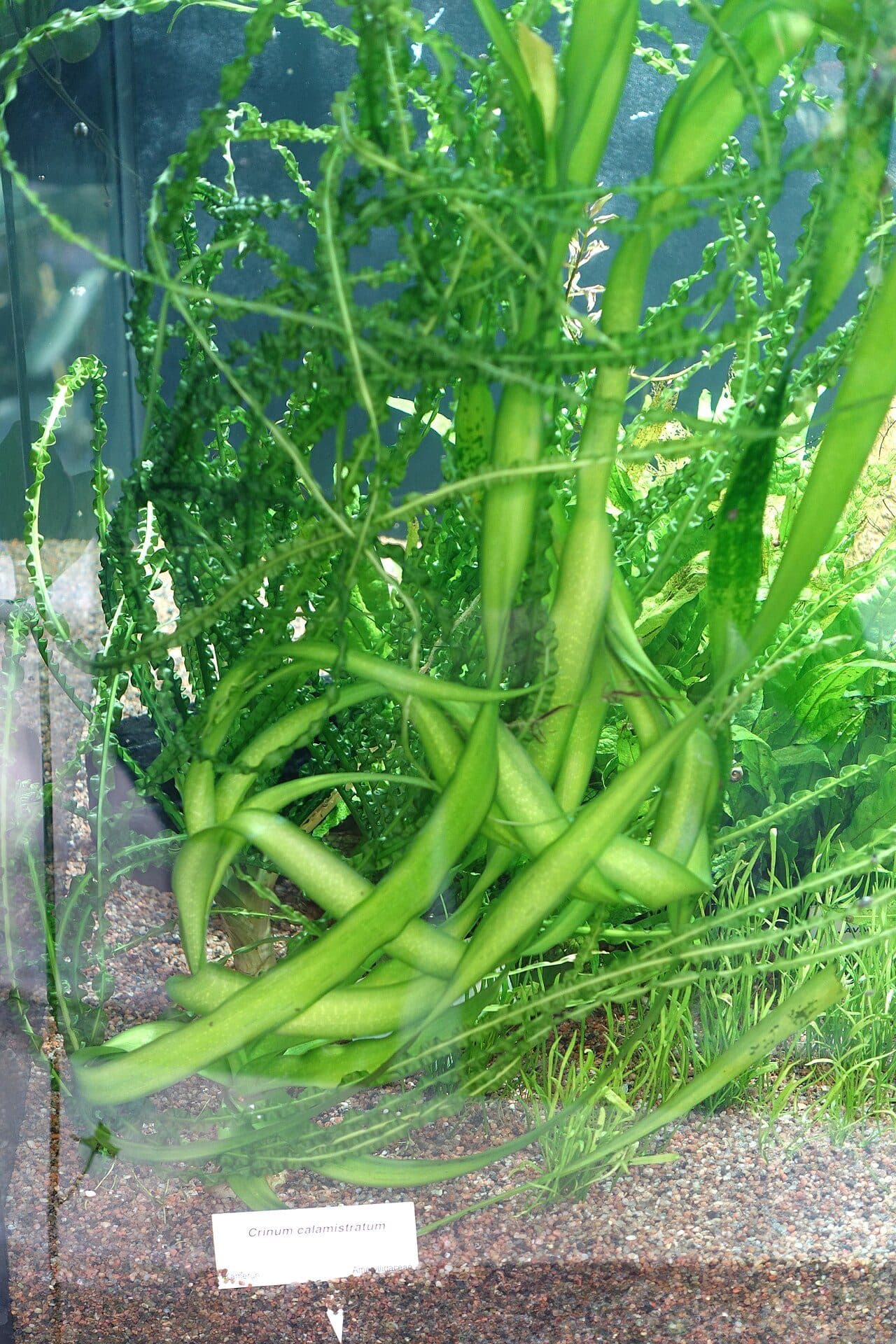
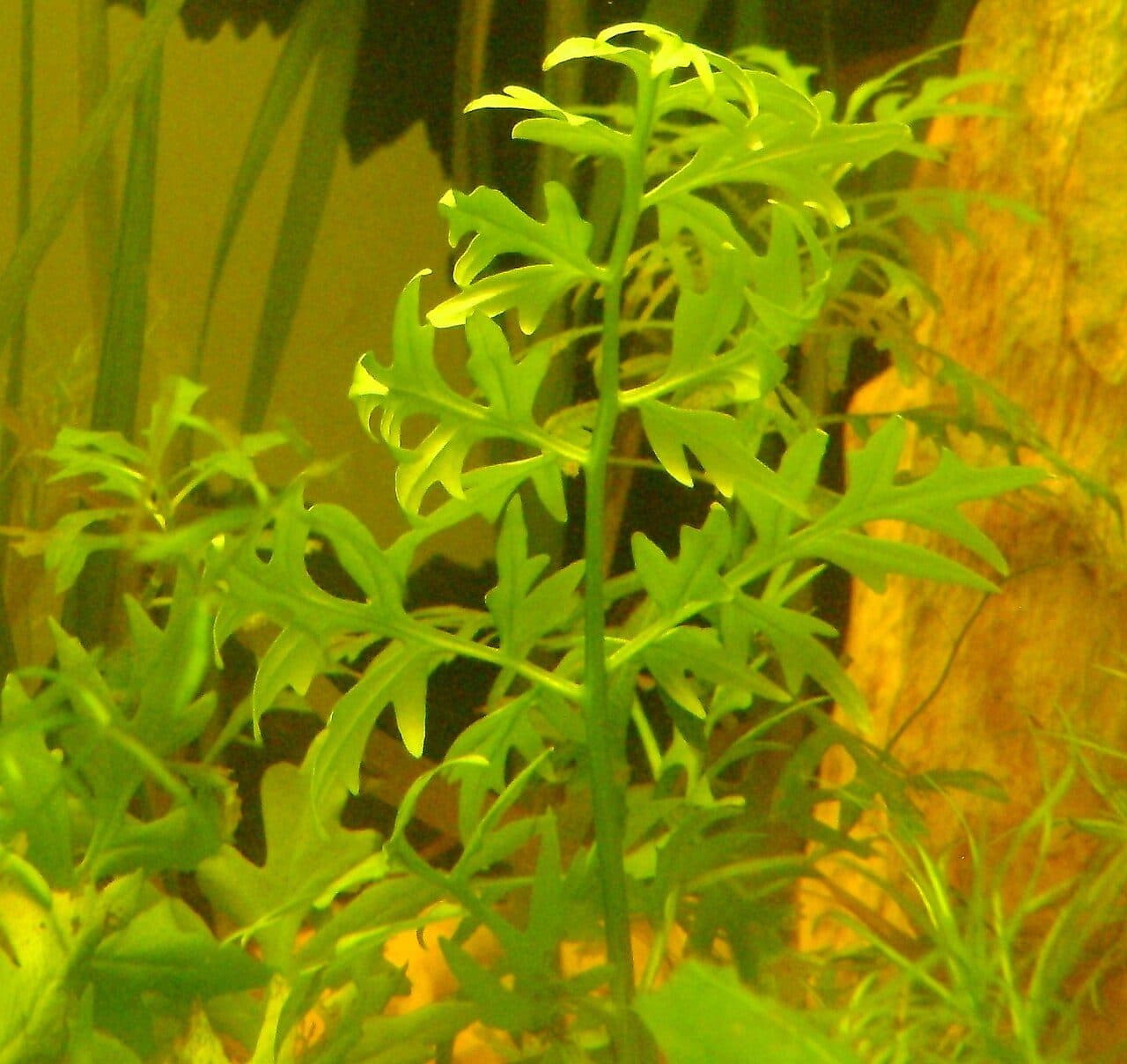
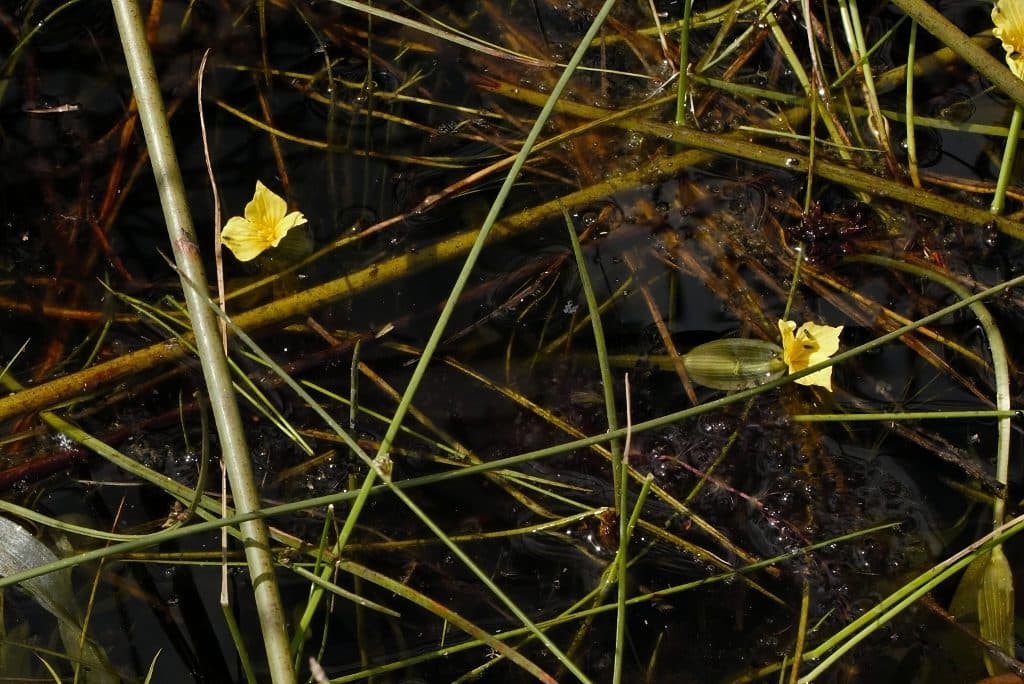
Dwarf anubias, Bolbitis heudelotii and Crinum natans, which grows in the mud of permanent streams, are recorded in Cameroon according to GBIF; Crinum calamistratum is known only from rivers in Cameroon. The water fern Ceratopteris cornuta and Ottelia ulvifolia, with broad wavy leaves, grow in the calm waters of the region.
Fish (8)
Plants (6)
Recreating it in an aquarium
- A sand bottom, stones and roots; anubias and Bolbitis are tied to the hardscape rather than planted.
- Soft, slightly acidic to neutral water (pH 6 to 7), between 24 and 26 °C.
- A strong current in part of the tank for the fan shrimp, and fine food in suspension.
- Caves (coconut shells, upturned pots) if you keep Pelvicachromis, which defend a territory around them.
- A lid: killifish and the butterflyfish jump.
Example tank
- Volume
- 200 L
- pH
- 6.9
- GH
- 4°
- Temp.
- 25 °C
- 10 × African red-eyed tetra
- 4 × Steel-blue killifish
- 3 × African fan shrimp
- Dwarf anubias
- African water fern
- Crinum natans
A 200 L tank: a shoal of African red-eyed tetras, a harem of Gardneri killifish (one male and three females), three fan shrimp, dwarf anubias, Bolbitis and a Crinum natans. The territorial kribensis would harass these peaceful species: it does better in a tank of its own.
Compatible stocking
Water shared by all species
- pH
- 6.8–7
- GH
- 1–5°
- Temp.
- 24–26 °C
Good to know
- Biotope tank: every species comes from Africa.
- No breeding in fresh water for African fan shrimp: the larvae need brackish or sea water.
Tanks recreating it
Aquarists present their tanks on video, often modelled on one precise site. The videos are hosted by YouTube, and the player only loads when you click.
Biotope Aquarium · YouTube
BIOTOPE AQUARIUM Project · YouTube
Sources
Species are listed from their profiles (FishBase, Seriously Fish) or, for plants, from GBIF records in the region; the example tank is checked by the simulator's rules.