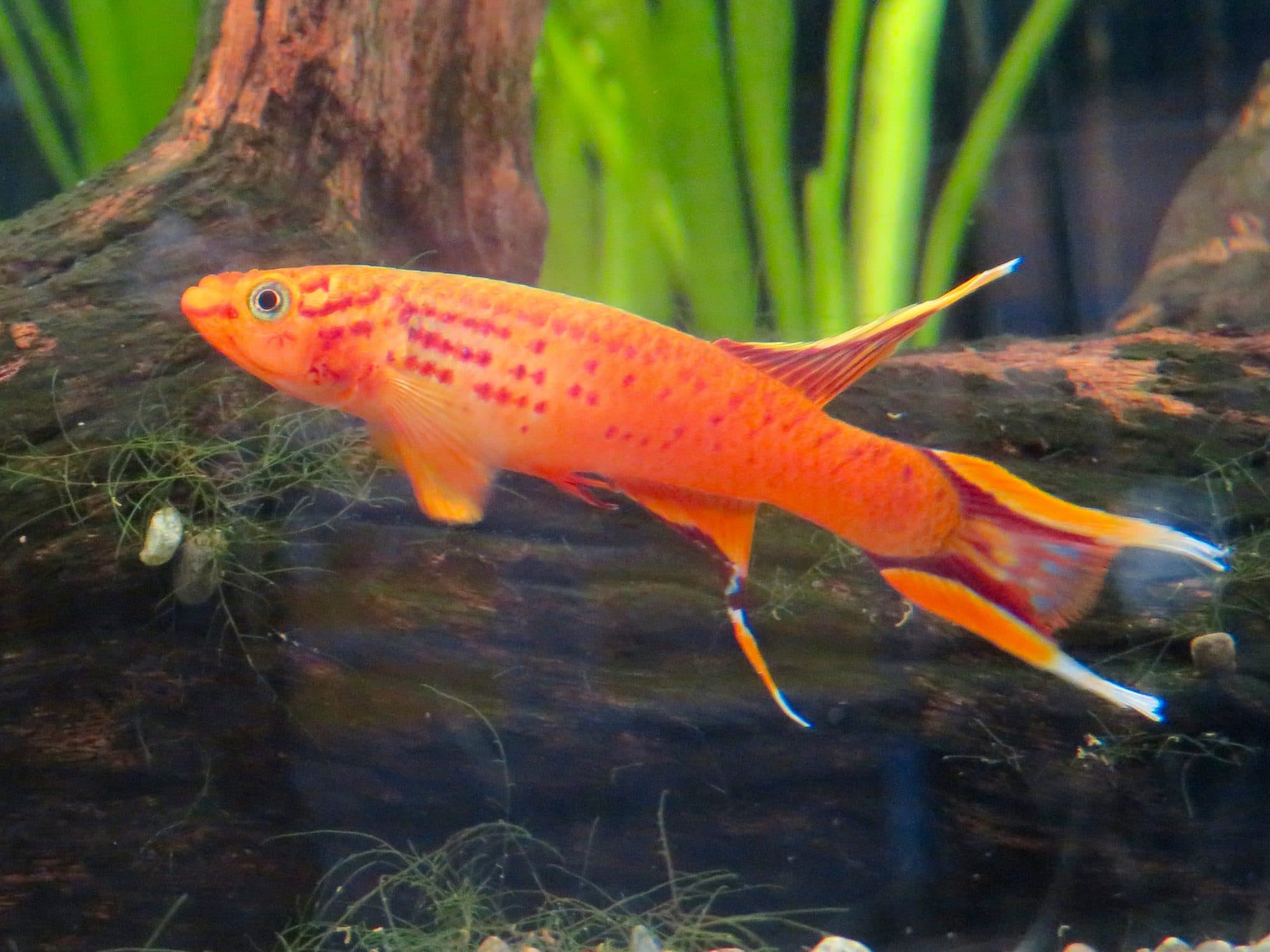
Photo: KKPCW, CC BY-SA 4.0, via Wikimedia Commons
Lyretail killifish (Cape Lopez)
Aphyosemion australe
6 cm
Adult size
20 L
Minimum volume
2
Minimum group
3 years
Lifespan
Water parameters
Understand these values- Genus
- Aphyosemion
- Diet
- carnivore
- Social life
- pair
In the wild
Overview
Described in 1921 by the German aquarist Arthur Rachow, the Cape Lopez killi takes its common name from its type locality, Cape Lopez, near the mouth of the Ogooué in Gabon; australe (“southern”) recalls that it was then the southernmost Aphyosemion known.
One of the first killis to become popular, it remains ideal for beginners: beautiful and easy to breed, it often lives more than three years. Orange, gold, chocolate or albino aquarium strains exist, alongside wild populations labelled by place and year of collection.
- Scientific name
- Aphyosemion australe (Rachow, 1921)
- Classification
- Cyprinodontiformes › Nothobranchiidae
- IUCN Red List
- Least concern (LC)
Natural habitat
Coasts of Gabon and the Congo (Cape Lopez area), up to Cameroon and Cabinda (Angola)
Observations (GBIF) and localities Native countries Rivers and lakes
It lives in the coastal lowlands of Gabon and the Congo, and is also reported from Cameroon and Cabinda (Angola).
It inhabits permanent waters, marshes and small forest streams, in soft, slightly acidic water; it is not an annual killi.
Behaviour
Very peaceful and shy, it can live in a community aquarium if its companions are carefully chosen: small characins, rasboras, dwarf cichlids, corydoras, small loricariids. The males, with lyre-shaped fins edged in white and orange, display without doing much harm.
It prefers small live or frozen prey, but aquarium-bred fish also accept flakes. It “hangs” its eggs among fine-leaved plants or a spawning mop, even in a small tank.
Sources:FishBase Seriously Fish GBIF · Base map: Natural Earth