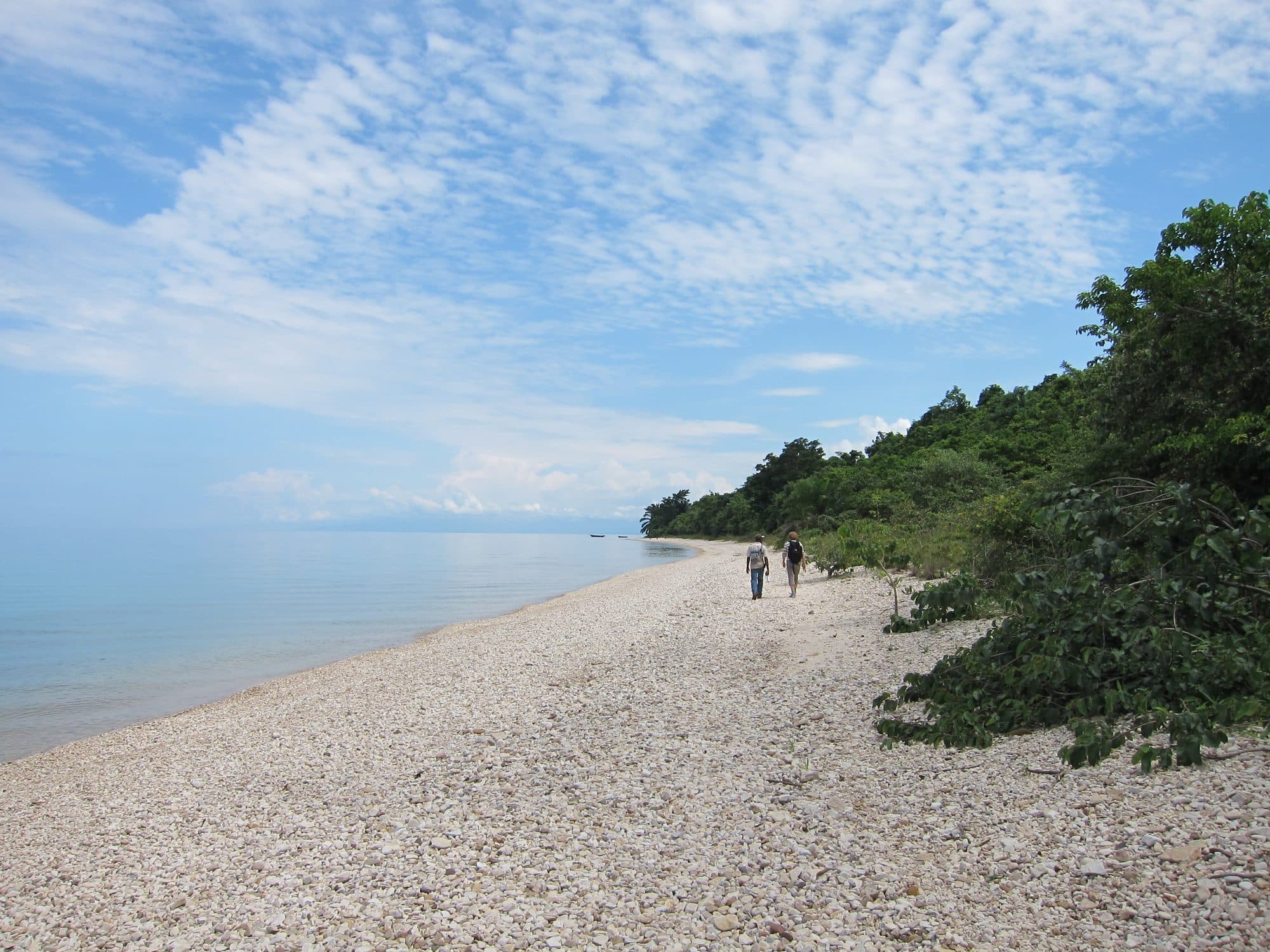
The lakeshore in Gombe Stream National Park, Tanzania: pebbles, clear water and forest down to the edge.
Photo: fabulousfabs, CC BY 2.0, via Wikimedia Commons
Great Rift lake
Lake Tanganyika, the rocky shores
Tanzania, DR Congo, Burundi, Zambia
One of the oldest lakes in the world: very hard, alkaline water, rock rubble where Tropheus, Julidochromis and lamprologines live, and shoals of Cyprichromis in open water.
The habitat
Lake Tanganyika stretches for nearly 670 km along the African Rift, between Tanzania, the Democratic Republic of the Congo, Burundi and Zambia. Nearly 1,500 m deep, it is the second deepest lake in the world after Baikal, but only its surface waters hold enough oxygen for fish.
Its shores alternate sandy beaches, plant beds, beds of empty shells and rocky coasts. On the latter, boulders and slabs pile up to several tens of metres deep, and each species has its own zone: the algae-covered surface of the rocks, the cracks, the caves or the open water above.
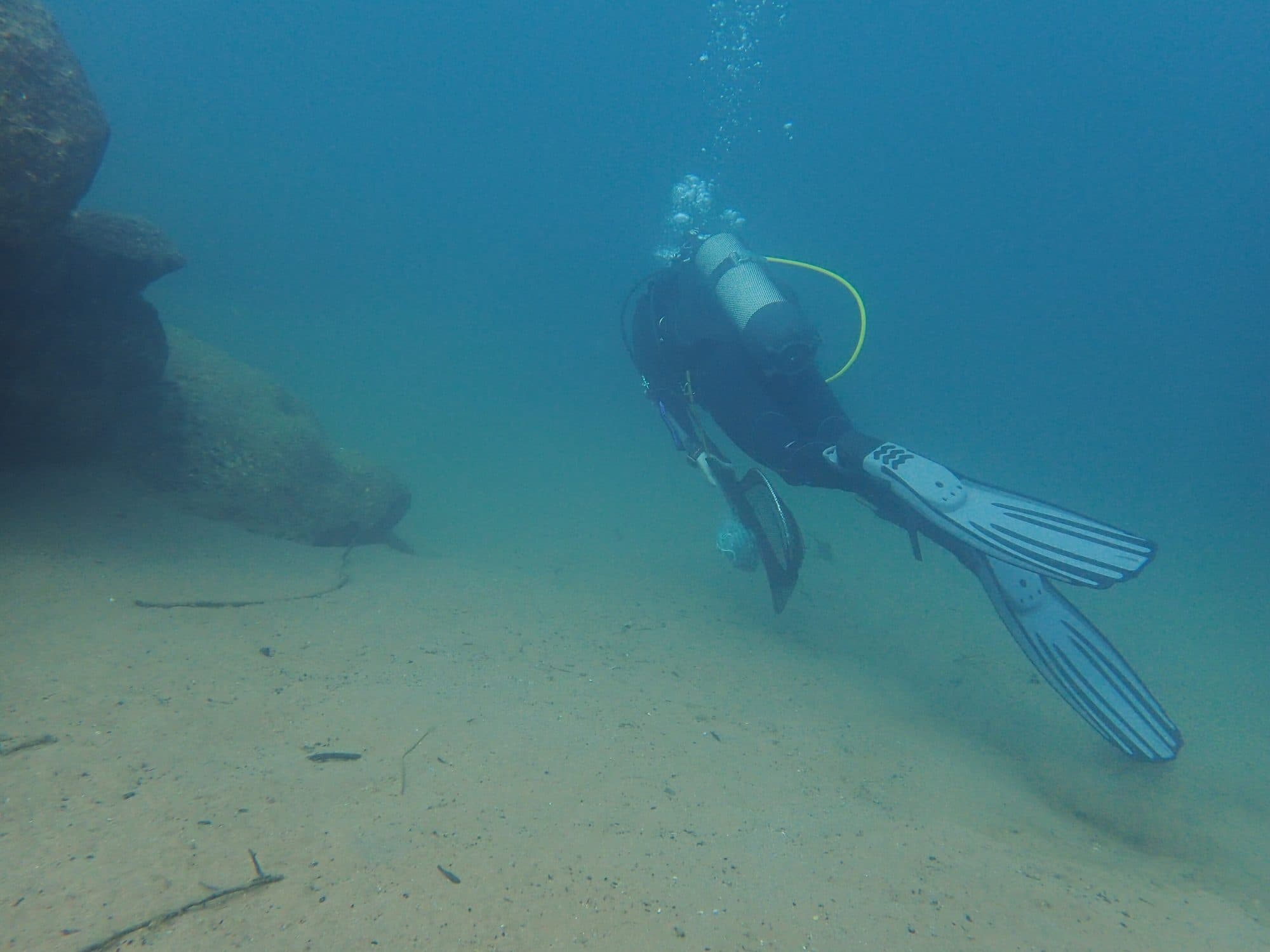
Scientific dive over a sand and rock bottom in the lake.
Photo: Cethuyghe, CC BY-SA 4.0, via Wikimedia Commons
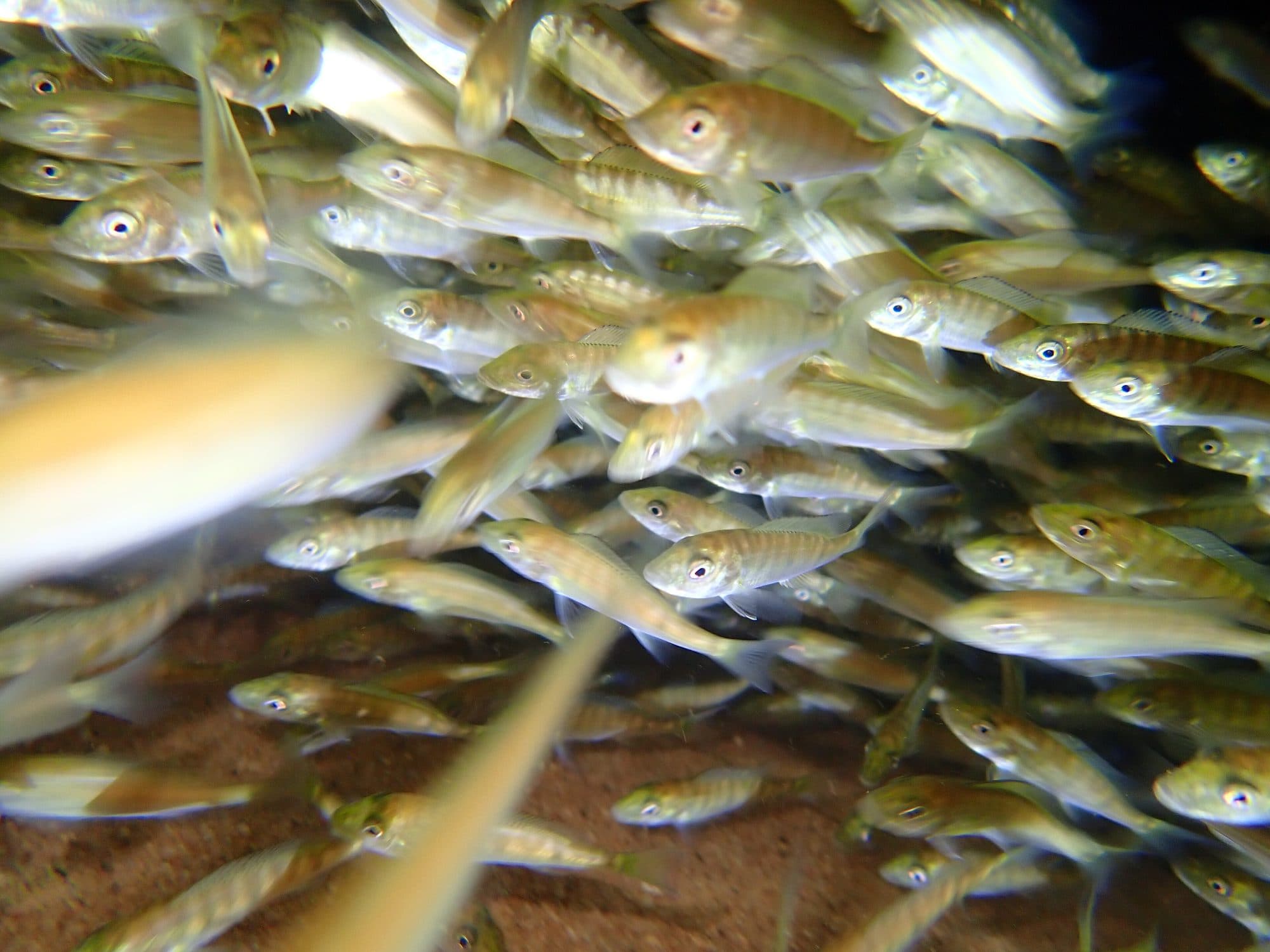
Young Boulengerochromis microlepis, the largest cichlid in the world, leave their nest at night under their parents' guard.
Photo: Cethuyghe, CC BY-SA 4.0, via Wikimedia Commons
The water
According to Talling and Talling (1965), the surface water has a conductivity of 606 to 620 µS/cm, three times that of Lake Malawi. It is very rich in magnesium: 10.4 to 12.5 °dGH for a carbonate hardness of 16.9 to 19.1 °dKH. Plisnier and colleagues (1996) measured a mean surface pH of 9.01 to 9.06 over a year, at Bujumbura, Kigoma and Mpulungu.
The lake water is also very stable and almost free of nitrate. In the aquarium, the main things to reproduce are the high pH and the hardness, with regular water changes: these cichlids tolerate nitrogen waste poorly.
Who lives here
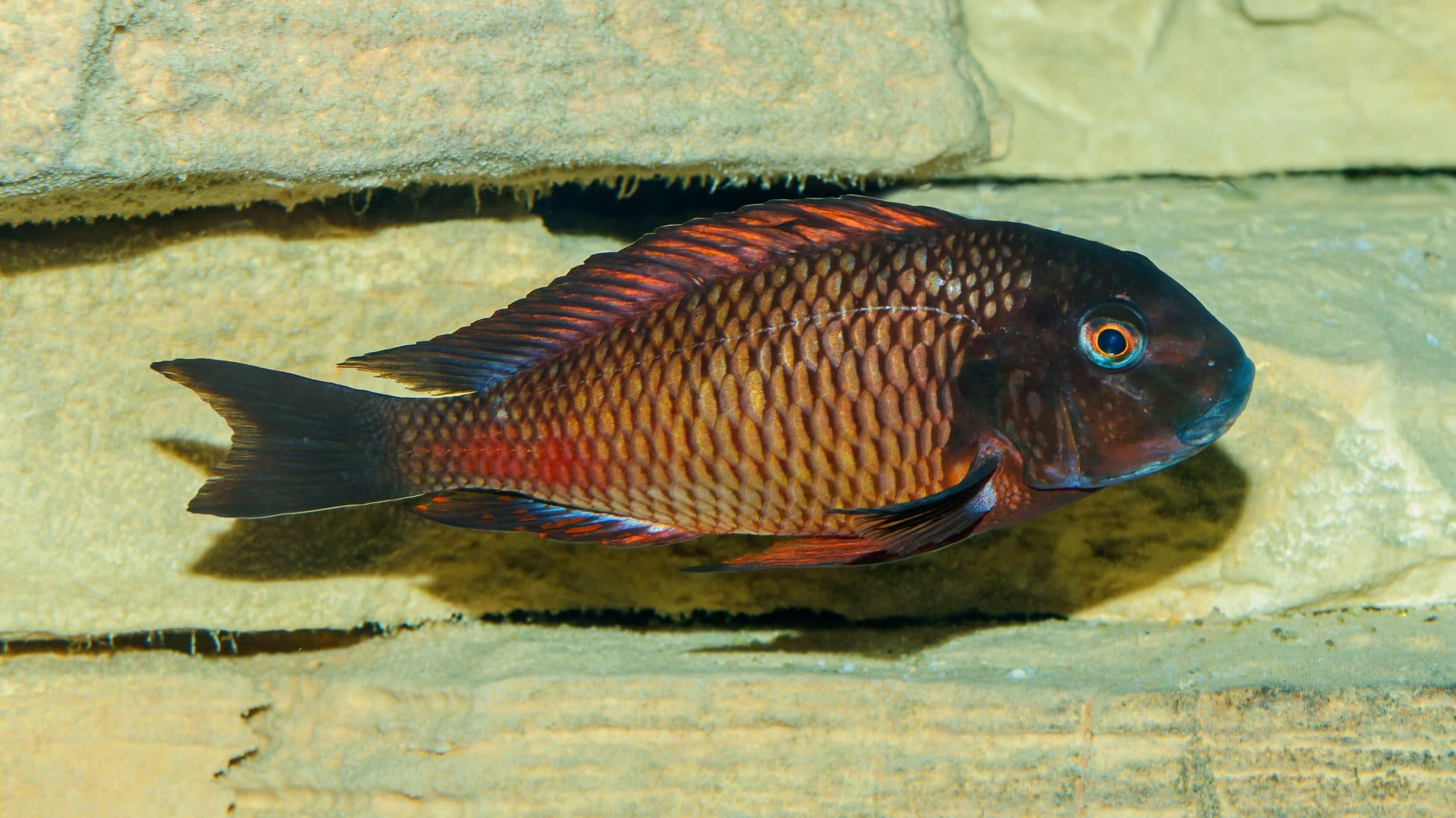
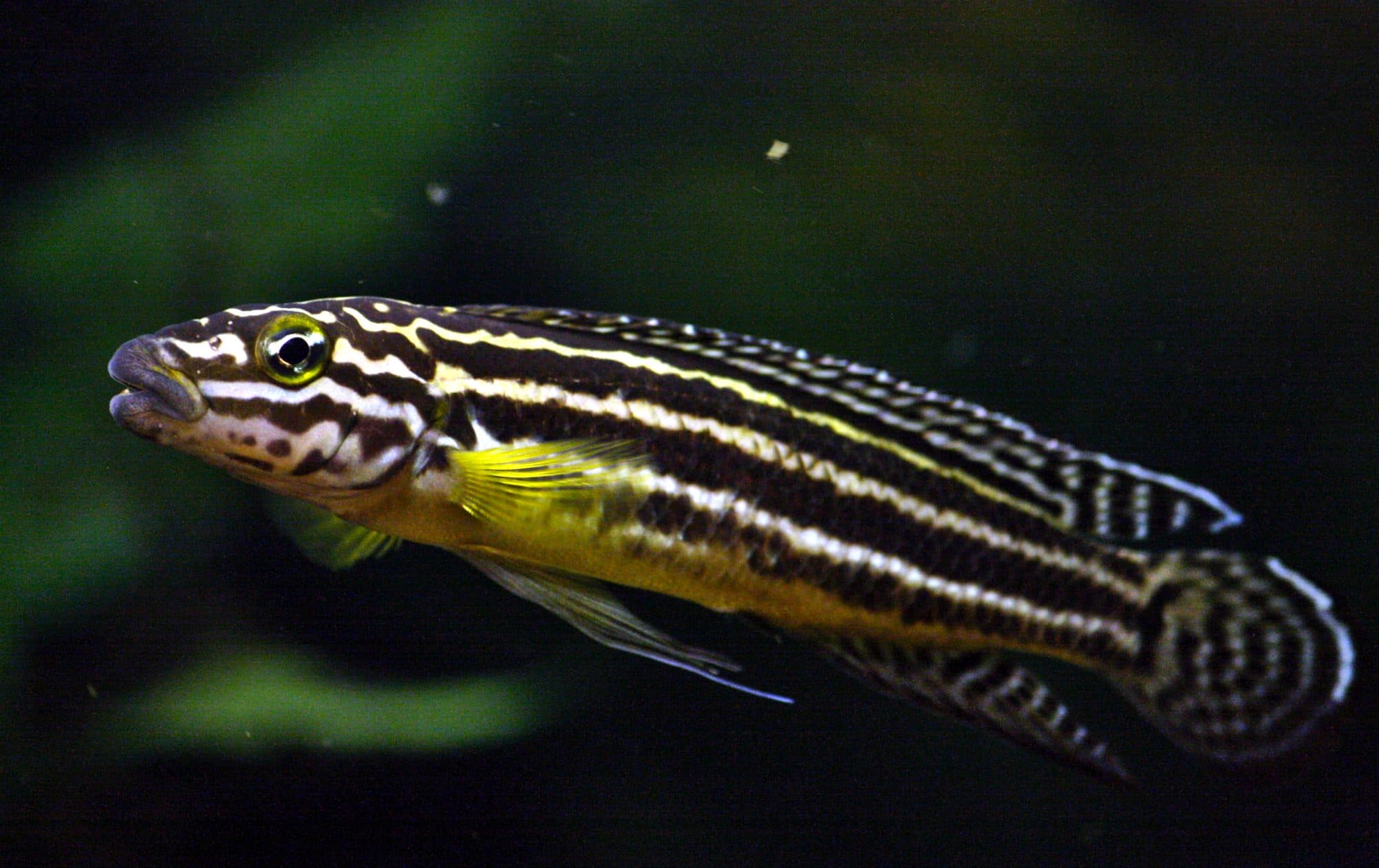
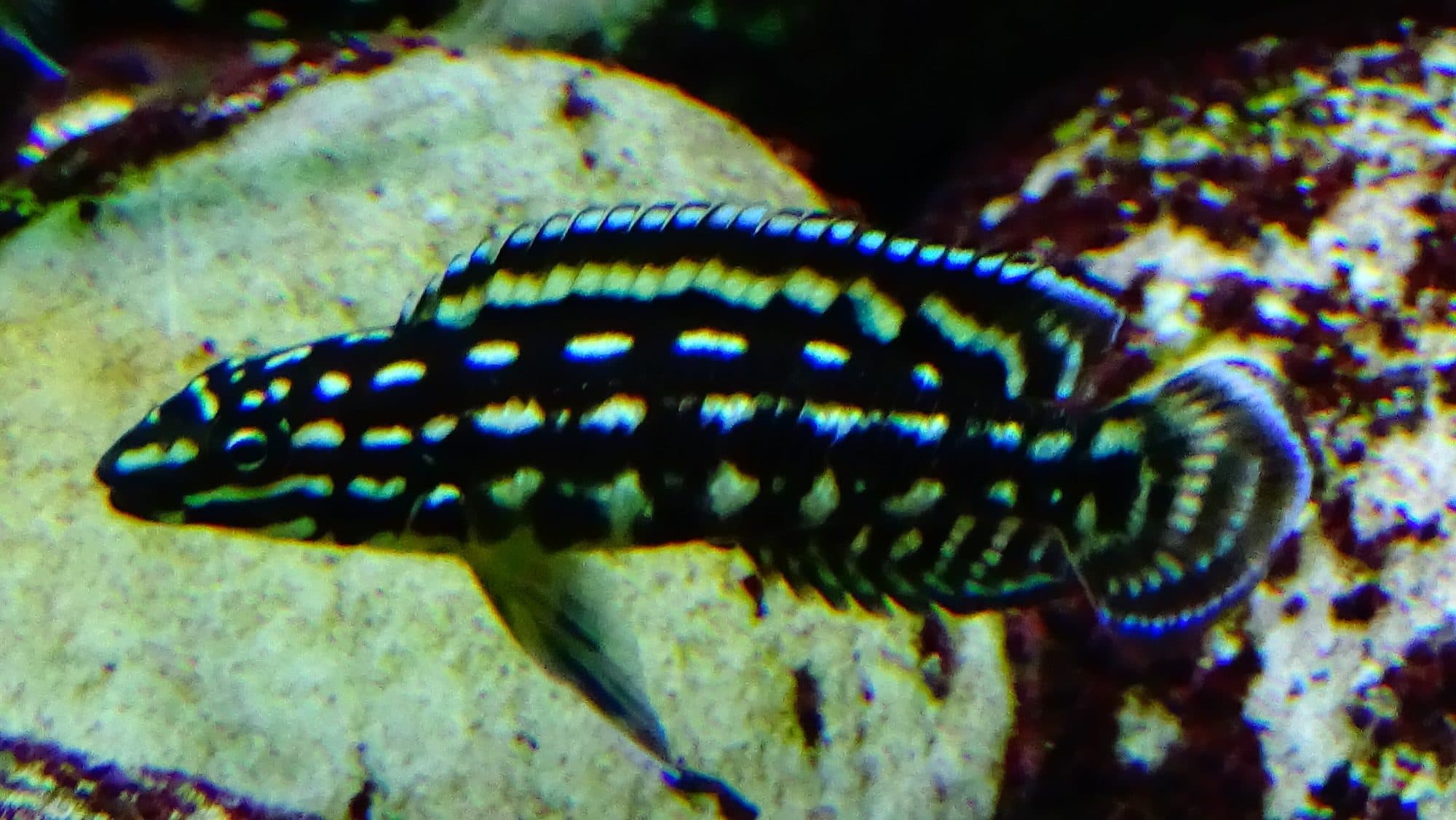
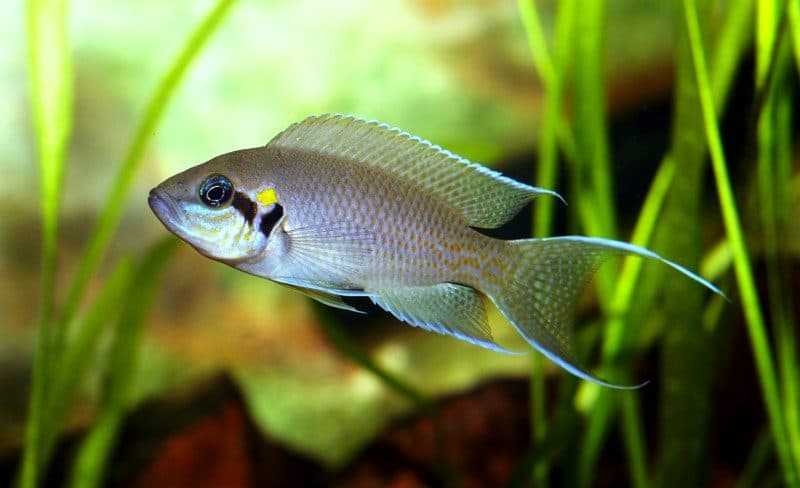
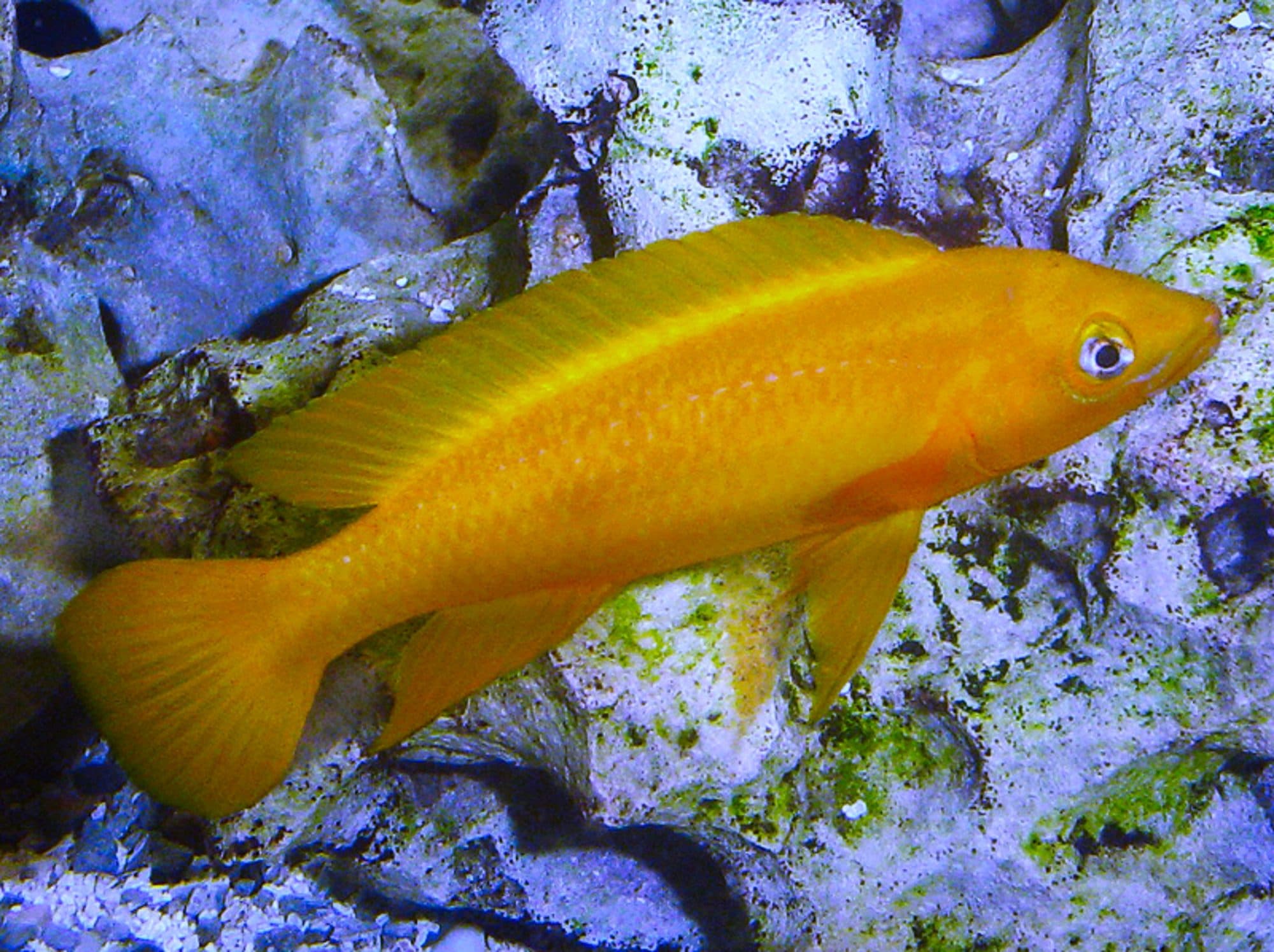
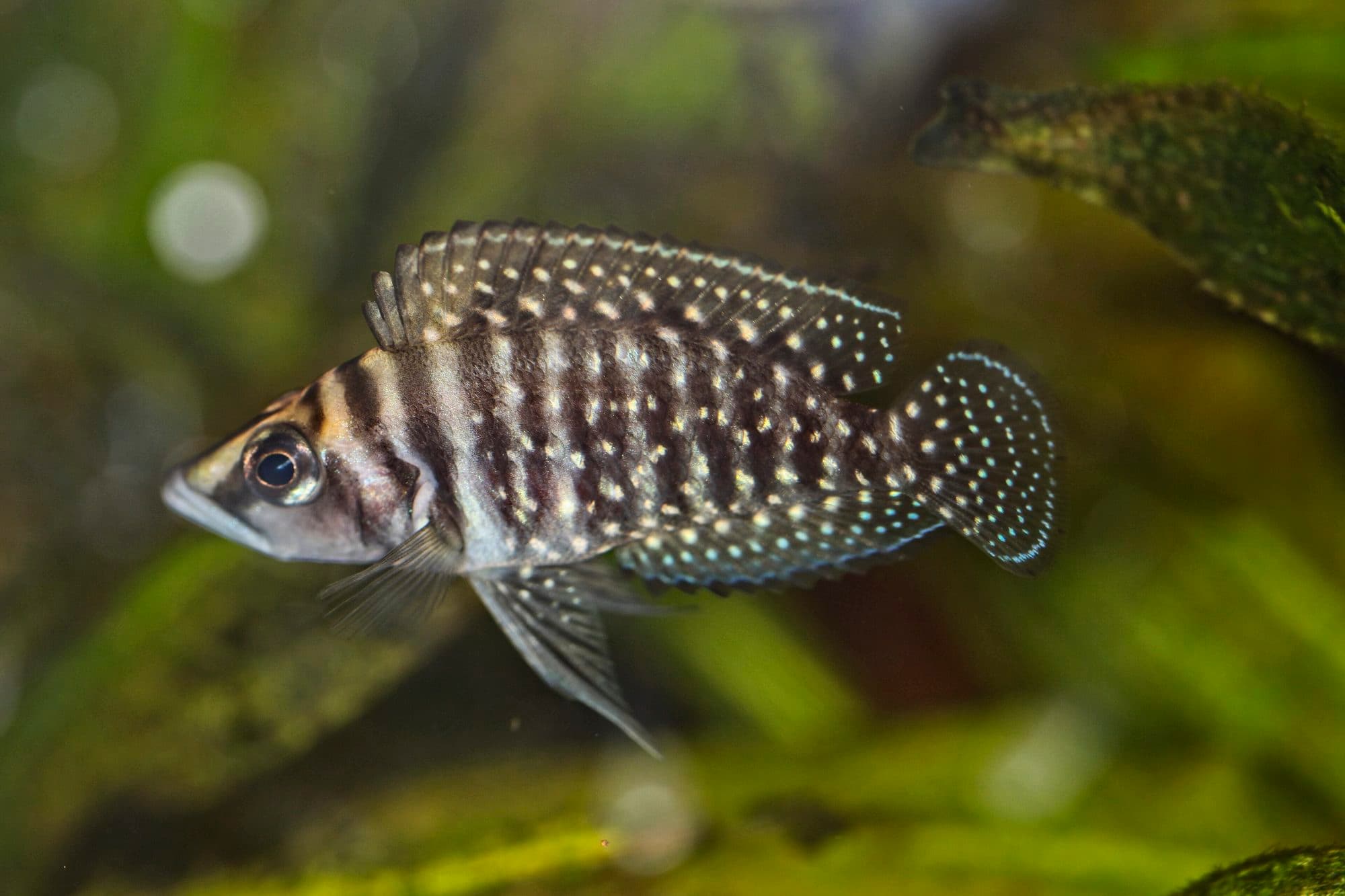
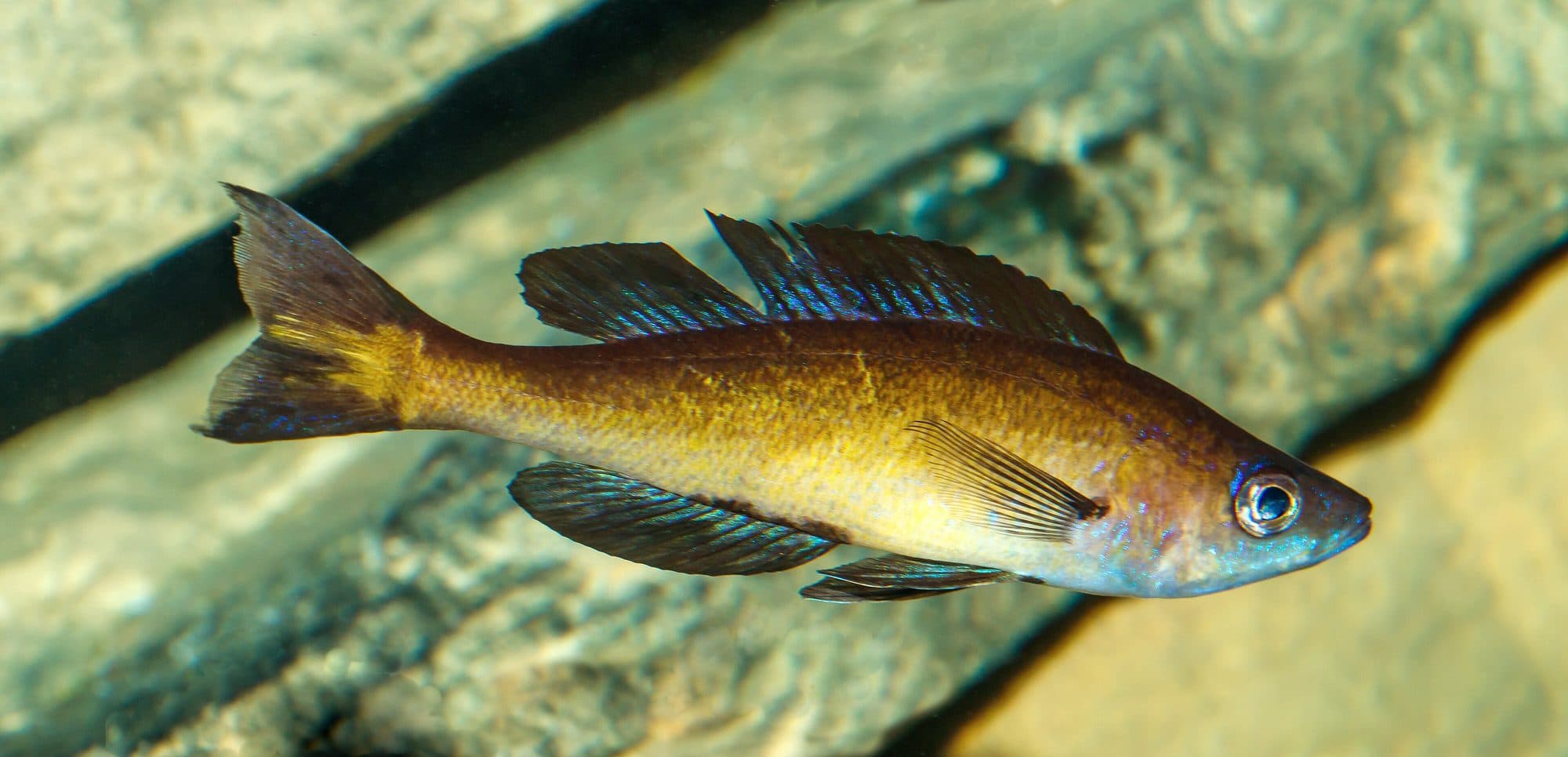
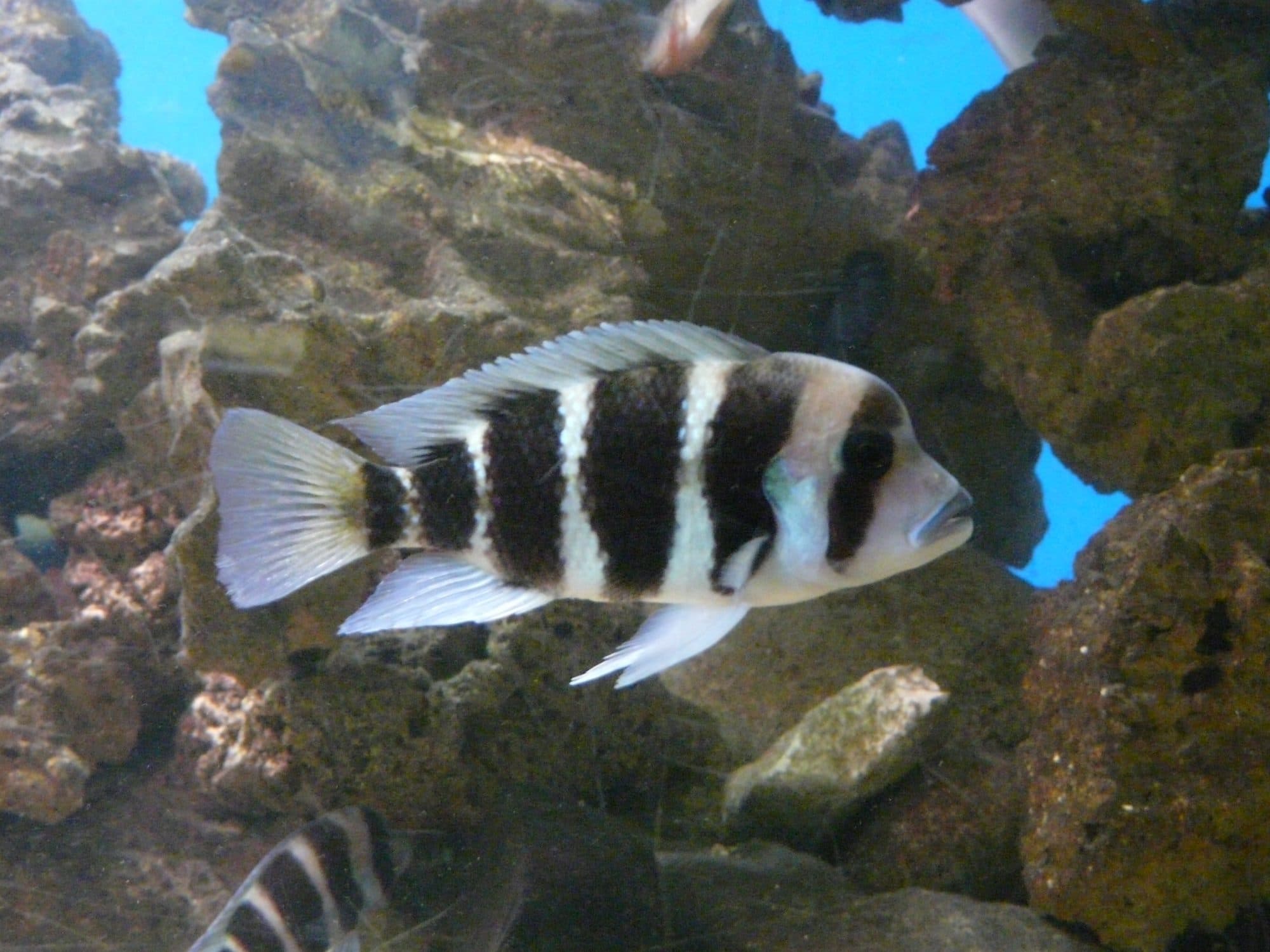
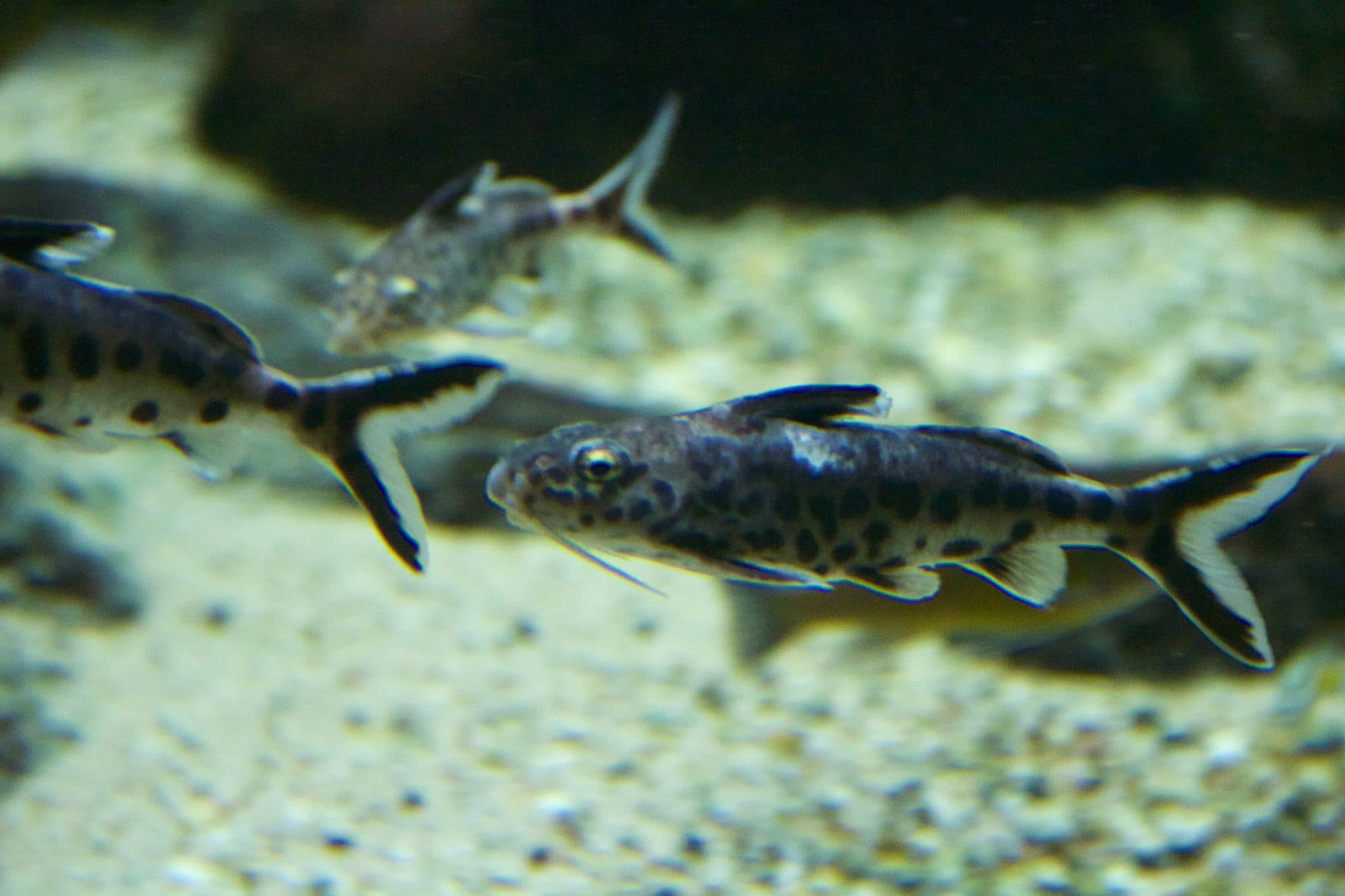
Tropheus graze the algae film of shallow rocks in groups. Julidochromis and the lemon cichlid (Neolamprologus leleupi) slip into the cracks, the fairy cichlid (N. brichardi) lives in colonies where the young of earlier broods help guard the fry, and the very flat Altolamprologus calvus hunts in the crevices. Cyprichromis leptosoma shoals in open water along the drop-offs, the frontosa (Cyphotilapia frontosa) lives deeper, and Synodontis petricola, a small catfish, hides among the rocks.
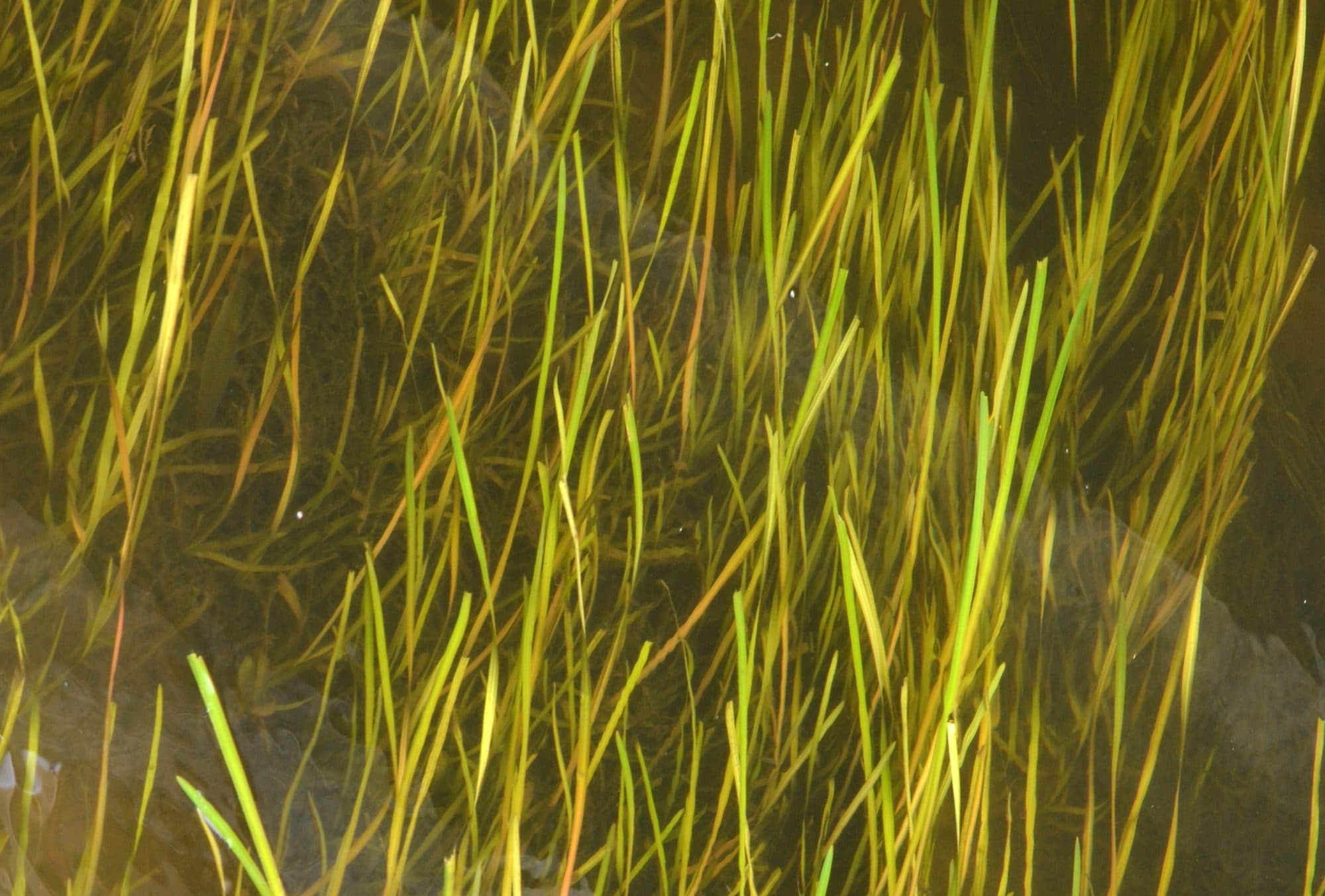
Beds of Vallisneria grow in sheltered bays and are recorded around the lake according to GBIF. The lake also holds endemic shrimps, crabs and snails, but none is in the catalogue.
Recreating it in an aquarium
- Rocks stacked securely up to the top of the tank, with narrow cracks for Julidochromis and lamprologines, and fine sand on the bottom.
- Hard, alkaline water, pH 8 to 9, 24 to 27 °C; coral sand or Rift lake salts help hold the pH and hardness.
- Few fish for the volume, and species from different zones (cracks, rock surface, open water) to spread out the territories.
- Frequent water changes and medium lighting, which lets algae grow on the rocks.
Example tank
- Volume
- 300 L
- pH
- 8.5
- GH
- 12°
- Temp.
- 25 °C
- 2 × Regan's julie
- 2 × Lemon cichlid
- 2 × Calvus
- 4 × Pygmy leopard catfish
A 300 L tank: a pair of Julidochromis regani, a pair of lemon cichlids, a pair of Altolamprologus calvus and four Synodontis petricola, in water at pH 8.5, 12 °dGH and 25 °C. Vallisneria is left out: its profile does not go above pH 8.
Compatible stocking
Water shared by all species
- pH
- 7.5–8.5
- GH
- 10–20°
- Temp.
- 24–27 °C
Good to know
- Biotope tank: every species comes from Africa.
Tanks recreating it
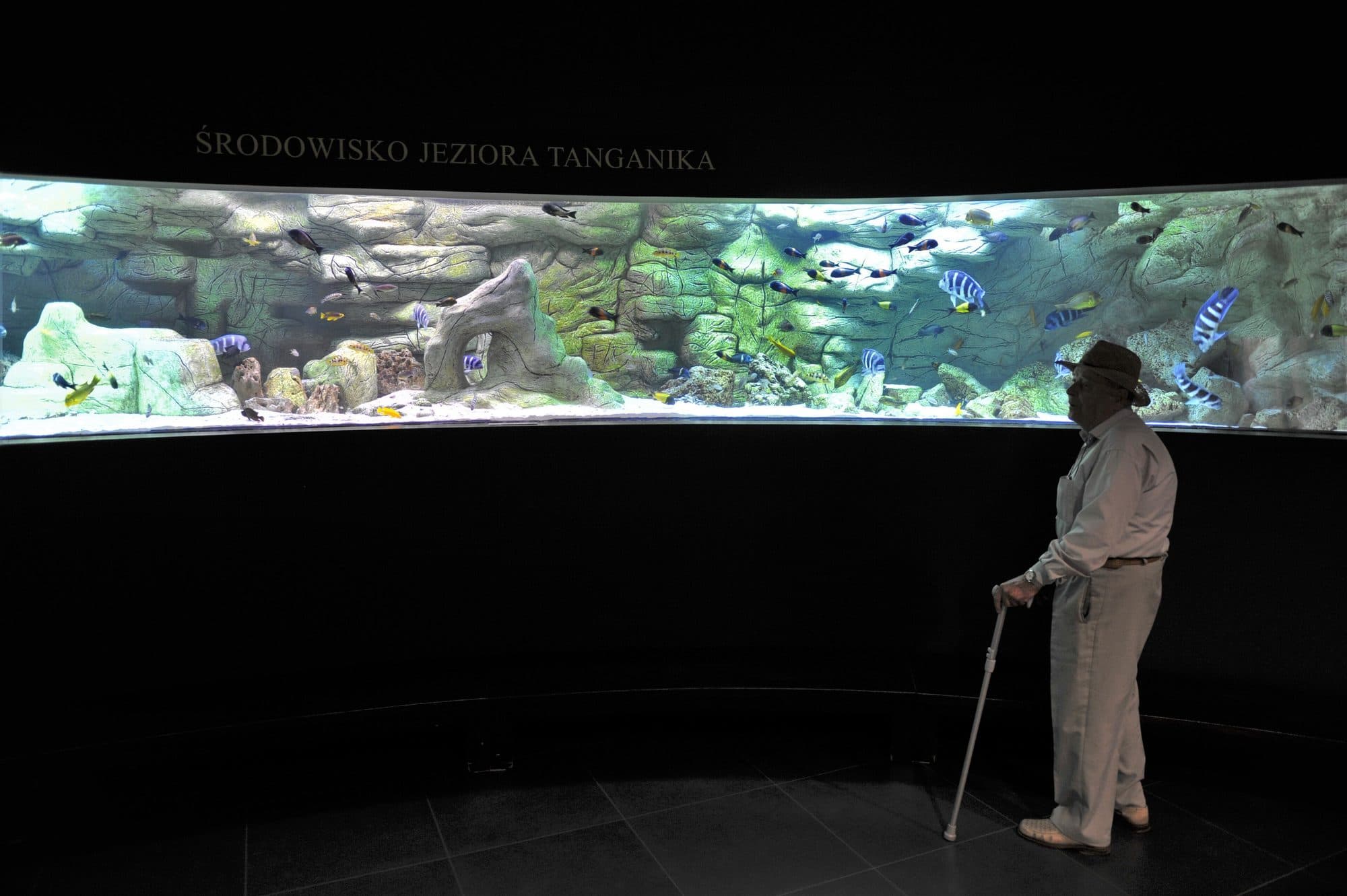
The large Lake Tanganyika tank of the Gliwice palm house, Poland: stacked rocks and frontosas.
Photo: Jarosław Roland Kruk, CC BY-SA 4.0, via Wikimedia Commons
Aquarists present their tanks on video, often modelled on one precise site. The videos are hosted by YouTube, and the player only loads when you click.
Biotope Aquarium · YouTube
Biotope Aquarium · YouTube
Sources
Species are listed from their profiles (FishBase, Seriously Fish) or, for plants, from GBIF records in the region; the example tank is checked by the simulator's rules.
- Talling & Talling (1965), The chemical composition of African lake waters. Internationale Revue der gesamten Hydrobiologie 50(3): 421-463, with the Lake Tanganyika pH of Plisnier et al. (1996, LTR Technical Document TD/46), tables reproduced by M. K. Oliver, Malawi Cichlid Homepage
- Seriously Fish: Julidochromis regani
- Seriously Fish: Altolamprologus calvus
- GBIF occurrences: Vallisneria spiralis, Lake Tanganyika