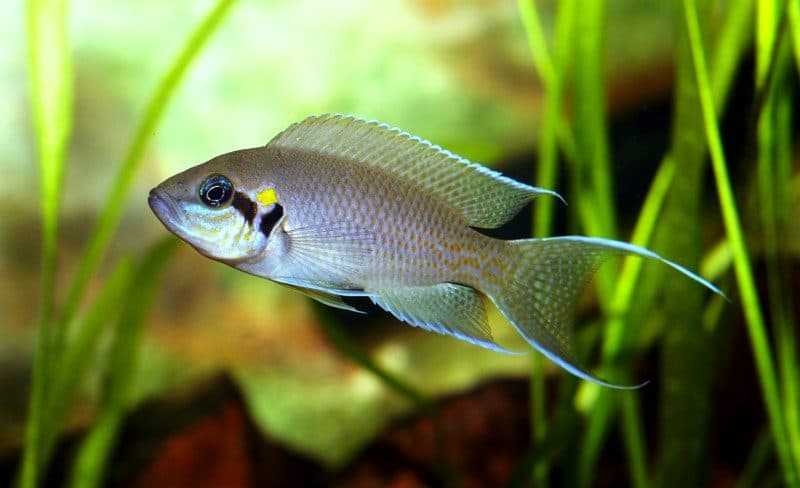
Photo: Przemysław Malkowski, CC BY-SA 3.0, via Wikimedia Commons
Princess of Burundi
Neolamprologus brichardi
8 cm
Adult size
200 L
Minimum volume
5
Minimum group
8 years
Lifespan
Water parameters
Understand these values- Genus
- Neolamprologus
- Diet
- omnivore
- Social life
- small group
In the wild
Overview
Described in 1974 by the Belgian ichthyologist Max Poll, the princess of Burundi is named after Pierre Brichard, a Belgian exporter based in Burundi who introduced the world to the cichlids of Lake Tanganyika. Elegant, pinkish beige with lyre-shaped fins edged in white, it measures about 9 cm.
With its very close relative N. pulcher, it is a classic model of cooperative breeding: young from previous broods stay in the family territory and help their parents defend and maintain it.
- Scientific name
- Neolamprologus brichardi (Poll, 1974)
- Classification
- Cichliformes › Cichlidae
- IUCN Red List
- Least concern (LC)
Natural habitat
Endemic to Lake Tanganyika (Burundi, DR Congo, Tanzania)
Observations (GBIF) and localities Native countries Rivers and lakes
It lives on the rocky shores of Lake Tanganyika, especially in the north of the lake, where colonies occupy rock piles and crevices.
The lake water is warm, very stable, hard and alkaline (pH 8 to 9). It feeds mainly on the plankton drifting over the rocks.
Behaviour
The pair, then the family, defends a territory together around the spawning cave, with marked aggression when there are fry. It does best in a species tank or with other Tanganyikan cichlids that occupy other levels (Cyprichromis, shell-dwellers).
Easy to breed, it spawns on the ceiling of a cave; several generations of fry live together and the colony grows. A group of juveniles allows pairs to form. It eats frozen and live prey and a little plant matter.
Sources:FishBase Seriously Fish GBIF · Base map: Natural Earth