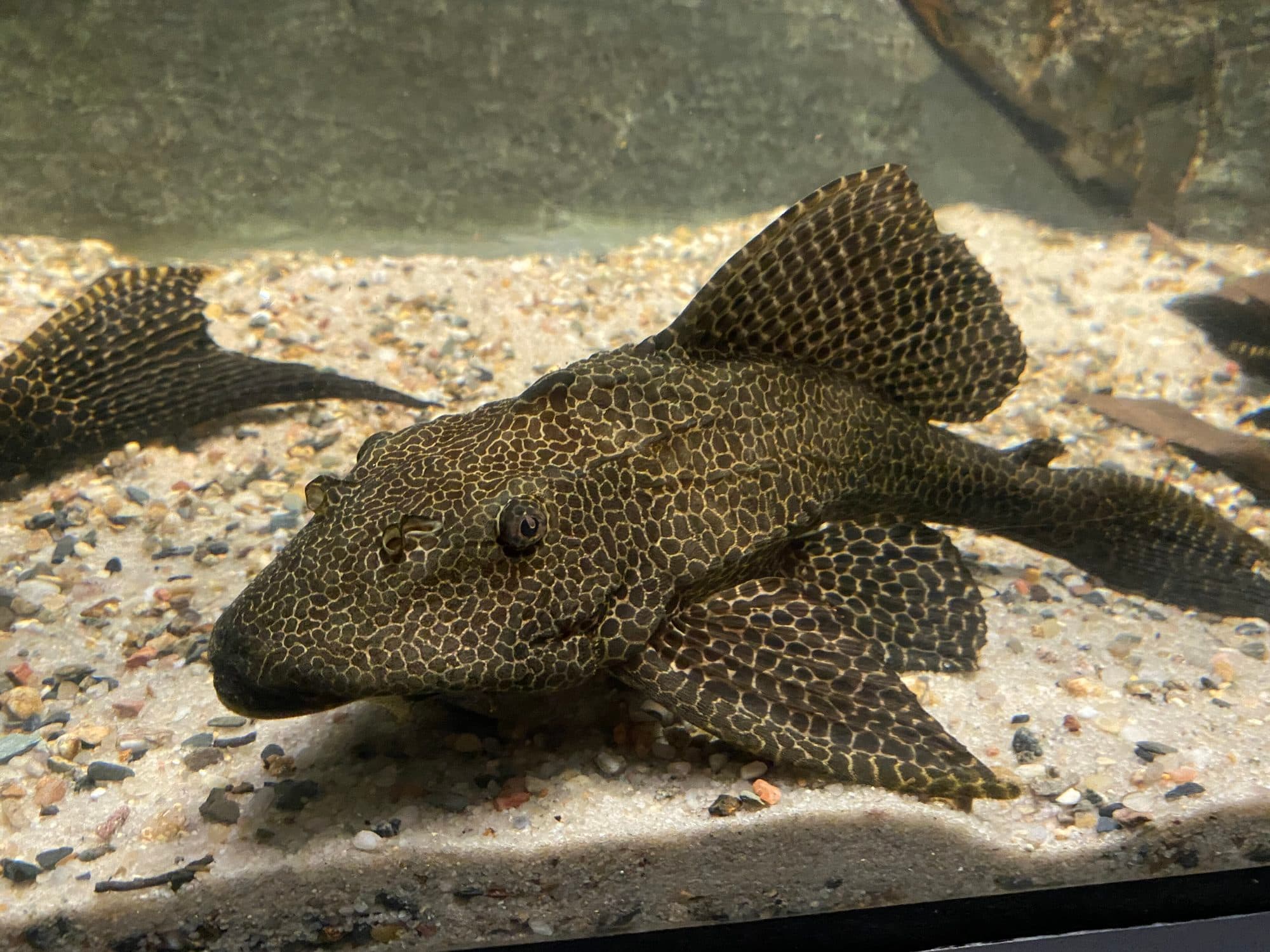
Photo: Britta Beck, CC BY 4.0, via Wikimedia Commons
Leopard sailfin pleco
Pterygoplichthys gibbiceps
40 cm
Adult size
500 L
Minimum volume
2
Minimum group
15 years
Lifespan
Water parameters
Understand these values- Genus
- Pterygoplichthys
- Diet
- omnivore
- Social life
- pair
In the wild
Overview
Described in 1854 by Rudolf Kner, the leopard (or “sailfin”) pleco is recognised by its tall, sail-shaped dorsal fin and its brown and cream reticulated pattern. Its name gibbiceps means “humped head”, for the crest on top of its head.
It reaches 50 cm and can live for more than 15 years. Like other Pterygoplichthys, it can breathe air by gulping it at the surface, which helps it survive in oxygen-poor water.
- Scientific name
- Pterygoplichthys gibbiceps (Kner, 1854)
- Classification
- Siluriformes › Loricariidae
- IUCN Red List
- Least concern (LC)
Natural habitat
Middle and upper Amazon and Orinoco basin (Brazil, Peru, Ecuador, Venezuela)
Observations (GBIF) and localities Native countries Rivers and lakes
It is widespread in the middle and upper Amazon basin and the Orinoco, in Brazil, Peru, Ecuador and Venezuela.
It lives in slow rivers, floodplain lakes and flooded areas, where it grazes the biofilm on wood and stones. Several Pterygoplichthys dig burrows in muddy banks to shelter and spawn in.
Behaviour
Nocturnal and peaceful with other species, it becomes territorial towards other large plecos as an adult. Its size calls for a very spacious aquarium and powerful filtration, as it produces a lot of waste.
It feeds mainly on algae and plant matter, supplemented in the aquarium with tablets, vegetables and soft wood to rasp. Breeding in hobby aquariums is exceptional; young fish in the trade come from pond farms.