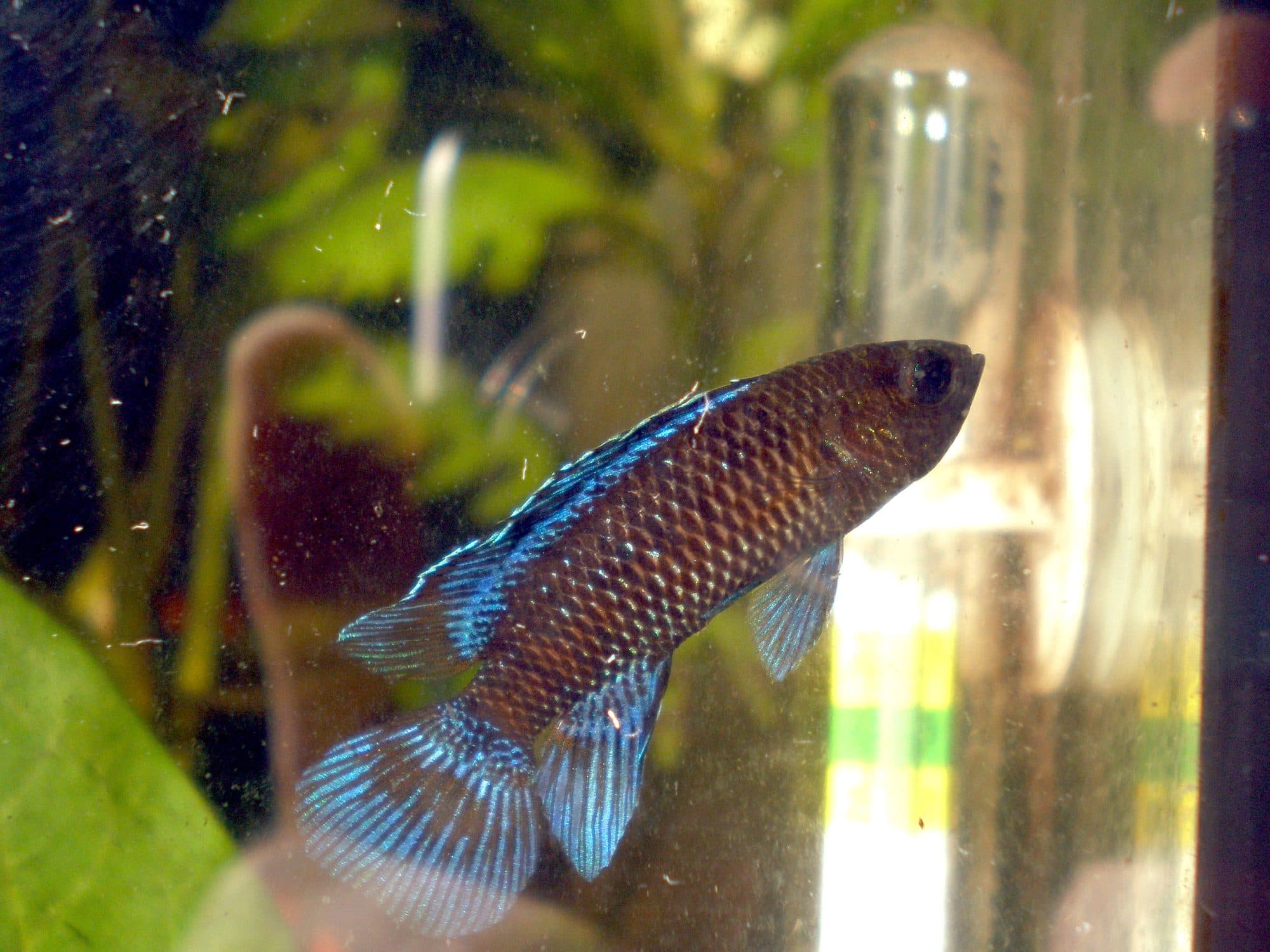
Photo: Kennyannydenny, CC BY-SA 3.0, via Wikimedia Commons
Chameleon fish
Badis badis
6 cm
Adult size
50 L
Minimum volume
3
Minimum group
5 years
Lifespan
Water parameters
Understand these values- Genus
- Badis
- Diet
- carnivore
- Social life
- small group
In the wild
Overview
The badis (Badis badis) was described in 1822 by Francis Hamilton solely from notes and drawings; a neotype was designated in 2002 by Sven Kullander and Ralf Britz, in a revision that took the family Badidae from five to fifteen species.
It is nicknamed “chameleon fish” for its ability to change colour and pattern very quickly according to its mood. It grows to 7 cm; the 8 cm sometimes quoted is exaggerated.
- Scientific name
- Badis badis (Hamilton, 1822)
- Classification
- Anabantiformes › Badidae
- IUCN Red List
- Least concern (LC)
Natural habitat
Ganges and Mahanadi basins, Assam (India, Bangladesh, Nepal), reported from Bhutan and Pakistan
Observations (GBIF) and localities Native countries Rivers and lakes
It lives in the Ganges basin, from the Yamuna to the delta in Bangladesh, in tributaries in Nepal, in the Mahanadi basin and in Assam, near the Brahmaputra.
It prefers slow, rather murky water among submerged vegetation, often near beds of water lilies: rivers, ponds, ditches and marshes. The neotype locality is a wide, shallow, muddy-bottomed stream that crosses rice fields.
Behaviour
Slow and discreet, it lives rather alone and is outcompeted by livelier species. Rival males are aggressive towards each other: keep a pair or a male with several females, with caves spread around. Do not keep it with other Badis (risk of hybridisation), and it eats small shrimp.
A micro-predator, it often refuses dry food and needs live or frozen prey. It spawns in a cave, which the male defends while guarding the eggs and then the fry.
Sources:FishBase Seriously Fish GBIF · Base map: Natural Earth