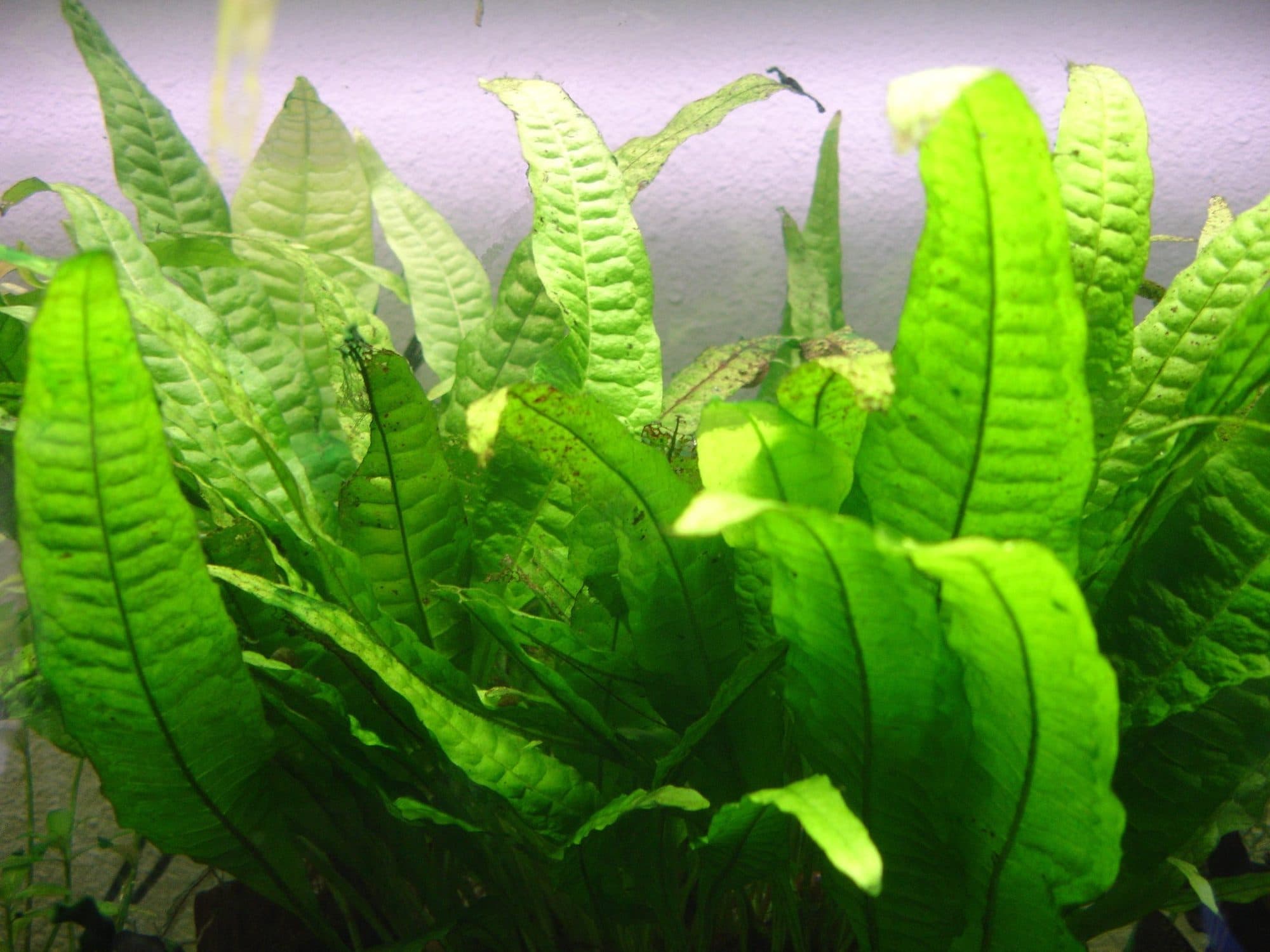
Photo: Pinpin, CC BY-SA 3.0, via Wikimedia Commons
Java fern
Microsorum pteropus (Blume) Copel.
15–30 cm
Height in the aquarium
low to high
Light
low
CO₂ needs
20–28 °C
Ideal temperature
Water parameters
Understand these values- Position
- on hardscape, background, midground
- Propagation
- plantlets on the leaves, plantlets on the roots, rhizome division, separating offshoots
- Grows emersed
- yes
In the wild
Overview
A fern very common in tropical and subtropical Asia, where it clings to rocks and wood in streams and waterfalls: some populations always live underwater, others on the damp forest floor. Botanists now place it in the genus Leptochilus, but the trade keeps the name Microsorum pteropus.
The species is very variable: beside the classic broad-leaved form there are forms with narrow leaves (“Narrow”), leaves split into a trident (“Trident”) or frilled at the tip (“Windeløv”). The black dots under the leaves are sporangia, the fern's reproductive organs, not a disease.
- Scientific name
- Leptochilus pteropus Current valid name; in the hobby: Microsorum pteropus
- Classification
- Polypodiales › Polypodiaceae
Natural habitat
South, Southeast and East Asia: rocks and wood in streams and waterfalls, damp forest floor
Observations (GBIF) and localities Native countries Rivers and lakes
- Native countries
- Introduced by people
No introduction reported outside its native range.
Countries: Kew World Checklist of Vascular Plants (WCVP). Dots: GBIF observations in the native countries.
In the aquarium
Growing in the aquarium
One of the easiest plants, ideal for beginners: moderate light is enough, with no fertiliser or CO2, and a gentle current suits it. Like the anubias, it forms a rhizome that rots if buried: tie it to a root or a stone, where its roots take hold within a few months.
It almost propagates itself: young plants appear under the leaves and at their tips, more rarely on the roots, and come away easily. The rhizome can also be cut with a knife. It also grows out of water, in a paludarium, as long as its support stays damp.
Sources:Flowgrow Tropica GBIF POWO (Kew) · Base map: Natural Earth