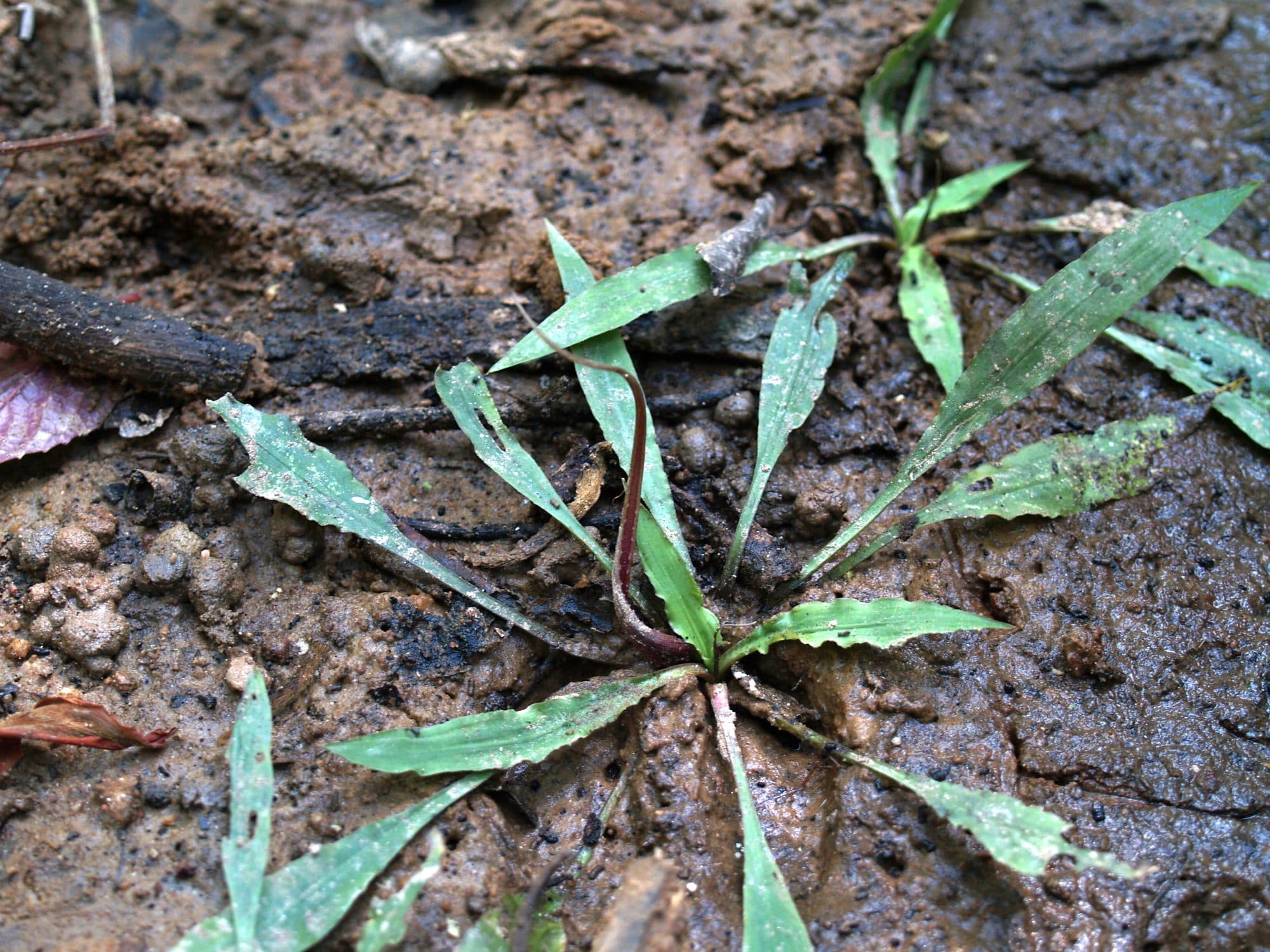
Photo: Ruppia2000, CC BY-SA 3.0, via Wikimedia Commons
Cryptocoryne spiralis
(Retz.) Fisch. ex Wydler
—
Height in the aquarium
low to high
Light
low
CO₂ needs
23–28 °C
Ideal temperature
Water parameters
Understand these values- Position
- background, midground
- Propagation
- runners, rhizome division, separating offshoots
- Uses
- specimen plant
- Grows emersed
- yes
In the wild
Overview
An aroid endemic to India, mainly the west and south of the country. It owes its name to its spathe, whose limb is twisted into a spiral, a feature unique to the species.
It grows in marshes and on riverbanks flooded by the monsoon. When they dry out, the plant loses all its leaves and survives on the reserves of its buried rhizome, then regrows with the rains. Its lanceolate leaves are very variable: red petioles, wavy margins or entirely green forms.
- Scientific name
- Cryptocoryne spiralis (Retz.) Fisch. ex Wydler
- Classification
- Alismatales › Araceae
- IUCN Red List
- Least concern (LC)
Natural habitat
India: Western Ghats and Deccan Plateau, marshes and monsoon-flooded rivers
Observations (GBIF) and localities Native countries Rivers and lakes
- Native countries
- Introduced by people
No introduction reported outside its native range.
Countries: Kew World Checklist of Vascular Plants (WCVP). Dots: GBIF observations in the native countries.
In the aquarium
Growing in the aquarium
Hardy, it tolerates hard water and grows slowly under medium light, in a rich substrate. Its long, narrow leaves suit the midground or the back of a small tank.
A plant bought grown out of water often loses its leaves before adapting. In an aquarium, with no dry season, it grows all year round.
Sources:Flowgrow GBIF POWO (Kew) Wikipédia (en) : Cryptocoryne spiralis · Base map: Natural Earth