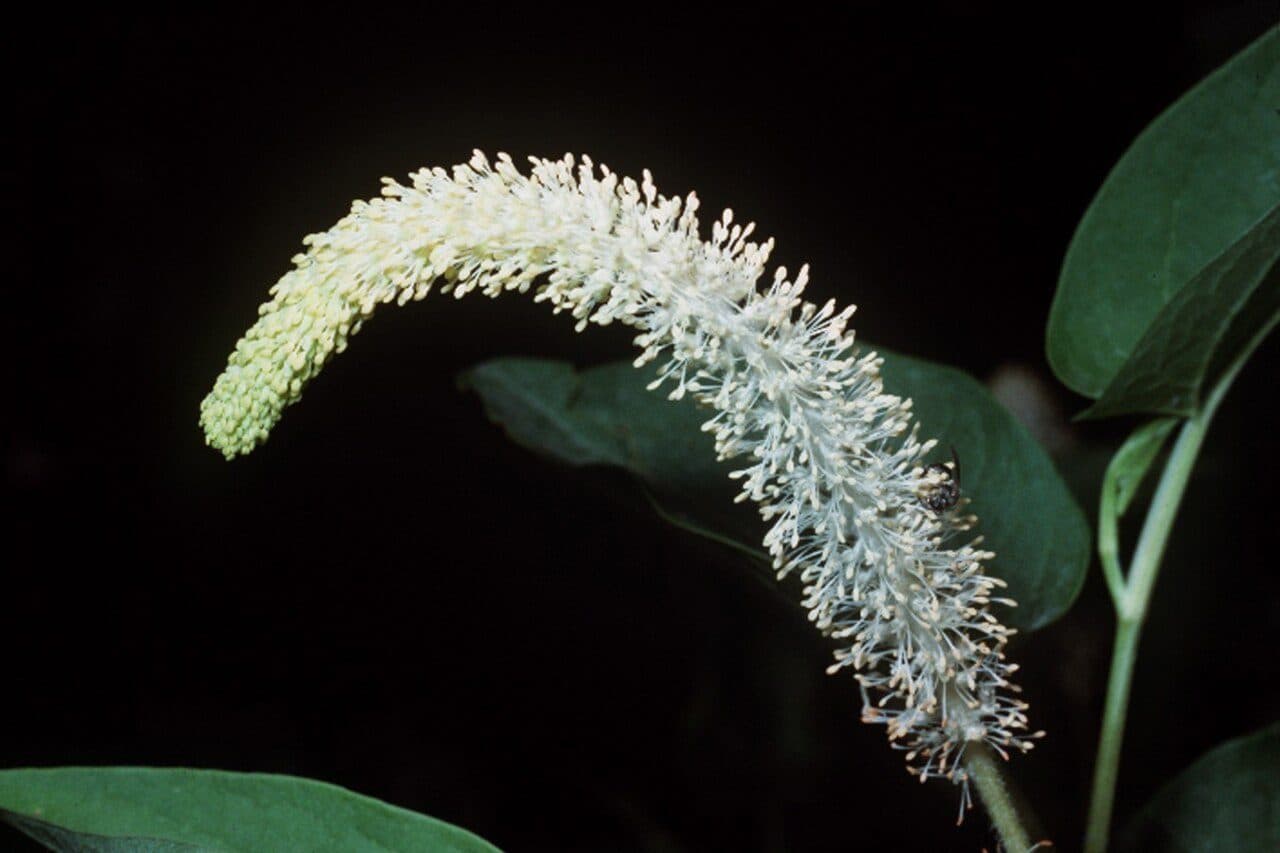
Photo: Robert H. Mohlenbrock, USDA-NRCS PLANTS Database, Public domain, via Wikimedia Commons
Lizard's tail
Saururus cernuus L.
—
Height in the aquarium
high
Light
low
CO₂ needs
20–25 °C
Ideal temperature
Water parameters
Understand these values- Position
- midground, foreground
- Propagation
- runners, cuttings
- Uses
- open-top tank
- Grows emersed
- yes
In the wild
Overview
Its large heart-shaped leaves contrast with fine-leaved plants. This American marsh plant grows straight underwater and can quickly pass the surface if allowed to rise. It was long used to build rows of plants in Dutch aquariums.
- Scientific name
- Saururus cernuus L.
- Classification
- Piperales › Saururaceae
- IUCN Red List
- Least concern (LC)
Natural habitat
North America
Observations (GBIF) and localities Native countries Introduced in Rivers and lakes
- Native countries
- Introduced by people
Outside its native range, in 5 countries:
An aquarium plant must never reach the wild: throwing away cuttings or emptying a tank into a stream can be enough to establish it.
Countries: Kew World Checklist of Vascular Plants (WCVP). Dots: GBIF observations in the native countries.
In the aquarium
Growing in the aquarium
Strong light, CO₂ and regular feeding encourage large, vigorous leaves. The foliage renews slowly and can carry spot algae. Replant the tops after trimming; floating stem fragments can also produce young plants. The emersed form is much easier to grow, but its runners need to be contained.
Sources:Flowgrow GBIF POWO (Kew) · Base map: Natural Earth