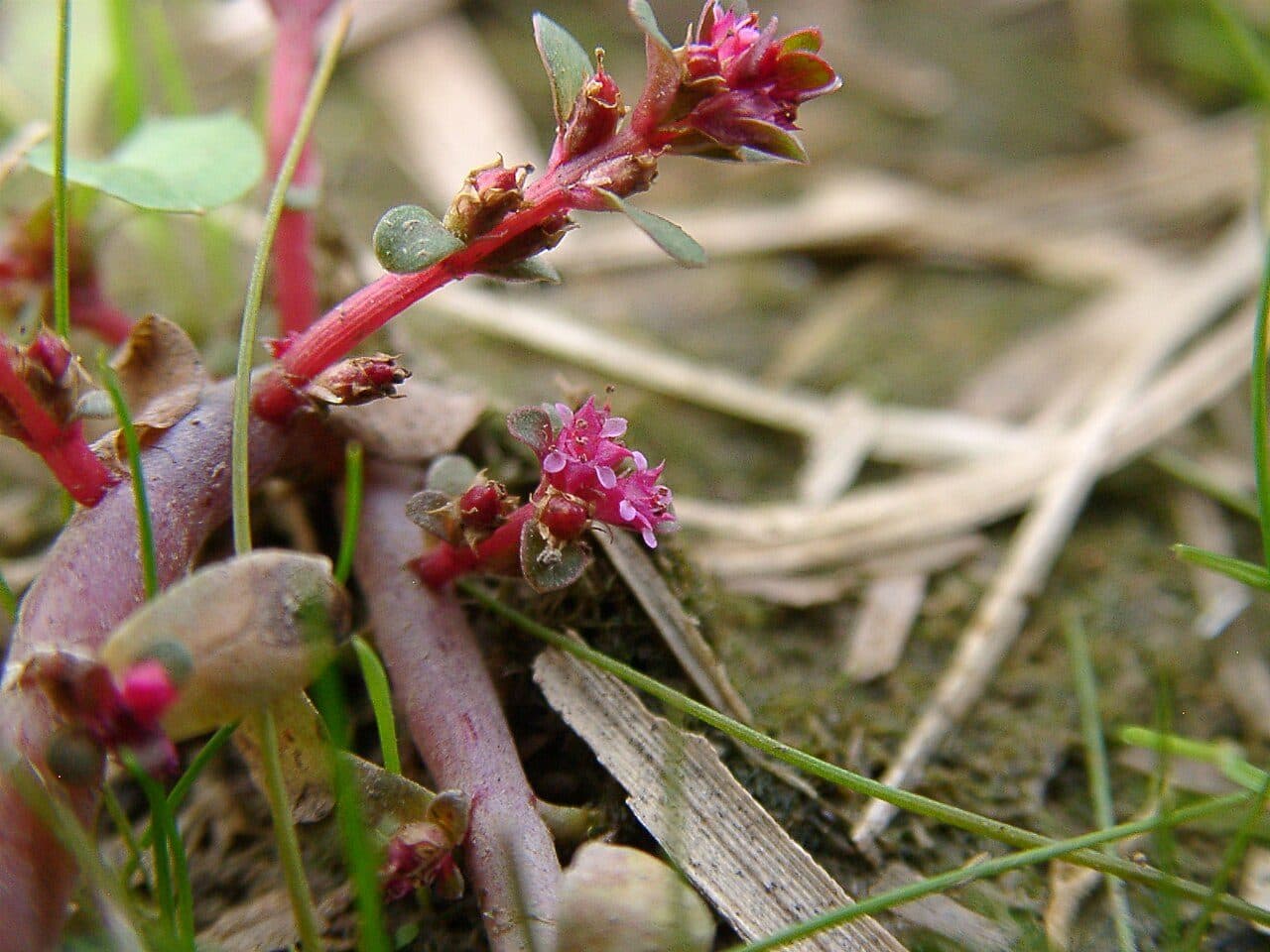
Photo: Loasa, Public domain, via Wikimedia Commons
Indian toothcup
Rotala indica (Willd.) Koehne
—
Height in the aquarium
high
Light
low
CO₂ needs
22–28 °C
Ideal temperature
Water parameters
Understand these values- Position
- midground, foreground
- Propagation
- cuttings
- Uses
- nano tank, Dutch street
- Grows emersed
- yes
In the wild
Overview
The true Rotala indica forms thick, very upright stems with small round to spoon-shaped leaves. It has also been circulated as Ammannia sp. “Bonsai”. The shoots branch little and can turn red at the tips. It is clearly different from Rotala rotundifolia, long sold under the same name.
- Scientific name
- Rotala indica (Willd.) Koehne
- Classification
- Myrtales › Lythraceae
- IUCN Red List
- Least concern (LC)
Natural habitat
South Asia, Southeast Asia, East Asia
Observations (GBIF) and localities Native countries Introduced in Rivers and lakes
- Native countries
- Introduced by people
Outside its native range, in 4 countries:
An aquarium plant must never reach the wild: throwing away cuttings or emptying a tank into a stream can be enough to establish it.
Countries: Kew World Checklist of Vascular Plants (WCVP). Dots: GBIF observations in the native countries.
In the aquarium
Growing in the aquarium
Its rather slow growth needs good light and available nutrients. Plant a group of stems of different heights to show off its almost columnar habit. Cuttings are used to renew the stand. Check the plant you receive before following advice for a fast, red “Rotala indica” that might be R. rotundifolia.
Sources:Flowgrow GBIF POWO (Kew) · Base map: Natural Earth