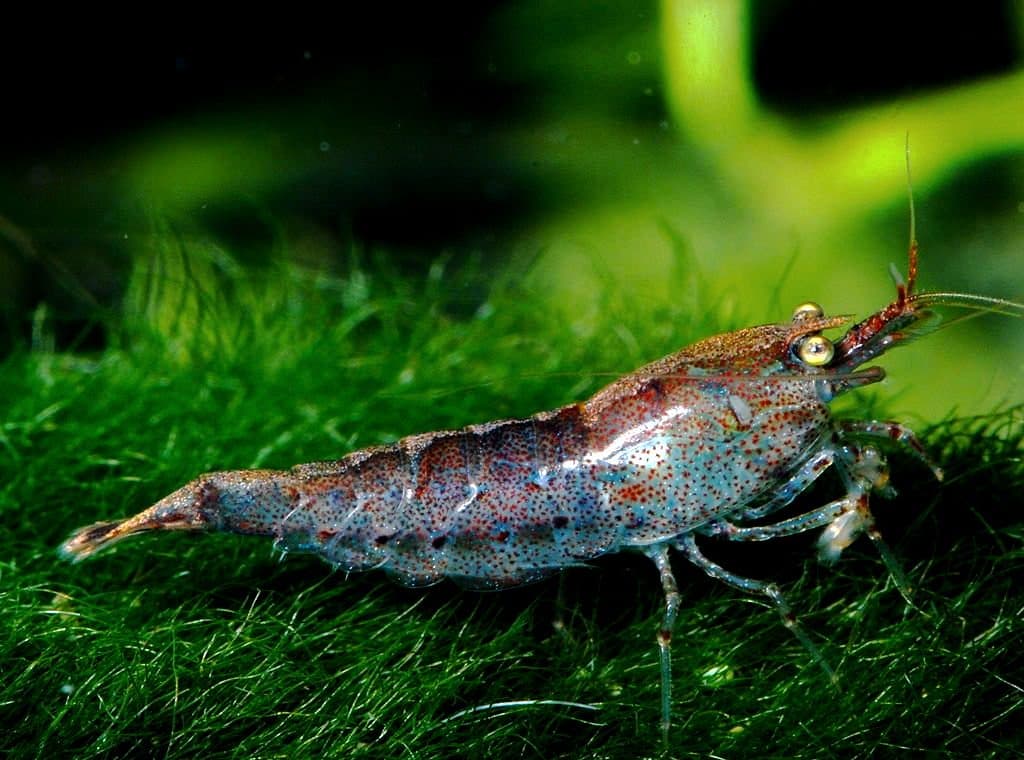
Photo: DirkBlankenhaus, CC BY-SA 3.0, via Wikimedia Commons
Neocaridina palmata
Documented form: Blue Pearl
3.5 cm
Adult size
20 L
Minimum volume
5
Minimum group
—
Lifespan
Size: body length.
Water parameters
Understand these valuesHardness (GH): not given by the sources
Carbonate hardness (KH): not given by the sources
- Genus
- Neocaridina
- Diet
- herbivore
- Social life
- colony
- Activity
- diurnal
- Adult habitat
- fresh water
- Breeding
- in fresh water
In the wild
Overview
Neocaridina palmata is a small, active shrimp that lives in colonies near the bottom. Its colouring varies between populations and aquarium-bred lines. The photos on this page show the species, without guaranteeing the Blue Pearl line: the aquarium parameters come from the profile of the latter. The size given for this form is two and a half to three and a half centimetres.
- Scientific name
- Neocaridina palmata (Shen, 1948)
- Classification
- Decapoda › Atyidae
- IUCN Red List
- Least concern (LC)
Natural habitat
China
Observations (GBIF) and localities Native countries Rivers and lakes
It lives in fresh water at 10 to 30 °C, with a pH of 6 to 8.5. Its colouring varies between populations; the Blue Pearl is an aquarium-bred line.
Behaviour
Lively and peaceful, it lives in colonies near the bottom and is active by day. It grazes algae and biofilm on plants. Being small, it hides when larger neighbours are around and ignores other species.
In the aquarium
Care and setup
The source recommends at least five individuals in an aquarium of at least twenty litres. Plants, leaves and roots add refuges, especially useful after moults. Large fish and crustaceans can catch these small shrimp; to watch the colony and keep the young, favour a species tank or small tankmates with no predatory habits.
Feeding
It looks for algae and microorganisms on plants and decor. Decaying leaves provide feeding surfaces, and dwarf shrimp foods complete these resources. Giving small portions limits leftovers that could foul the water.
Breeding
The female carries her eggs under the abdomen. After several weeks of incubation the young are already formed and independent: the documented form breeds entirely in fresh water. The juveniles benefit from plants and fine refuges; successful breeding does not protect them from the other residents of the tank.
Sources:Fishipedia GBIF · Base map: Natural Earth