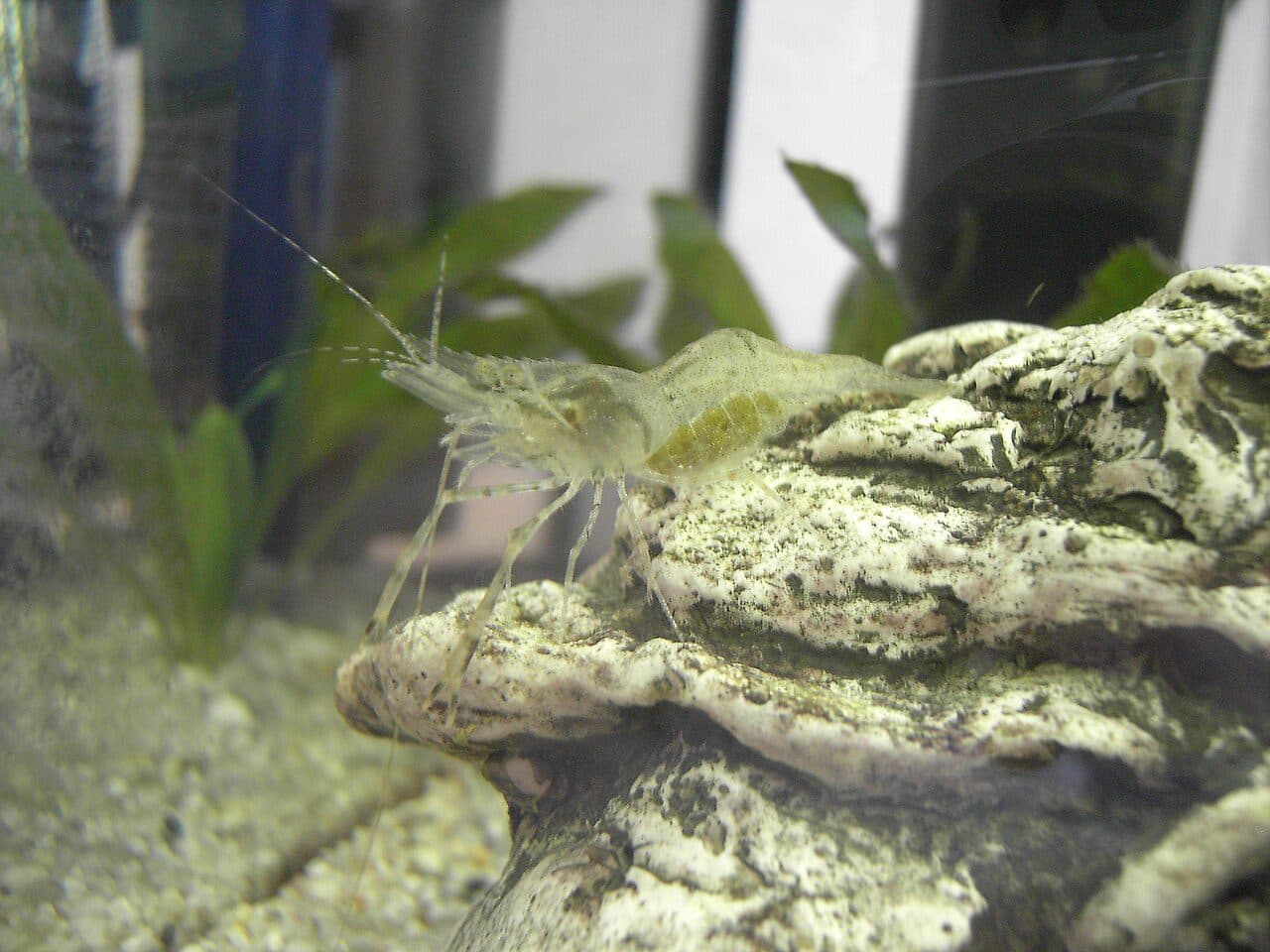
Photo: Tolderi, CC BY-SA 3.0, via Wikimedia Commons
Red claw shrimp
Macrobrachium assamense
7 cm
Adult size
80 L
Minimum volume
3
Minimum group
—
Lifespan
Size: body length.
Water parameters
Understand these valuesHardness (GH): not given by the sources
Carbonate hardness (KH): not given by the sources
- Genus
- Macrobrachium
- Diet
- carnivore
- Social life
- small group
- Activity
- diurnal
- Adult habitat
- fresh water
- Breeding
- in fresh water
In the wild
Overview
This large-clawed shrimp is often confused with Macrobrachium hendersoni. The grooves at the tips of the claws and the fine grey-white hairs of adult males are the marks described by the source. Its opportunistic behaviour calls for more caution than with dwarf shrimp.
- Scientific name
- Macrobrachium assamense (Tiwari, 1958)
- Classification
- Decapoda › Palaemonidae
- IUCN Red List
- Least concern (LC)
Natural habitat
South Asia: northeastern India, Bangladesh and Myanmar
Native countries Rivers and lakes
It lives in streams with pebble and rock beds, in neutral to alkaline water (pH 7 to 8.3) at 14 to 28 °C.
Behaviour
Active by day, it lives in small groups. Hardy and opportunistic, it attacks smaller fish and crustaceans within reach, and cannibalism is known when food runs short. A poor swimmer as an adult, it mostly gets around by walking.
In the aquarium
Care and setup
Build caves among pebbles and roots, with separate living areas. Avoid small animals that could become prey and watch how the individuals get along.
Feeding
Give a varied diet including mollusc and fish flesh and suitable prepared foods.
Breeding
The source describes breeding in fresh water. The decor must let young and adults find separate refuges.
Sources:Fishipedia GBIF · Base map: Natural Earth