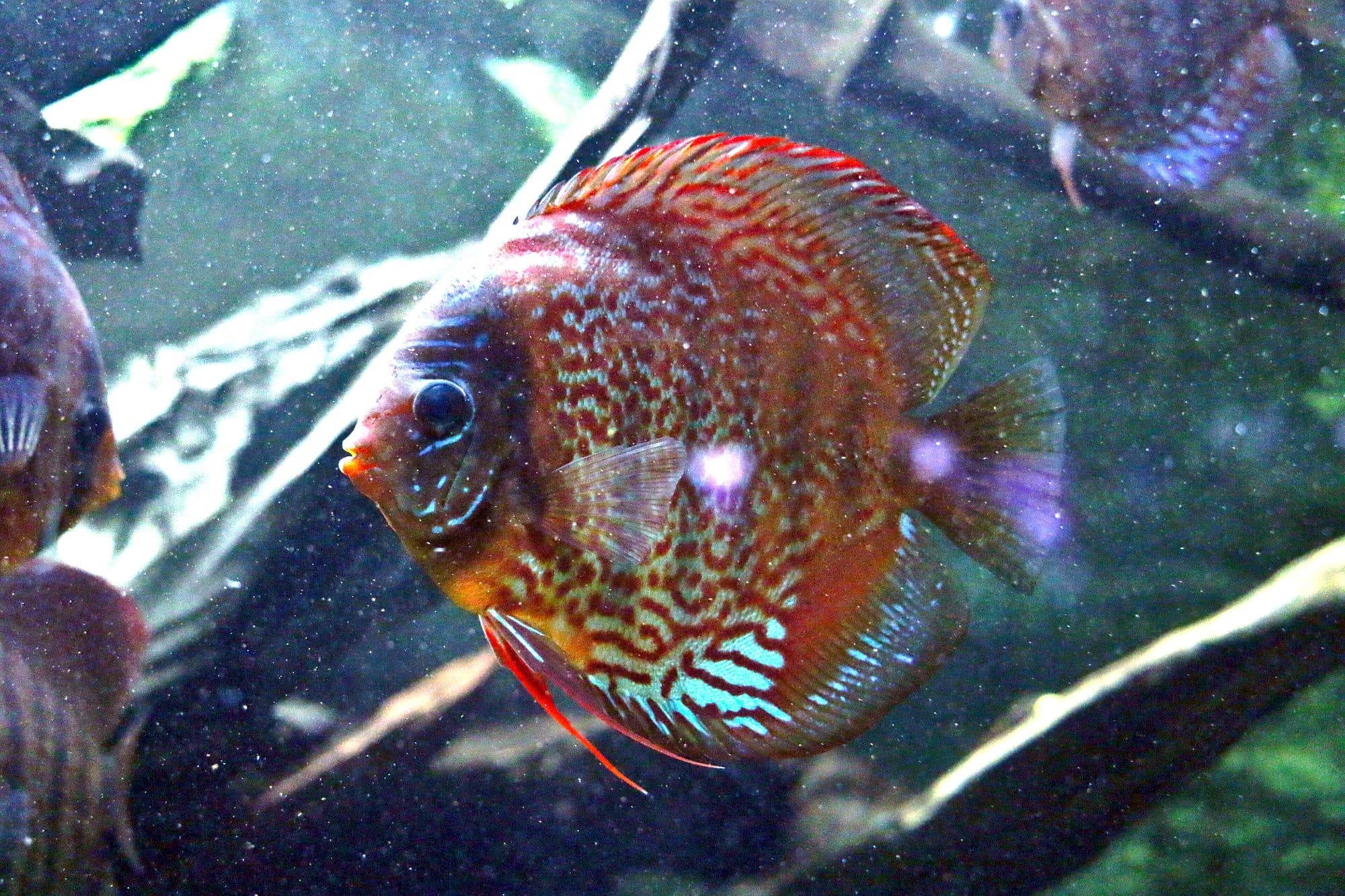
Photo: Cangadoba, CC BY-SA 4.0, via Wikimedia Commons
Discus
Symphysodon aequifasciatus
15 cm
Adult size
350 L
Minimum volume
6
Minimum group
12 years
Lifespan
Water parameters
Understand these values- Genus
- Symphysodon
- Diet
- carnivore
- Social life
- small group
In the wild
Overview
Described in 1904 by Jacques Pellegrin, the discus is often called the “king of the aquarium”. Its classification is debated: depending on the authors, the genus Symphysodon has two to four species, and S. aequifasciatus groups the brown and blue discus, with nine vertical bands of equal intensity (hence aequifasciatus).
It is famous for the way it raises its young: during their first days, the fry feed on a mucus secreted by the skin of both parents. Decades of selective breeding have produced a multitude of captive varieties.
- Scientific name
- Symphysodon aequifasciatus Pellegrin, 1904
- Classification
- Cichliformes › Cichlidae
- IUCN Red List
- Least concern (LC)
Natural habitat
Amazon and Solimões, from the Río Putumayo (Colombia, Peru) to the Tocantins basin (Brazil)
Observations (GBIF) and localities Native countries Rivers and lakes
It lives along the Solimões and the main course of the Amazon, from the Río Putumayo to the Tocantins basin. Introduced populations exist in Guyana and Suriname.
It rarely frequents the main channels and prefers slow tributaries and forest lakes, where it gathers in shoals in deep, sheltered areas, among roots, logs and rocks. The water there is warm (26 to 30 °C), soft and acidic.
Behaviour
Peaceful and gregarious, it lives in a group and becomes territorial when breeding. It is sensitive to water quality and stress: a tall, calm tank, very clean water and peaceful companions that tolerate heat (small tetras, Sterba's corydoras, plecos) suit it.
In the wild it feeds on insect larvae, insects and planktonic invertebrates. The pair spawns on a vertical surface and guards the eggs, then the fry, which it feeds with its mucus.
Sources:FishBase Seriously Fish GBIF · Base map: Natural Earth