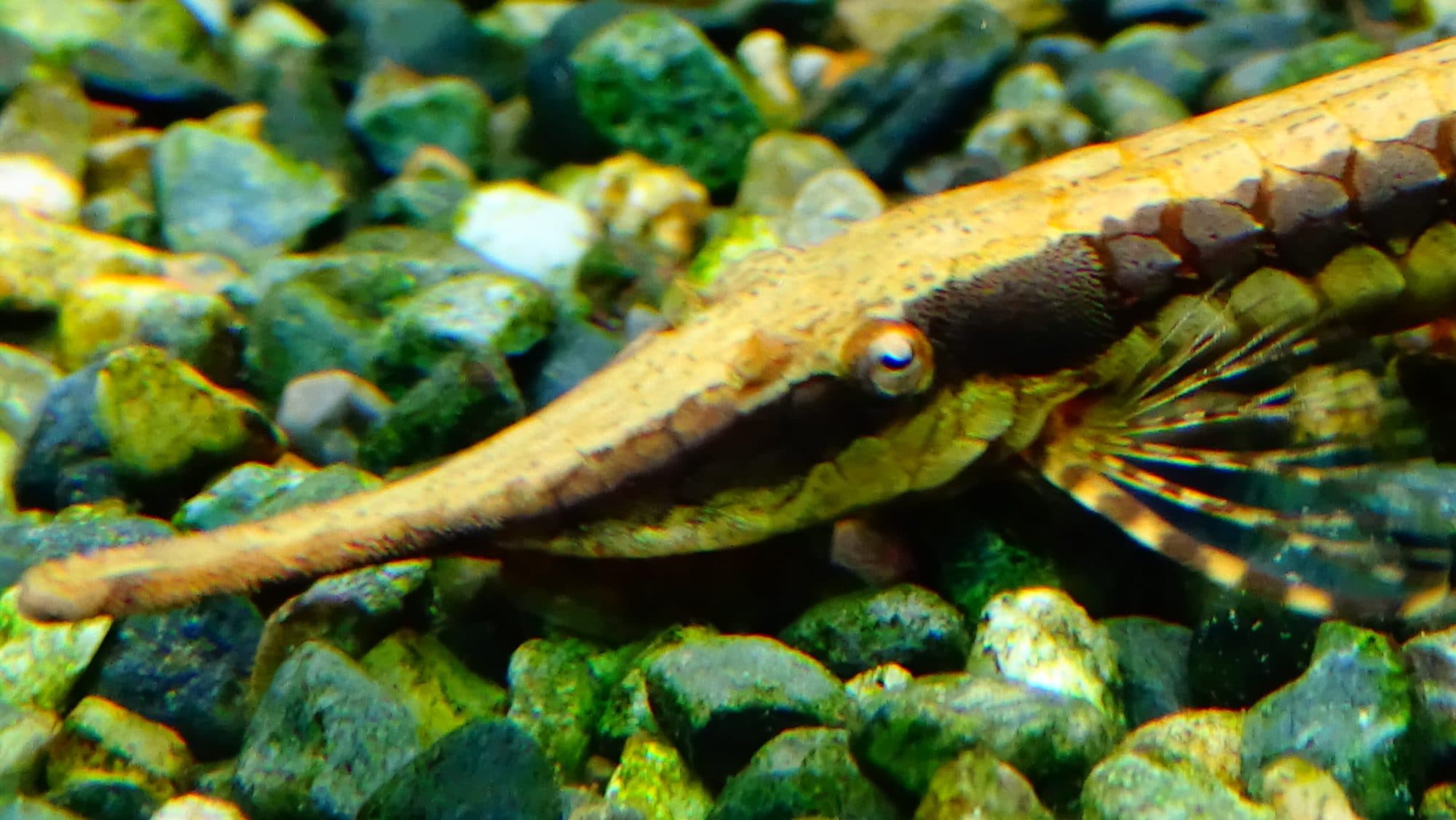
Photo: Cedricguppy - Loury Cédric, CC BY-SA 4.0, via Wikimedia Commons
Twig catfish
Farlowella acus
15 cm
Adult size
160 L
Minimum volume
1
Minimum group
10 years
Lifespan
Water parameters
Understand these values- Genus
- Farlowella
- Diet
- herbivore and xylophage
- Social life
- solitary
In the wild
Overview
Described in 1853 by Rudolf Kner, the twig catfish (acus, “needle”) has an extremely elongated body and a long snout that make it look like a twig: perfect camouflage among submerged branches.
The IUCN lists it as vulnerable: its range is limited to a few basins in northern Venezuela, including the heavily polluted Lake Valencia. Most “Farlowella acus” on sale are actually other species of the genus.
- Scientific name
- Farlowella acus (Kner, 1853)
- Classification
- Siluriformes › Loricariidae
- IUCN Red List
- Vulnerable (VU)
Natural habitat
Lake Valencia and Río Torito basins (northern Venezuela)
Observations (GBIF) and localities Native countries Rivers and lakes
The species is known from the Lake Valencia and Río Torito basins, in northern Venezuela.
Farlowella live in calm to gently flowing water, among submerged branches, roots and vegetation, where they graze algae and biofilm. The recommended water is soft, slightly acidic, between 24 and 26 °C.
Behaviour
Very peaceful and slow, it copes poorly with competition for food from lively fish. It often stays motionless, clinging to a branch or the glass.
It feeds on algae and biofilm, and rasps soft wood; a mature, planted aquarium rich in wood is essential, with blanched vegetables as a supplement. The female spawns on a vertical surface (glass, wood) and the male guards and cleans the eggs until they hatch; adult males have odontodes along the sides of the snout.