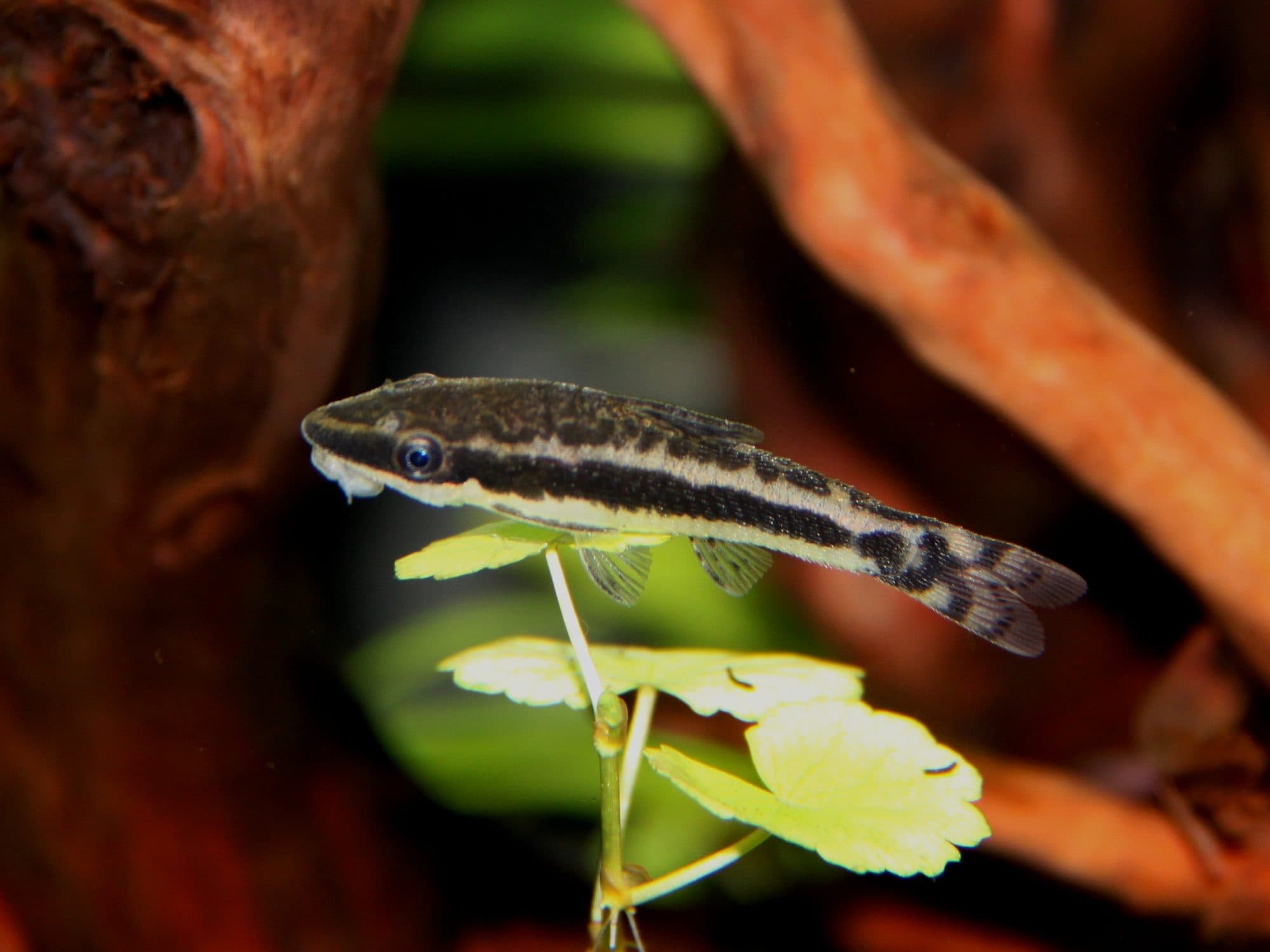
Photo: Cisamarc, CC BY-SA 3.0, via Wikimedia Commons
Golden otocinclus
Otocinclus affinis
5 cm
Adult size
90 L
Minimum volume
6
Minimum group
8 years
Lifespan
Water parameters
Understand these values- Genus
- Otocinclus
- Diet
- omnivore, herbivore, algae eater
- Social life
- small group
In the wild
Overview
Described in 1877 by Franz Steindachner, Otocinclus affinis is one of the oldest names in the genus. Otocinclus comes from the Greek for “ear” and “grille”, for the perforated bone behind the head.
In the trade, the name “Otocinclus affinis” is very often applied to other species, notably O. macrospilus or O. vittatus, which are exported far more: the true species, native to south-eastern Brazil, is rarely offered.
- Scientific name
- Otocinclus affinis Steindachner, 1877
- Classification
- Siluriformes › Loricariidae
- IUCN Red List
- Least concern (LC)
Natural habitat
South-eastern Brazil, Rio de Janeiro region
Observations (GBIF) and localities Native countries Rivers and lakes
Its natural range lies in the small coastal rivers of the Rio de Janeiro region, in Brazil, in a subtropical climate.
Otocinclus live in shoals on bank vegetation, leaves and wood in calm streams, where they scrape off algae and biofilm. It tolerates cooler water than its Amazonian cousins (20 to 26 °C).
Behaviour
Very peaceful, it is kept in a group of at least 5 to 6, with calm fish that do not steal its food. It often clings to the glass and leaves.
It is an algae grazer: a planted, mature aquarium rich in biofilm is essential, supplemented with blanched vegetables and spirulina tablets. Like all otocinclus, it often suffers from starvation during transport and must be acclimatised in a well-established tank.