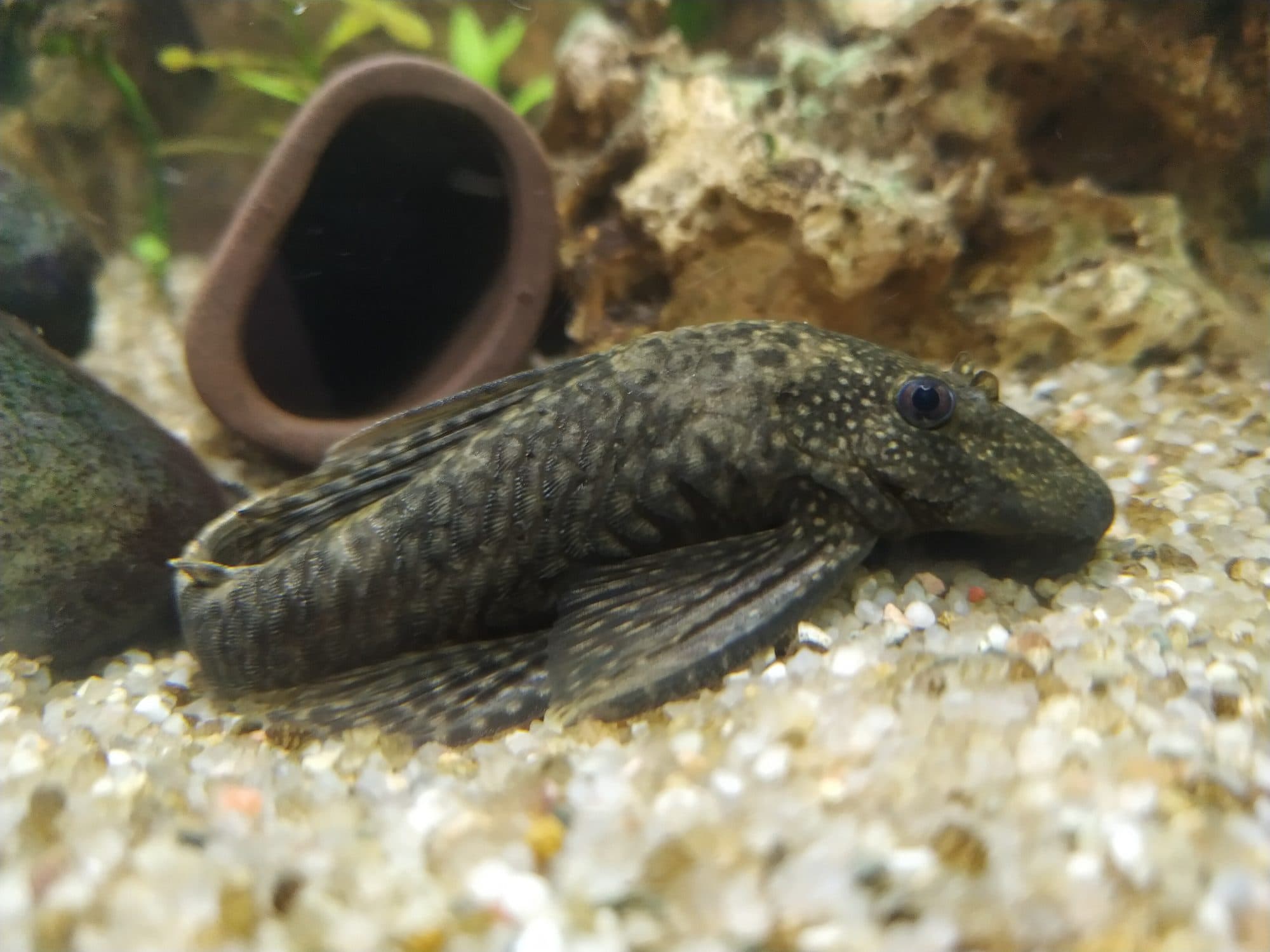
Photo: Graf zu Pappenheim, CC BY-SA 4.0, via Wikimedia Commons
Starlight bristlenose (L183)
Ancistrus dolichopterus
15 cm
Adult size
200 L
Minimum volume
1
Minimum group
20 years
Lifespan
Water parameters
Understand these values- Genus
- Ancistrus
- Diet
- herbivore
- Social life
- solitary
In the wild
Overview
Described in 1854 by the Austrian ichthyologist Rudolf Kner from fish caught near Manaus, Ancistrus dolichopterus (“long-finned”) differs from all other Ancistrus by its 9 soft rays in the dorsal fin. In the hobby it corresponds to the “starlight” pleco (L183), black dotted with white with white-edged fins.
The genus has more than 60 species, recognisable by the spines on their cheeks and, in males, by the fleshy tentacles on the snout. The name was long wrongly applied to the common aquarium bristlenose, hence much confusion over its range.
- Scientific name
- Ancistrus dolichopterus Kner, 1854
- Classification
- Siluriformes › Loricariidae
- IUCN Red List
- Least concern (LC)
Natural habitat
Middle and lower Rio Negro, Amazonas (Brazil); other Amazonian basins are mentioned
Observations (GBIF) and localities Native countries Rivers and lakes
According to Seriously Fish, the species is endemic to the middle and lower Rio Negro in Amazonas state; other sources list it in other Amazonian basins and in Guyana, probably because of misidentifications.
It lives in flowing blackwater streams and tributaries, acidic and very soft, among submerged wood and rocks.
Behaviour
Fairly peaceful towards other species, it is territorial towards its own kind and similarly shaped fish. It spends the day hidden in cavities and wood.
Omnivorous, it enjoys small invertebrates and sinking foods as well as plant matter. It is a cave spawner: the male guards and fans the eggs, then the fry. Adult males bear tentacles on the head and odontodes (small skin teeth) on the pectoral fins and gill cover.
Sources:FishBase Seriously Fish GBIF · Base map: Natural Earth