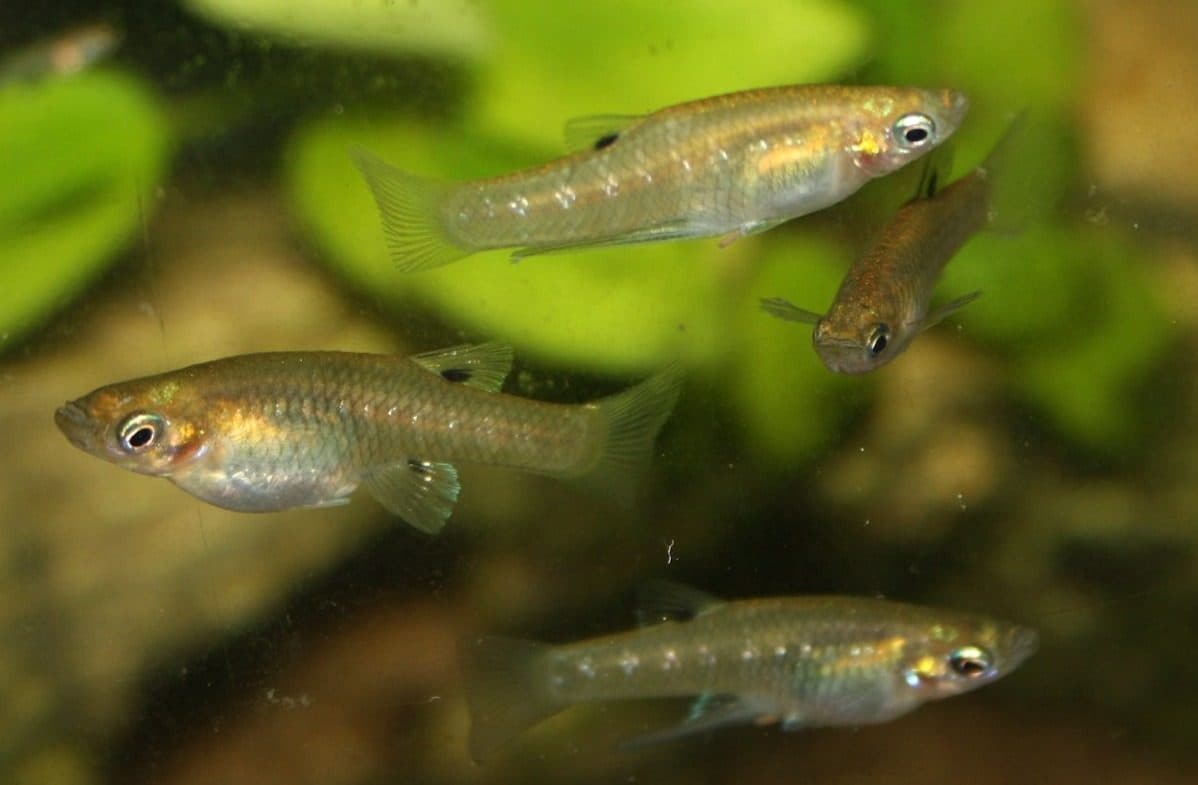
Photo: Livebearerguy, CC BY-SA 4.0, via Wikimedia Commons
Metallic livebearer
Girardinus metallicus
6 cm
Adult size
40 L
Minimum volume
8
Minimum group
5 years
Lifespan
Water parameters
Understand these values- Genus
- Girardinus
- Diet
- carnivore and planktivore
- Social life
- small group
In the wild
Overview
Described in 1854 by the Cuban naturalist Felipe Poey, Girardinus metallicus owes its genus name to the French zoologist Charles Girard and its species name to the metallic sheen of its body. The smaller males have a black band running from the mouth to the gonopodium, along the underside.
Females reach almost 9 cm, males about 5 cm.
- Scientific name
- Girardinus metallicus Poey, 1854
- Classification
- Cyprinodontiformes › Poeciliidae
- IUCN Red List
- Least concern (LC)
Natural habitat
Endemic to Cuba
Observations (GBIF) and localities Native countries Rivers and lakes
It is endemic to Cuba, where it lives in pools, ponds, lakes and streams.
It prefers clear, still or very slow water, sometimes slightly brackish, hard and close to neutral, between 22 and 26 °C.
Behaviour
Peaceful, it suits a hard-water aquarium with hardy corydoras, tetras and small rainbowfish, or a brackish tank with small gobies. It copes poorly with soft, acidic water.
An omnivore, it feeds on diatoms, algae, detritus, insect larvae and plant matter. A livebearer, it breeds easily after a gestation of about 24 days; several females per male and densely planted areas reduce harassment.
Sources:FishBase Seriously Fish GBIF · Base map: Natural Earth