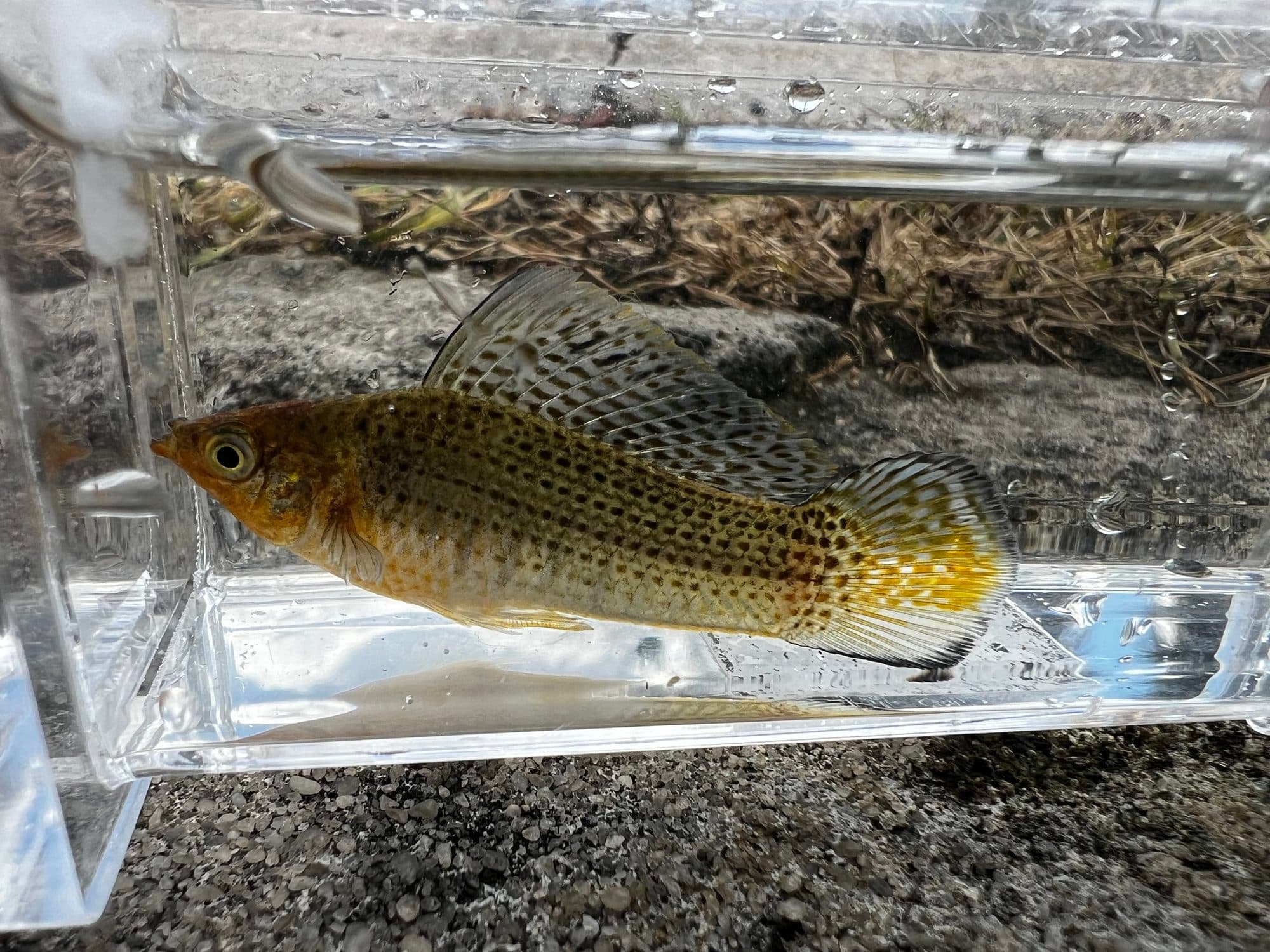
Photo: (c) Nick Tobler (Cowturtle), some rights reserved (CC BY), CC BY 4.0, via Wikimedia Commons
Sailfin molly
Poecilia latipinna
12 cm
Adult size
100 L
Minimum volume
3
Minimum group
5 years
Lifespan
Water parameters
Understand these values- Genus
- Poecilia
- Diet
- herbivore
- Social life
- small group
In the wild
Overview
Described in 1821 by the French naturalist Charles Alexandre Lesueur, the sailfin molly owes its Latin name latipinna (“broad fin”) to the huge, sail-shaped dorsal fin of adult males, which they spread during displays.
It is told apart from the very similar Poecilia velifera by the rectangular (not rounded) dark spots on its dorsal fin. Introduced to many countries, from Kenya to New Zealand, it often competes there with local species.
- Scientific name
- Poecilia latipinna (Lesueur, 1821)
- Classification
- Cyprinodontiformes › Poeciliidae
- IUCN Red List
- Least concern (LC)
Natural habitat
Coasts of the south-eastern United States and the Gulf of Mexico, from North Carolina to Veracruz (Mexico)
Observations (GBIF) and localities Native countries Rivers and lakes
It is native to the coastal plains of the south-eastern United States, from North Carolina to Florida, and around the Gulf of Mexico as far as Veracruz.
It lives in calm, warm water in small streams, ponds, marshes, canals and tidal ditches, often brackish, rich in algae and vegetation. It tolerates hard fresh water as well as seawater.
Behaviour
It suits a hard-water community aquarium, but may harass small fish as it grows, and males are aggressive towards each other in the breeding season.
In the wild it is almost exclusively herbivorous, grazing algae and plants, with a few small crustaceans and insects: vegetables or plant-based flakes are essential in the aquarium. Gestation lasts about two months and produces up to about fifty large fry; one male to two females is recommended.
Sources:FishBase Seriously Fish GBIF · Base map: Natural Earth