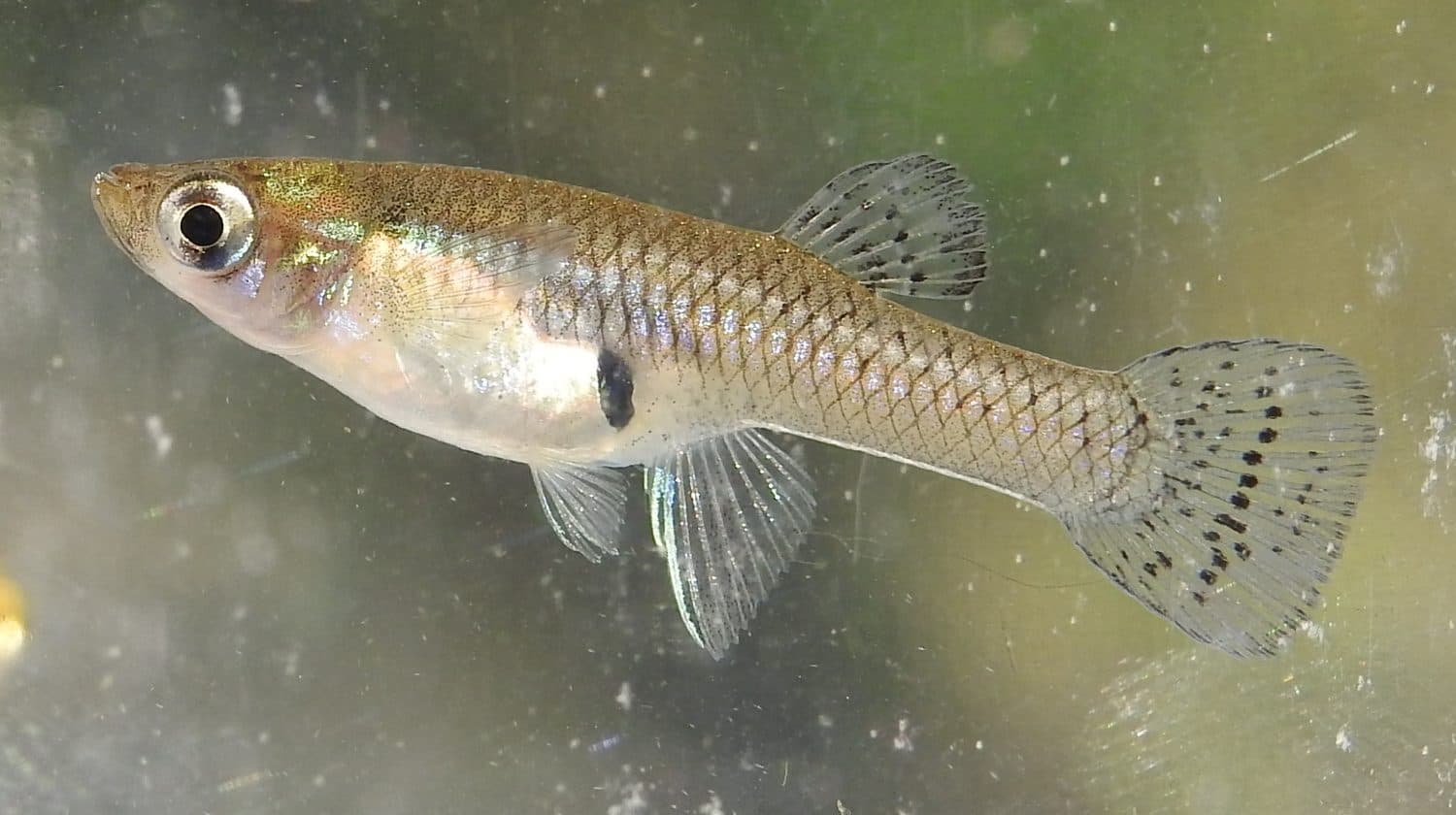
Photo: JeffreyGammon, CC BY-SA 4.0, via Wikimedia Commons
Eastern mosquitofish
Gambusia holbrooki
7 cm
Adult size
100 L
Minimum volume
5
Minimum group
5 years
Lifespan
Water parameters
Understand these values- Genus
- Gambusia
- Diet
- carnivore, omnivore and planktivore
- Social life
- small group
In the wild
Overview
Described in 1859 by Charles Girard, the eastern mosquitofish is named after the American zoologist John Edwards Holbrook. It was released in tropical and subtropical countries all over the world to control the larvae of mosquitoes that carry malaria.
The outcome of these introductions is now judged to be poor: its effect on mosquitoes was minimal, even counterproductive since it also devours the invertebrates that eat them, and it has seriously threatened many local species, notably small endemic killifish in Europe. It is now widely established in southern France.
- Scientific name
- Gambusia holbrooki Girard, 1859
- Classification
- Cyprinodontiformes › Poeciliidae
- IUCN Red List
- Least concern (LC)
Natural habitat
Eastern United States, from New Jersey to Alabama; introduced worldwide, including southern Europe
Observations (GBIF) and localities Native countries Rivers and lakes
Its natural range covers the Atlantic and Gulf of Mexico basins of the eastern United States, from New Jersey to Alabama. It is established throughout southern Europe and on every continent.
It lives in still or slow water: vegetated ponds and lakes, oxbows, calm pools in streams, and even brackish water. Very tough, it tolerates 15 to 35 °C. Shoals stay along the edges, where they hunt small insects that fall into the water.
Behaviour
Despite what its small size suggests, it is lively and aggressive: it nips other fish's fins and attacks fry. It is not recommended for a community aquarium.
A livebearer, it breeds very quickly; its life is short, often one to two years in the wild. Releasing mosquitofish (or any aquarium fish) into the wild must never be done.