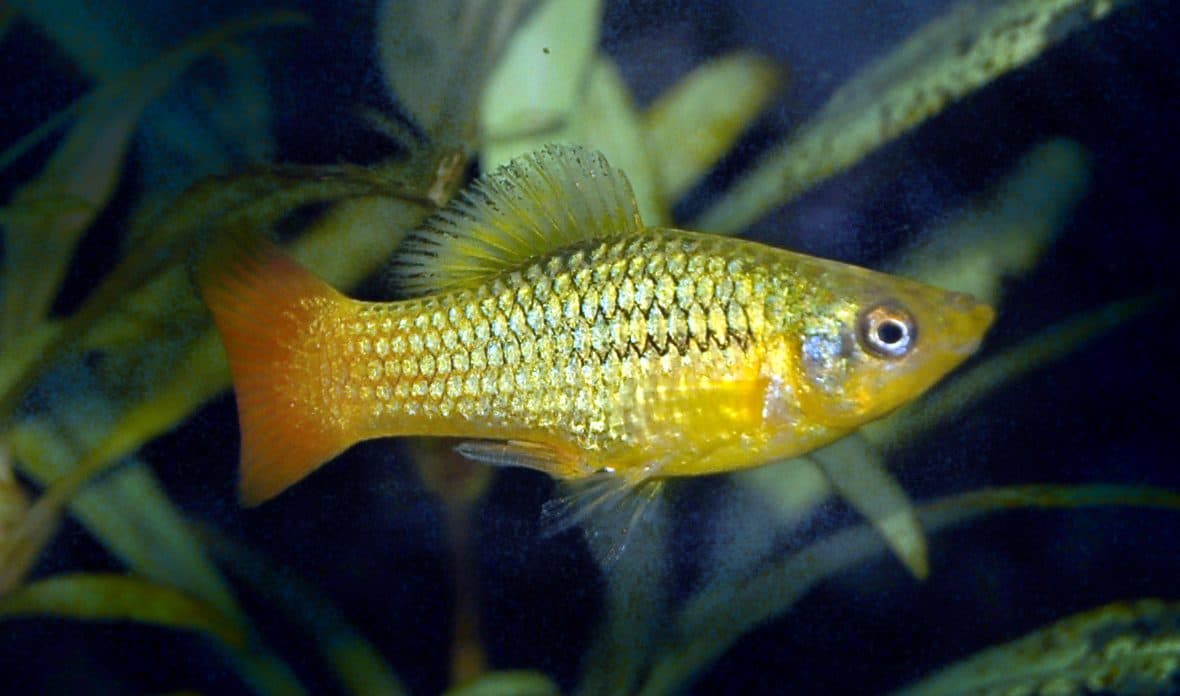
Photo: Marrabbio2, CC BY-SA 3.0, via Wikimedia Commons
Variable platyfish
Xiphophorus variatus
7 cm
Adult size
80 L
Minimum volume
4
Minimum group
5 years
Lifespan
Water parameters
Understand these values- Genus
- Xiphophorus
- Diet
- carnivore and omnivore
- Social life
- harem
In the wild
Overview
Described in 1904 by the American ichthyologist Seth Eugene Meek, the variatus platy owes its name to the Latin varius, “variegated”, for its highly variable colours. Like other Xiphophorus, it is used in genetic research.
Fish in the trade almost all come from farms in Asia and Eastern Europe. Introduced populations have become established in Costa Rica, Colombia, the United States, Hawaii, Singapore and Hong Kong.
- Scientific name
- Xiphophorus variatus (Meek, 1904)
- Classification
- Cyprinodontiformes › Poeciliidae
- IUCN Red List
- Least concern (LC)
Natural habitat
Endemic to the Atlantic slope of Mexico, from southern Tamaulipas to northern Veracruz
Observations (GBIF) and localities Native countries Rivers and lakes
It is native to Mexico, between southern Tamaulipas and northern Veracruz state, on the Atlantic slope.
It lives in warm springs, shallow streams, pools, marshes, canals and heavily vegetated ditches, often rich in algae and phytoplankton. Its subtropical climate means it prefers slightly cooler water than most livebearers (20 to 26 °C), hard and alkaline.
Behaviour
Peaceful and hardy, it is a good community aquarium fish. As with the platy, males relentlessly chase the females: several females per male and densely planted areas are recommended.
An undemanding omnivore, it eats worms, crustaceans, insects, detritus and plant matter. A livebearer, after 4 to 7 weeks of gestation it gives birth to broods that can exceed 100 fry; adults eat few of them.
Sources:FishBase Seriously Fish GBIF · Base map: Natural Earth