Photo: Matthew Mannell, Public domain, via Wikimedia Commons
Sterba's corydoras
Corydoras sterbai
7 cm
Adult size
100 L
Minimum volume
8
Minimum group
15 years
Lifespan
Water parameters
Understand these values- Genus
- Corydoras
- Diet
- omnivore
- Social life
- shoal
In the wild
Overview
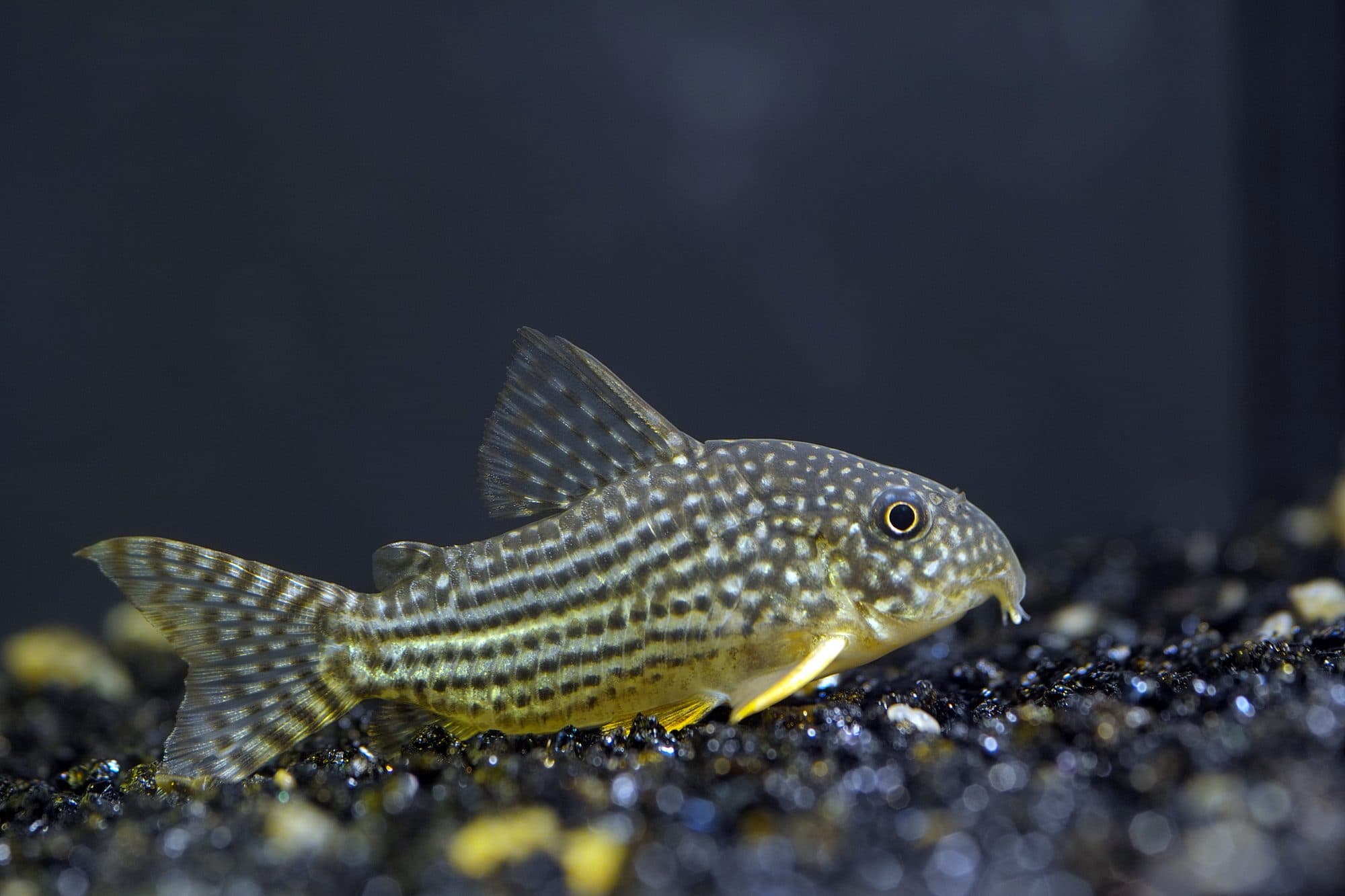
Described in 1962 by the German aquarist Joachim Knaack, Sterba's corydoras is named after Günther Sterba, a zoologist and author of reference books on aquarium fish. It is recognised by its dark, white-dotted head, its spotted body and the bright orange rays of its pectoral and pelvic fins.
Since the 2024 revision of the corydoras group, FishBase places it in the genus Hoplisoma. It can live for more than 15 years.
- Scientific name
- Hoplisoma sterbai (Knaack, 1962)Current valid name; in the hobby: Corydoras sterbai
- Classification
- Siluriformes › Callichthyidae
- IUCN Red List
- Least concern (LC)
Natural habitat
Rio Guaporé basin (central Brazil and Bolivia)
Observations (GBIF) and localities Native countries Rivers and lakes
The species was described from a specimen from the Rio Guaporé, which marks the border between Brazil and Bolivia. It lives in small rivers, creeks, tributaries and pools in flooded forest, in soft, acidic water that is often flowing and poor in plants.
Almost all fish sold today come from farms in Eastern Europe and Asia; they are more tolerant than wild fish but prefer water that is not too warm (22 to 28 °C).
Behaviour
Very peaceful, it suits many community aquariums with small tetras, cyprinids, anabantoids and dwarf cichlids. It is much more active and confident in a group of at least 6.
An omnivore, it sifts the substrate for food: sinking pellets and live or frozen prey. It is one of the easiest corydoras to breed: the female sticks her eggs to the glass or to plants. Seen from above, females are broader and rounder than males.
Sources:FishBase Seriously Fish GBIF · Base map: Natural Earth