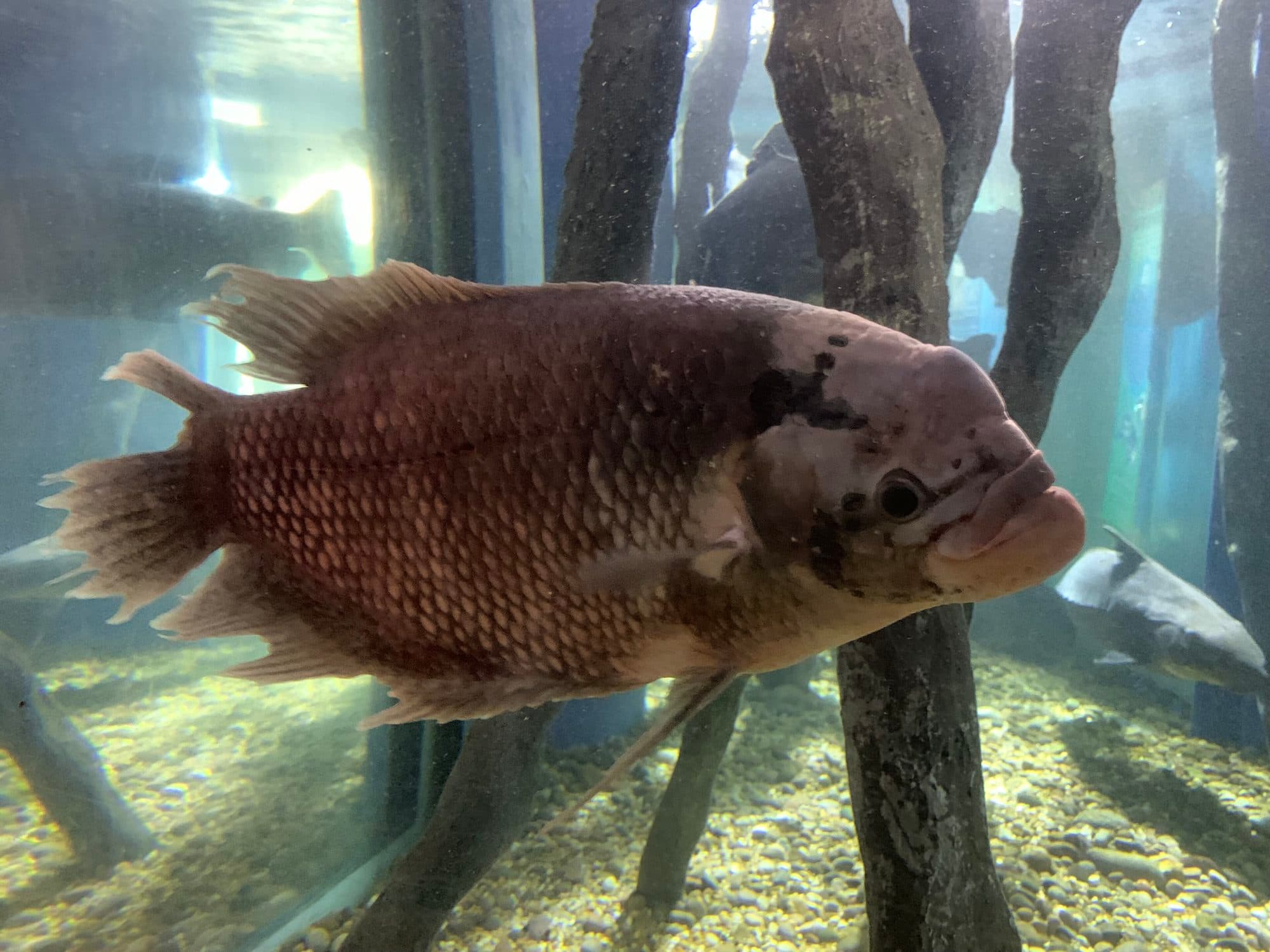
Photo: Qoki Doki, CC BY-SA 4.0, via Wikimedia Commons
Giant gourami
Osphronemus goramy
60 cm
Adult size
5000 L
Minimum volume
3
Minimum group
25 years
Lifespan
Water parameters
Understand these values- Genus
- Osphronemus
- Diet
- omnivore and carnivore
- Social life
- small group
In the wild
Overview
Described in 1801 by the French naturalist Bernard-Germain de Lacepède, the giant gourami is the largest of the gouramis: it reaches 70 cm and can live for more than 20 years. Miocene fossils have been found in central Sumatra.
It is above all a highly prized food fish in Southeast Asia, farmed in many countries. Able to breathe moist air, it survives a long time out of water, which allows it to be transported alive without refrigeration. In the aquarium it needs a tank of several thousand litres.
- Scientific name
- Osphronemus goramy Lacepède, 1801
- Classification
- Anabantiformes › Osphronemidae
- IUCN Red List
- Least concern (LC)
Natural habitat
Sumatra, Borneo, Java, Malay Peninsula, Thailand and Mekong basin; introduced elsewhere for aquaculture
Observations (GBIF) and localities Native countries Rivers and lakes
Its natural range is thought to include Sumatra, Borneo, Java, the Malay Peninsula, Thailand and Indochina; it has been introduced to many countries for aquaculture.
It lives in marshes, lakes, medium to large rivers and slow canals, among vegetation, and enters flooded forest. It tolerates a wide range of water, soft to hard, and even brackish.
Behaviour
Generally peaceful with other large fish (knifefish, large catfish, loricariids), it eats small ones. Some adults become aggressive, especially when cramped.
An omnivore, it eats aquatic plants, fish, frogs, earthworms and even carrion. Mature at six months, the male builds a large nest of plant material (grass, roots) near the surface and guards the eggs; males have pointed dorsal and anal fins.
Sources:FishBase Seriously Fish GBIF · Base map: Natural Earth