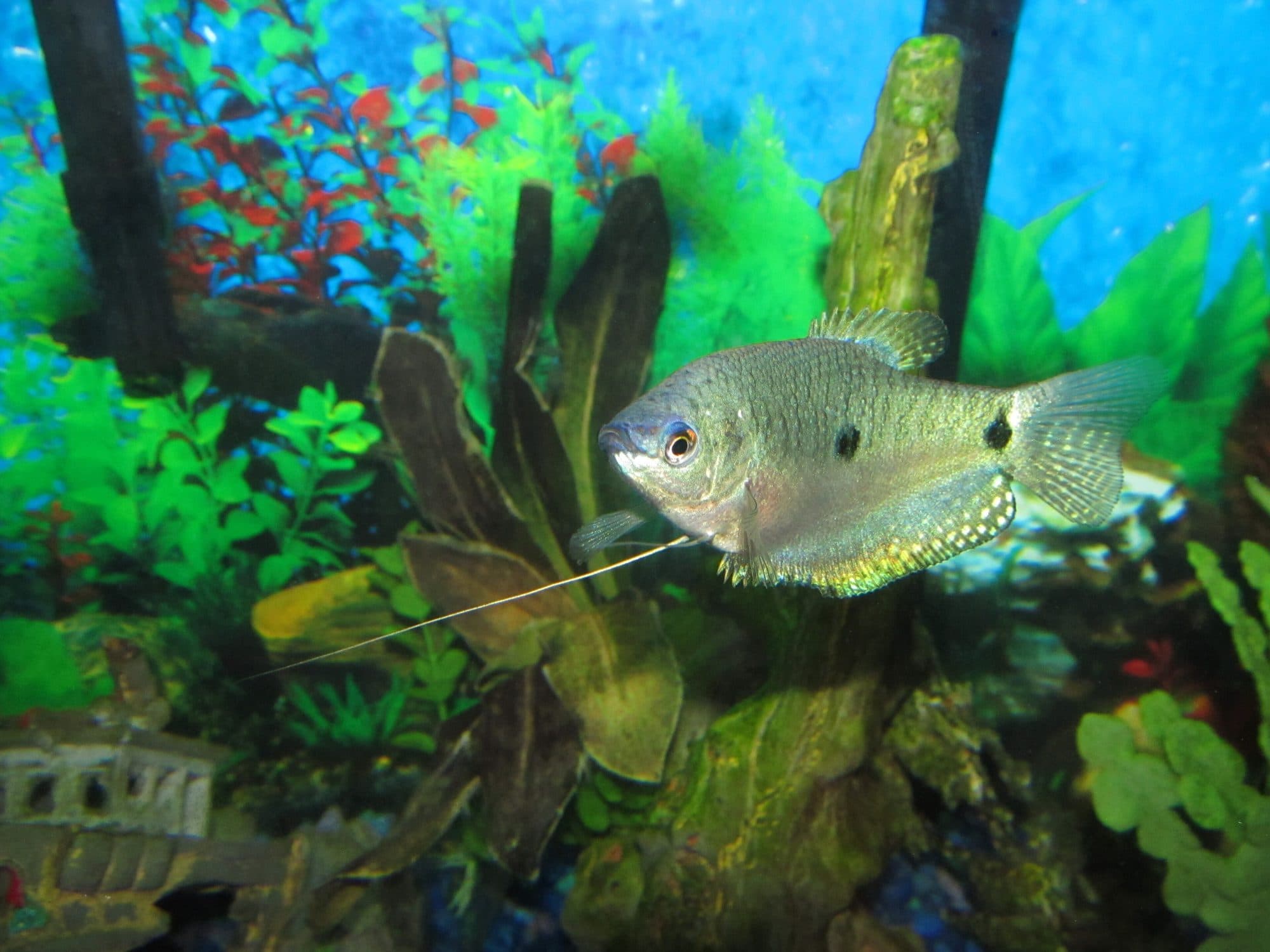
Photo: Gourami Watcher, CC BY-SA 3.0, via Wikimedia Commons
Three spot gourami
Trichopodus trichopterus
12 cm
Adult size
200 L
Minimum volume
2
Minimum group
8 years
Lifespan
Water parameters
Understand these values- Genus
- Trichopodus
- Diet
- carnivore, omnivore and planktivore
- Social life
- small group
In the wild
Overview
Described in 1770 by the German naturalist Peter Simon Pallas, the blue gourami is one of the oldest known aquarium fish. Its two black spots on the flank, plus its eye, earn it the English name “three spot gourami”. It reaches 15 cm.
Besides its many captive-bred forms (blue, golden, opaline), it is also a food fish: it is sold fresh in Southeast Asian markets, and salted and dried in Java. It has been introduced to many countries.
- Scientific name
- Trichopodus trichopterus (Pallas, 1770)
- Classification
- Anabantiformes › Osphronemidae
- IUCN Red List
- Least concern (LC)
Natural habitat
Mekong basin (southern China, Laos, Thailand, Cambodia, Vietnam), Myanmar, Malaysia and northern Indonesia
Observations (GBIF) and localities Native countries Rivers and lakes
It lives mainly in the Mekong basin and the plains of Southeast Asia: pools, ditches, marshes, canals and shallow wetlands, still and rich in vegetation.
In the middle and lower Mekong it makes lateral migrations: in the rainy season it leaves the river and permanent water bodies for flooded forests and grasslands, then returns when the water drops. It must breathe air at the surface thanks to its labyrinth.
Behaviour
Often presented as a community fish, it is not always one: some individuals become cantankerous with age. Males are territorial and squabble, especially in the breeding season; it is best kept with robust fish (barbs, large tetras, loricariids, loaches, other medium gouramis).
An omnivore, it eats plants, algae, zooplankton, larvae and detritus. The male builds a large bubble nest among floating plants; he may harass an unwilling female, hence the value of offering him two or three.
Sources:FishBase Seriously Fish GBIF · Base map: Natural Earth