Photo: JanRehschuh, CC BY-SA 3.0, via Wikimedia Commons
Dwarf gourami
Trichogaster lalius
6 cm
Adult size
80 L
Minimum volume
1
Minimum group
4 years
Lifespan
Water parameters
Understand these values- Genus
- Trichogaster
- Diet
- omnivore
- Social life
- pair
In the wild
Overview
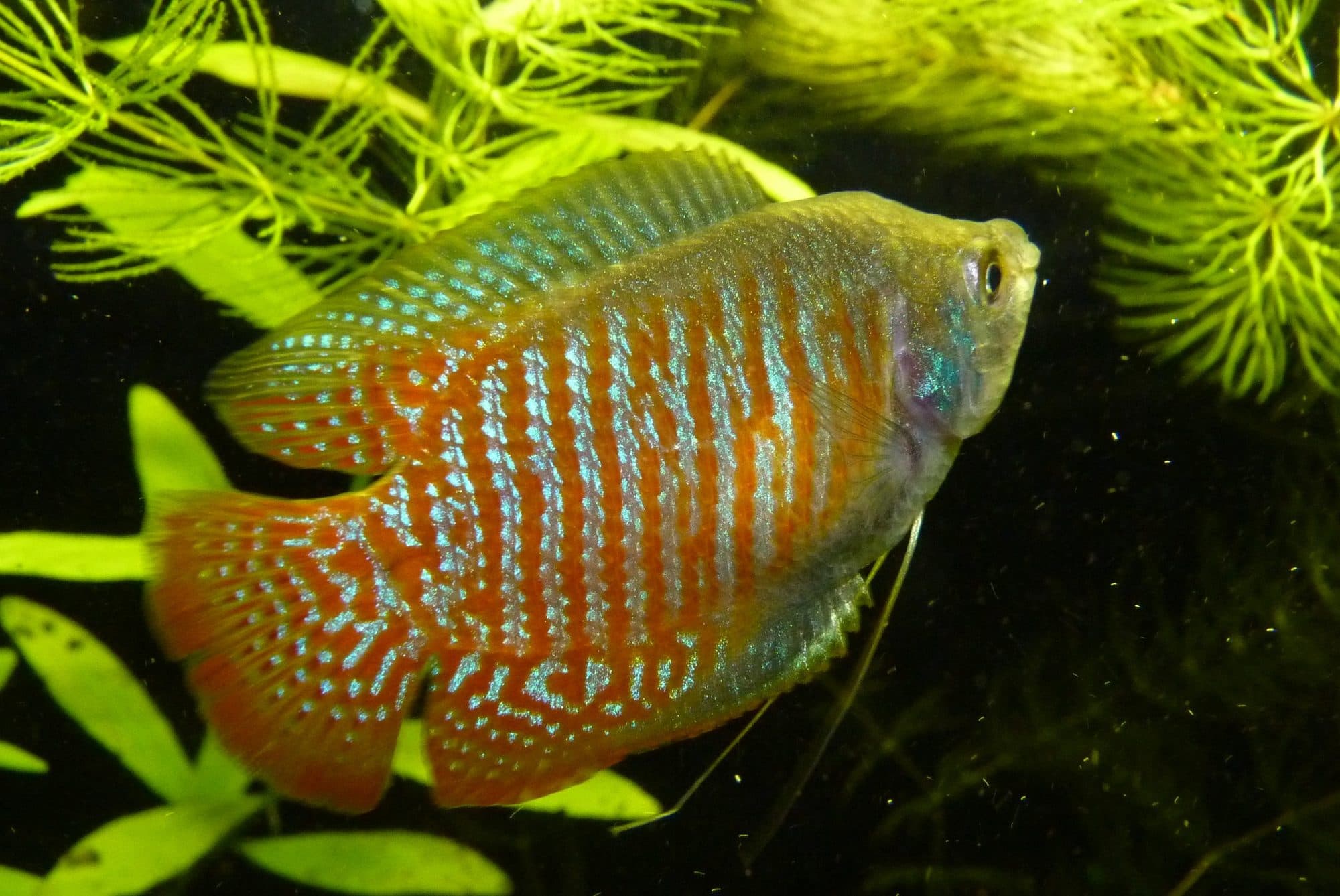
Described in 1822 by Francis Hamilton, the dwarf gourami has oblique red and turquoise-blue bands in the male; females are silvery. Many captive-bred forms exist (“neon”, “red”, “powder blue”).
All fish in the trade are mass-bred, mainly in Asia. The species is badly affected by an iridovirus (DGIV), a virus widespread in some farms, which explains the fragility of many batches and calls for a serious quarantine.
- Scientific name
- Trichogaster lalius (Hamilton, 1822)
- Classification
- Anabantiformes › Osphronemidae
- IUCN Red List
- Least concern (LC)
Natural habitat
Pakistan, northern India and Bangladesh
Observations (GBIF) and localities Native countries Rivers and lakes
It is widespread in Pakistan, northern India and Bangladesh; records from Nepal and Myanmar are thought to be misidentifications. Feral populations exist in Singapore, the United States and Colombia.
It lives in slow, weed-choked water: pools, marshes, ditches, streams and irrigation canals. Like all gouramis, it supplements its breathing with air taken at the surface.
Behaviour
Both shy and territorial, it should be the main fish in a small tank. Males can become very aggressive towards other anabantoids (bettas, gouramis) or brightly coloured fish such as guppies, and hide in the presence of larger species.
Small, peaceful cyprinids (harlequins, rasboras) and discreet loaches are the best companions. An omnivore, it feeds on small invertebrates and algae. The male builds a bubble nest, often mixed with plant debris, and guards the eggs.
Sources:FishBase Seriously Fish GBIF · Base map: Natural Earth