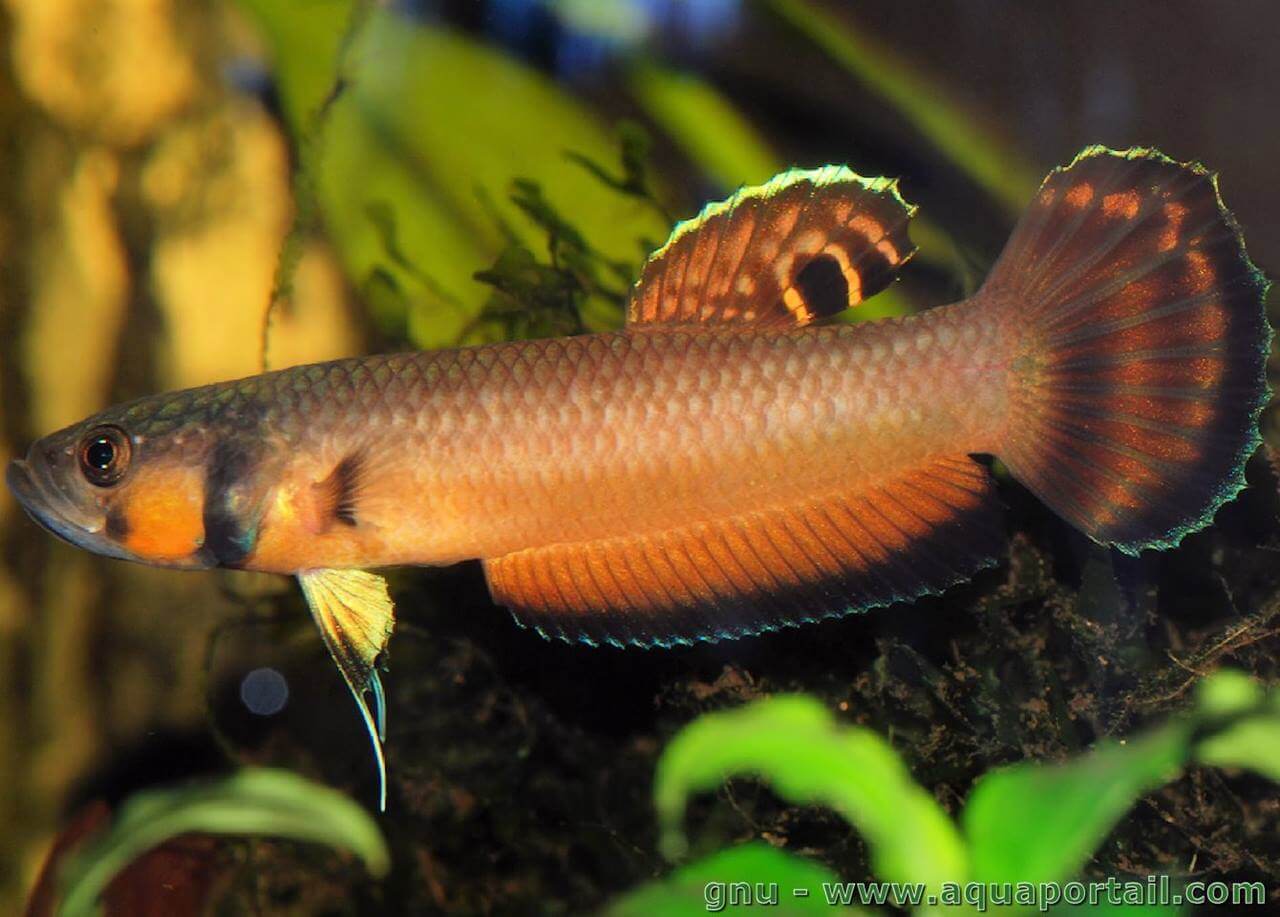
Brunei beauty
Betta macrostoma
10 cm
Adult size
120 L
Minimum volume
2
Minimum group
5 years
Lifespan
Water parameters
Understand these values- Genus
- Betta
- Diet
- carnivore
- Social life
- pair
In the wild
Overview
Described in 1910 by Charles Tate Regan, the Brunei beauty is one of the most spectacular Betta: the red male bears a red spot on the gill cover and a white-ringed black eyespot on the dorsal fin. Macrostoma means “big mouth”.
It is listed as vulnerable by the IUCN because of its tiny range. Its populations differ slightly in colour by locality and are kept separately by breeders.
- Scientific name
- Betta macrostoma Regan, 1910
- Classification
- Anabantiformes › Osphronemidae
- IUCN Red List
- Vulnerable (VU)
Natural habitat
Northern Borneo: Labi district (Brunei) and Baram district near Marudi (Sarawak, Malaysia)
Observations (GBIF) and localities Native countries Rivers and lakes
Endemic to Borneo, it is known only from a few localities along the Mendaram river and the Labi forest in Brunei, and from Baram district near Marudi in Sarawak.
It lives in calm, shaded pools at the top of waterfalls in rainforest or along clear, fast streams. Each pool holds a single adult, a pair or a few juveniles. The slightly brown water is almost free of minerals, with a pH of 4.4 to 5.7.
Behaviour
Discreet with other fish, it is easily intimidated by larger or livelier species. Among themselves, however, males fight constantly, and females squabble until they establish a hierarchy: keep it as a pair, possibly formed from a small group.
It is a mouthbrooder: the male keeps the eggs and then the fry in his mouth. It hunts insects and small invertebrates, perhaps the red shrimp that share its habitat. A tight-fitting lid is essential to keep the humid air the fry need.
Sources:FishBase Seriously Fish GBIF · Base map: Natural Earth