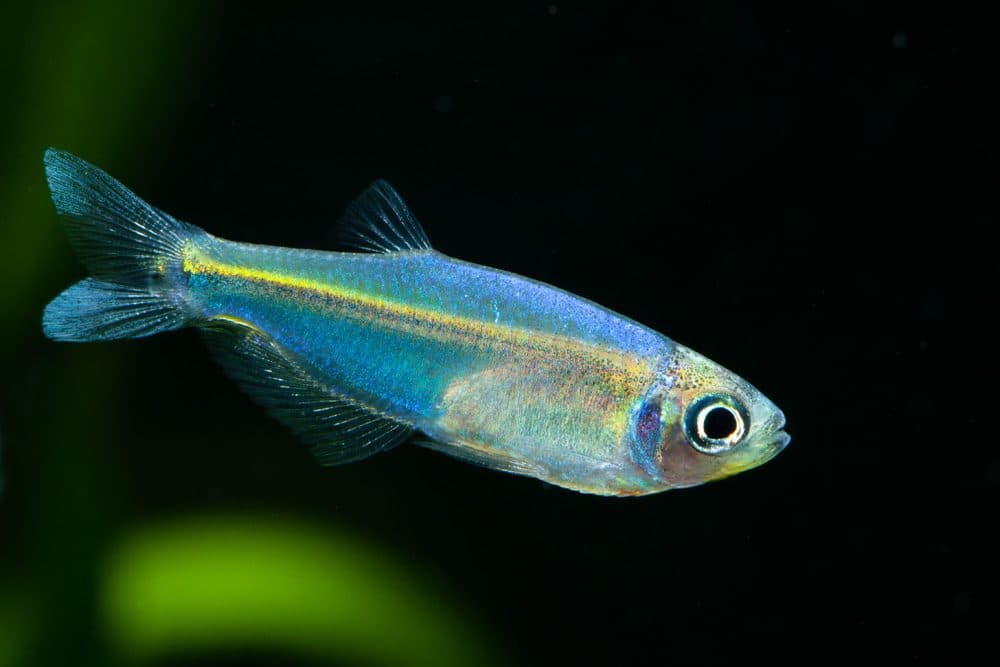
Tambopata tetra
Tyttocharax tambopatensis
2 cm
Adult size
60 L
Minimum volume
10
Minimum group
5 years
Lifespan
Water parameters
Understand these values- Genus
- Tyttocharax
- Diet
- omnivore
- Social life
- shoal
In the wild
Overview
Described in 1995 by Stanley Weitzman and Hernán Ortega, this tetra is named after the Tambopata River, in south-eastern Peru. With a maximum length of about 1.6 cm without the tail, it is one of the smallest known characiforms.
The genus Tyttocharax belongs to the subfamily Xenurobryconinae; the revision of tetra classification published in 2024 places this group in the family Stevardiidae, separate from the Characidae.
- Scientific name
- Tyttocharax tambopatensis Weitzman & Ortega, 1995
- Classification
- Characiformes › Stevardiidae
- IUCN Red List
- Least concern (LC)
Natural habitat
Manu and Tambopata river basins, Peruvian Amazon (Madre de Dios)
Observations (GBIF) and localities Native countries Rivers and lakes
It inhabits small blackwater streams running through Mauritia flexuosa palm swamps (aguajales) in the Peruvian Amazon. It is found mainly in pools and calm areas of streams 2 to 4 m wide lined with gallery forest, 20 to 60 cm deep.
The current there is weak, the bottom sandy or stony, cluttered with plant debris. It stays near the banks, where vegetation provides shelter from predators.
Behaviour
A shoaling fish, it swims near the surface in groups of 20 to 80 in the wild. Its very small size means it should be kept in a species tank or one shared with tiny, peaceful species, with very fine live food.
It remains rare in the trade and poorly documented in the aquarium; keeping it in a large group, in soft, acidic water, best reproduces its natural conditions.