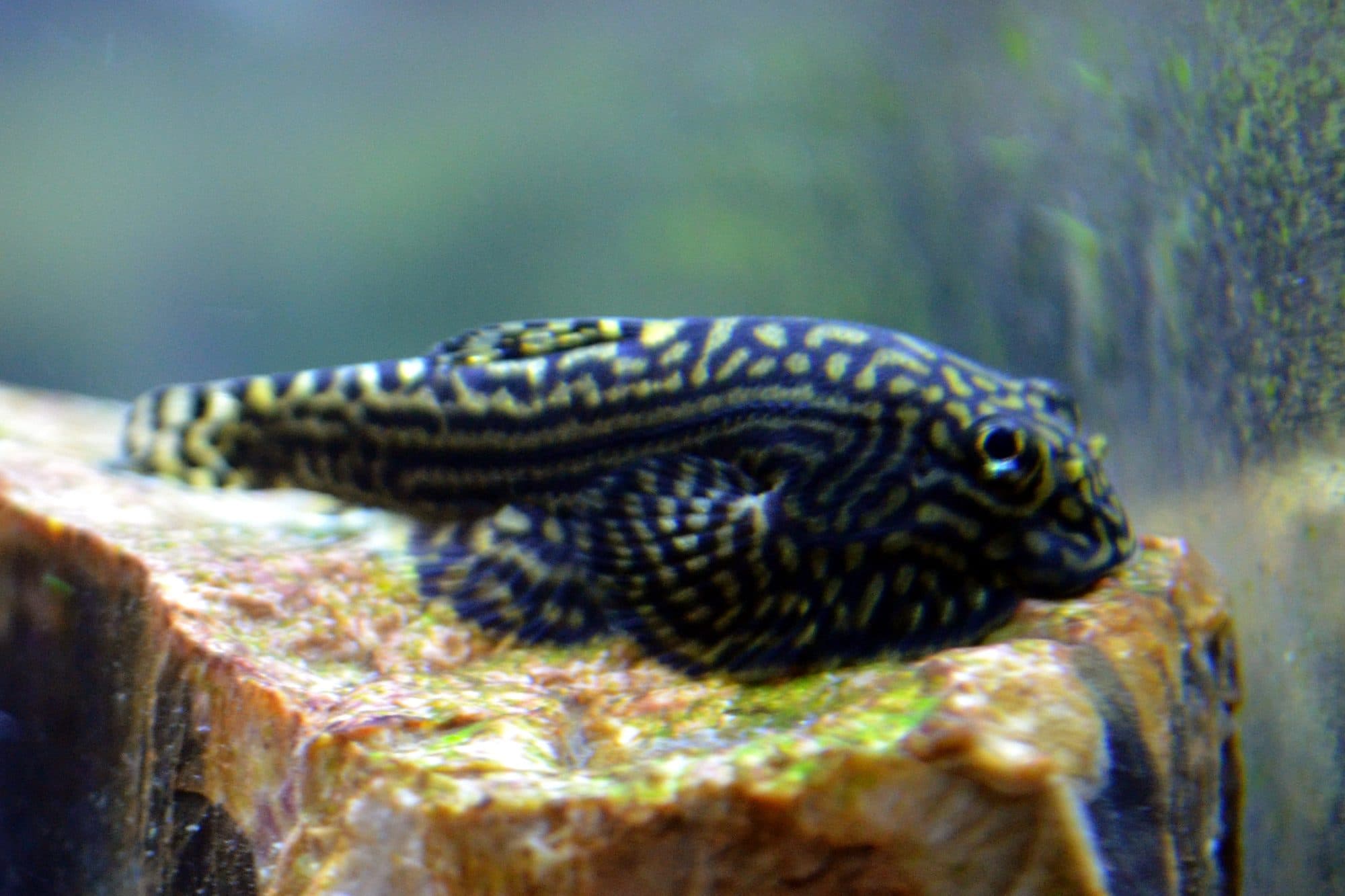
Photo: Spiketooth, CC BY-SA 3.0, via Wikimedia Commons
Gold ring butterfly sucker
Sewellia lineolata
6.5 cm
Adult size
80 L
Minimum volume
4
Minimum group
5 years
Lifespan
Water parameters
Understand these values- Genus
- Sewellia
- Diet
- herbivore, algae eater
- Social life
- small group
In the wild
Overview
This reticulated hillstream loach, stuck to stones like a little disc, was recorded by Diard more than 150 years before it was rediscovered in the early 1990s. Arriving in the trade in the mid-2000s, it soon became popular thanks to its patterns and easy breeding. It is listed as vulnerable.
- Scientific name
- Sewellia lineolata (Valenciennes, 1846)
- Classification
- Cypriniformes › Gastromyzontidae
- IUCN Red List
- Vulnerable (VU)
Natural habitat
Central Vietnam (Huong, Thu Bon, Tra Khuc and An Lao basins); reported from the Mekong basin
Observations (GBIF) and localities Native countries Rivers and lakes
It lives in headwaters and fast, shallow, highly oxygenated tributaries, made up of riffles and runs broken by pools or waterfalls, over rock, sand, gravel and boulders, without aquatic plants. The clear water and sunshine let a rich biofilm grow there.
Behaviour
The most dominant of the hillstream loaches, without being aggressive towards different fish. Keep it with small midwater cyprinids (Tanichthys, Danio, Devario, Rasbora), hillstream gobies (Rhinogobius, Stiphodon) or rheophilic catfish. It needs a strong current, plenty of oxygen and cool water. It grazes algae: algae-based food and small prey.
Sources:FishBase Seriously Fish GBIF · Base map: Natural Earth