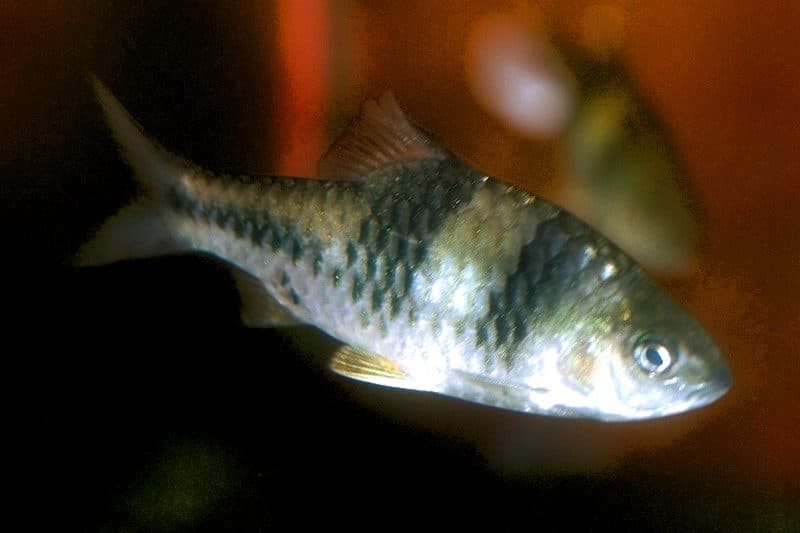
Photo: opencage, CC BY-SA 3.0, via Wikimedia Commons
T-barb
Puntius lateristriga
15 cm
Adult size
400 L
Minimum volume
6
Minimum group
12 years
Lifespan
Water parameters
Understand these values- Genus
- Puntius
- Diet
- omnivore
- Social life
- shoal
In the wild
Overview
The T-barb, now placed in the genus Striuntius, owes its name to the dark pattern on its flanks. It is sometimes sold under the name of the related B. kuchingensis, which instead has a row of spots along the lateral line. Several local forms are recognised.
- Scientific name
- Striuntius lateristriga (Valenciennes, 1842)Current valid name; in the hobby: Puntius lateristriga
- Classification
- Cypriniformes › Cyprinidae
- IUCN Red List
- Least concern (LC)
Natural habitat
Southern Thailand, Peninsular Malaysia, Sumatra, Java and a few islands in the South China Sea (Tioman, Anambas)
Observations (GBIF) and localities Native countries Rivers and lakes
It lives mainly in clear-water forest streams, often in pools at the foot of waterfalls, over smooth rocks, sand or gravel, with submerged wood, leaf litter and plants (Cryptocoryne, Barclaya). It has also been found in peat swamps and blackwater streams.
Behaviour
Fairly boisterous, it can intimidate less robust species with its size and activity, especially at mealtimes. In a large tank, keep it with other robust fish: large Danio and Devario, Barilius, Garra and some loaches. Young fish live in large groups, adult males become more solitary. A foraging omnivore: varied food, live or frozen prey.
Sources:FishBase Seriously Fish GBIF · Base map: Natural Earth