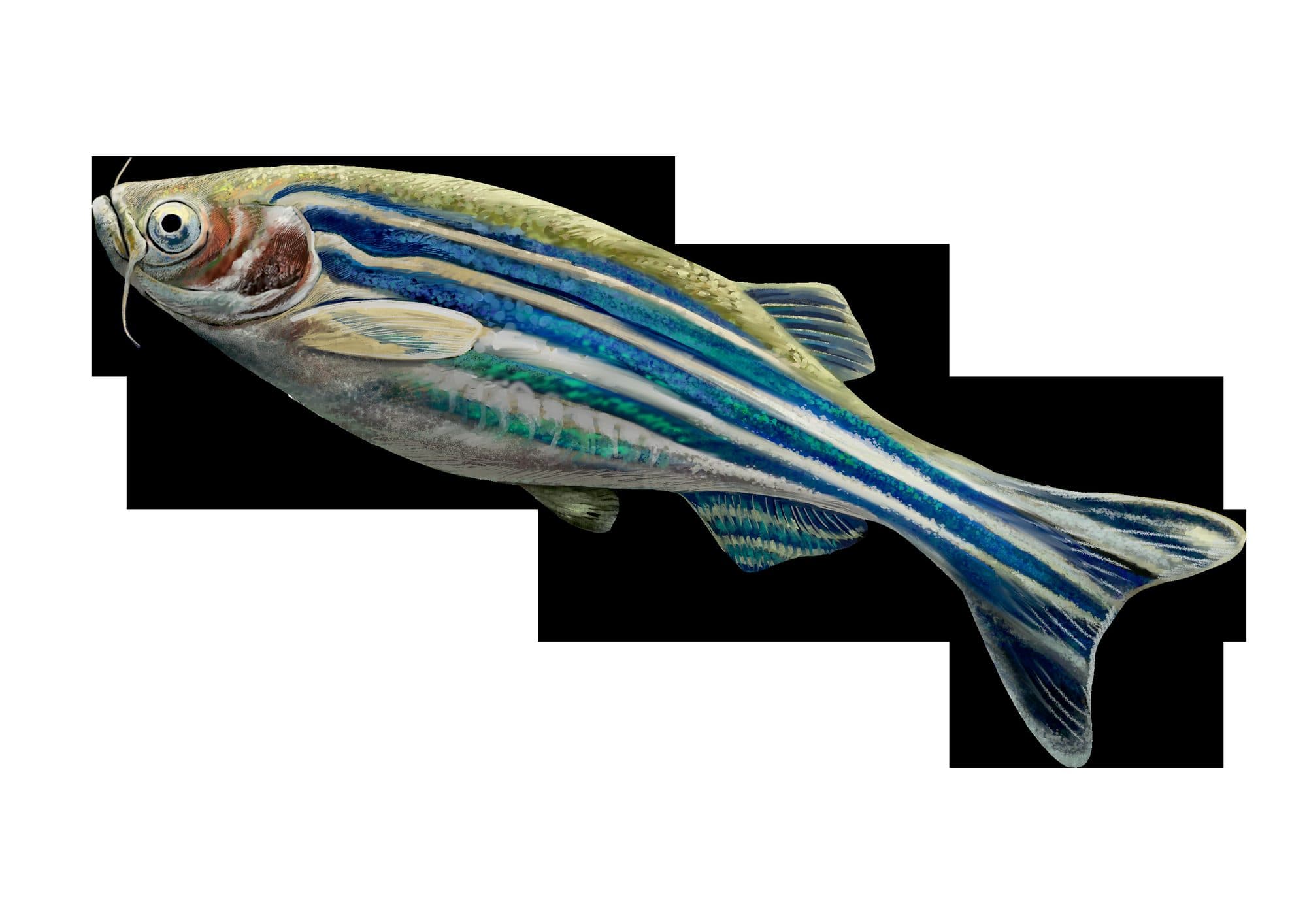
Photo: DataBase Center for Life Science (DBCLS), CC BY 4.0, via Wikimedia Commons
Zebra danio
Danio rerio
4 cm
Adult size
100 L
Minimum volume
10
Minimum group
4 years
Lifespan
Water parameters
Understand these values- Genus
- Danio
- Diet
- carnivore
- Social life
- shoal
In the wild
Overview
Described in 1822 by the Scottish surgeon Francis Hamilton from fish from the Kosi River, a tributary of the Ganges, the zebra danio is also called the “zebrafish” for its blue and gold stripes. Some authors place it in the genus Brachydanio.
It is one of the main model organisms in biology: its transparent embryos, which develop in a few days, are used to study development, genetics, regeneration and toxicology. Domestic strains live 3.5 years on average, up to 5.5 years for the oldest.
- Scientific name
- Danio rerio (Hamilton, 1822)
- Classification
- Cypriniformes › Danionidae
- IUCN Red List
- Least concern (LC)
Natural habitat
Plains of the Indian subcontinent: India, Bangladesh, Nepal, Bhutan, Pakistan, Myanmar
Observations (GBIF) and localities Native countries Rivers and lakes
A 2007 study in northeast India found it mainly in slow or still water over silt, with submerged or overhanging vegetation: seasonal pools, flooded margins and mature rice paddies, rather than in river channels. In rocky streams, shoals stay at the edges, under the vegetation.
Its historical range runs from Pakistan to Myanmar, but many old records probably concern related species discovered since. In the wild it behaves almost like an annual species, breeding just before the monsoon.
Behaviour
Peaceful, hardy and lively, it is a shoaling fish to keep in a group of at least 8 to 10; the slimmer males then compete in colour to attract the females. It swims mainly at the surface and in midwater.
A micropredator, it feeds on small crustaceans and insect larvae (mosquitoes in particular), but accepts anything in the aquarium. It is an excellent choice for a first breeding: it scatters its eggs among plants, with no parental care, and breeds all year round.
Sources:FishBase Seriously Fish GBIF · Base map: Natural Earth