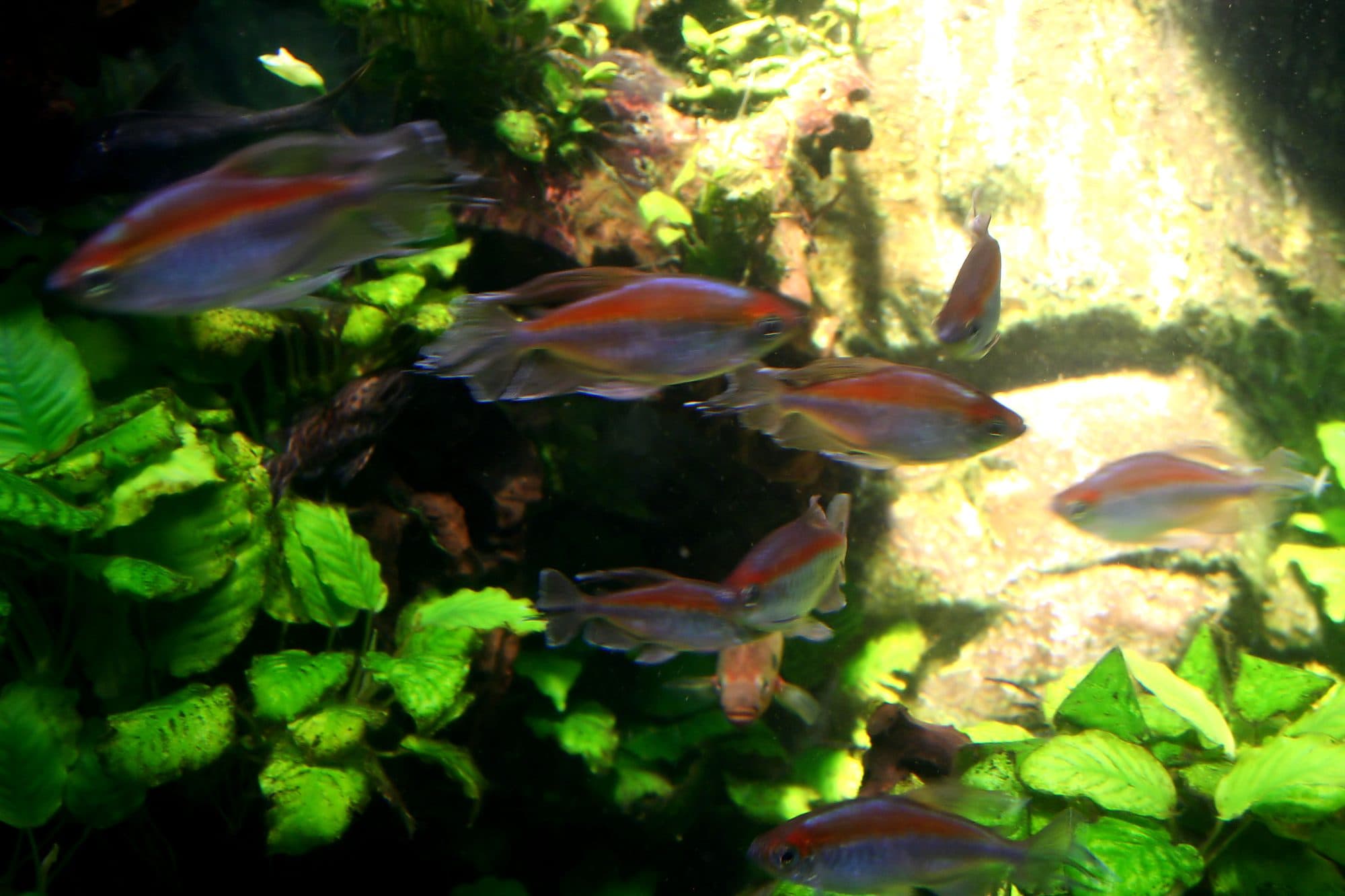
Photo: Phalinn Ooi from Kuala Lumpur, Malaysia, CC BY 2.0, via Wikimedia Commons
Congo tetra
Phenacogrammus interruptus
8 cm
Adult size
140 L
Minimum volume
8
Minimum group
8 years
Lifespan
Water parameters
Understand these values- Genus
- Phenacogrammus
- Diet
- omnivore
- Social life
- shoal
In the wild
Overview
The Congo tetra is often sold young, grey and dull, at 4 cm, and goes unnoticed. Once adult it takes on iridescent highlights and males develop spectacular long, fringed fins. Most fish in the trade are bred in the Far East and Eastern Europe.
- Scientific name
- Phenacogrammus interruptus (Boulenger, 1899)
- Classification
- Characiformes › Alestidae
- IUCN Red List
- Least concern (LC)
Natural habitat
Lower and middle Congo basin: Democratic Republic of the Congo and Republic of the Congo
Observations (GBIF) and localities Native countries Rivers and lakes
Wild populations live in part of the Congo basin, where they feed on small worms, insects, crustaceans and algae.
Behaviour
Peaceful, but its active swimming and size can frighten shy species. Keep it with other tetras, rainbowfish, Corydoras, Loricariidae, Synodontis and calm cichlids (Pelvicachromis, Cleithracara), never with fin nippers or boisterous species. Timid, it must be kept in a group. Sensitive to water quality, which determines the state of its fins and colours. A good share of live and frozen prey.
Sources:FishBase Seriously Fish GBIF · Base map: Natural Earth