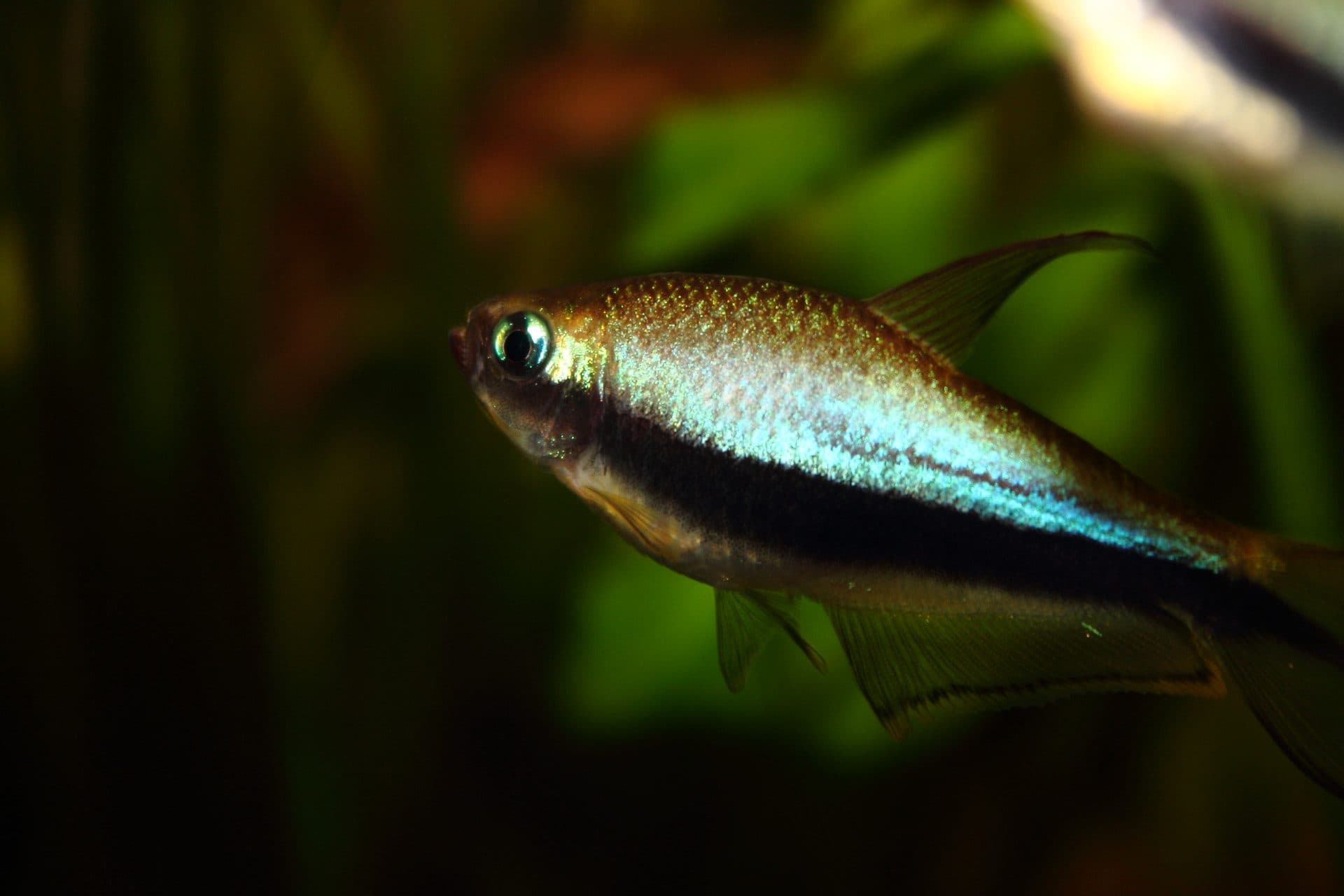
Photo: Dennis Lamczak, CC BY-SA 3.0, via Wikimedia Commons
Emperor tetra
Nematobrycon palmeri
4 cm
Adult size
100 L
Minimum volume
8
Minimum group
5 years
Lifespan
Water parameters
Understand these values- Genus
- Nematobrycon
- Diet
- carnivore
- Social life
- shoal
In the wild
Overview
The emperor tetra, with its violet sheen and trident-shaped tail in the male, is one of the best choices for beginners: beautiful, hardy and cheap. Almost all fish in the trade are captive-bred. It is sometimes confused with N. lacortei, the only other species in the genus.
- Scientific name
- Nematobrycon palmeri Eigenmann, 1911
- Classification
- Characiformes › Acestrorhamphidae
- IUCN Red List
- Data deficient (DD)
Natural habitat
Colombia: San Juan and Atrato basins
Observations (GBIF) and localities Native countries Rivers and lakes
It is ubiquitous within its range, in slow stretches of rivers, small tributaries and oxbows, with livebearers (Priapichthys), cichlids (Andinoacara) and various characins and Loricariidae.
Behaviour
One of the best tetras for a community tank: lively, peaceful and colourful, it lives with most livebearers, Danio, Rasbora, other tetras, Corydoras, small Loricariidae, gouramis and dwarf cichlids, but not with large species that would eat it. Keep it in a shoal. A micropredator: fine dry food, but not exclusively, with small live or frozen prey every day.
Sources:FishBase Seriously Fish GBIF · Base map: Natural Earth