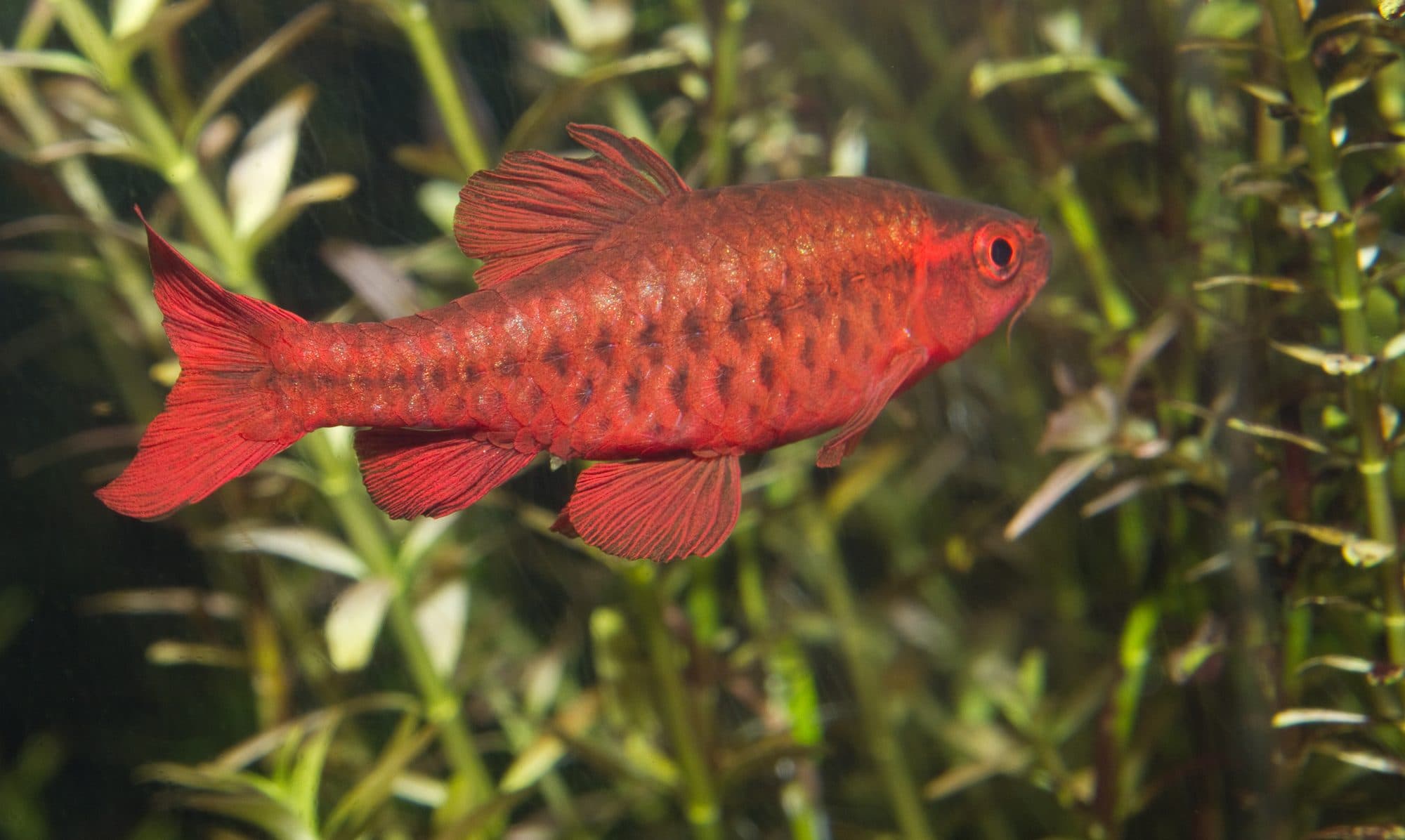
Photo: Brian Gratwicke, CC BY 2.0, via Wikimedia Commons
Cherry barb
Puntius titteya
4 cm
Adult size
80 L
Minimum volume
6
Minimum group
5 years
Lifespan
Water parameters
Understand these values- Genus
- Puntius
- Diet
- omnivore
- Social life
- small group
In the wild
Overview
Described in 1929 by the Sri Lankan zoologist Paulus Deraniyagala, the cherry barb takes its species name from a local vernacular name; Puntius comes from the Bengali pungti, used for small cyprinids. Males in breeding condition turn an intense cherry red.
The IUCN lists the species as vulnerable: its forest habitat has been massively cleared and the most colourful forms may have been overfished. Fish in the trade now almost all come from farms, with albino or “super red” strains.
- Scientific name
- Puntius titteya Deraniyagala, 1929
- Classification
- Cypriniformes › Cyprinidae
- IUCN Red List
- Vulnerable (VU)
Natural habitat
Endemic to Sri Lanka: Kelani to Nilwala basins, in the south-western “wet zone”
Observations (GBIF) and localities Native countries Rivers and lakes
It lives in the “wet zone” of south-western Sri Lanka, which receives 2,000 to 3,000 mm of rain a year and was once covered in lowland rainforest. It has been collected in the Kelani and Nilwala basins and the small streams between them.
It mainly frequents heavily shaded, shallow, slow streams and rivulets over silt covered in dead leaves. Less than 5% of the region's primary forest remains today.
Behaviour
Very peaceful and undemanding about water quality, it is an excellent beginner's fish, compatible with most small community fish. Gregarious, it is kept in a group of at least 6 to 10; the smaller, slimmer males then compete in colour.
An omnivore, it feeds on detritus, green algae, diatoms, insect larvae and small animals. The female scatters about 200 eggs among the bank vegetation; they hatch in 1 to 2 days, with no parental care.
Sources:FishBase Seriously Fish GBIF · Base map: Natural Earth