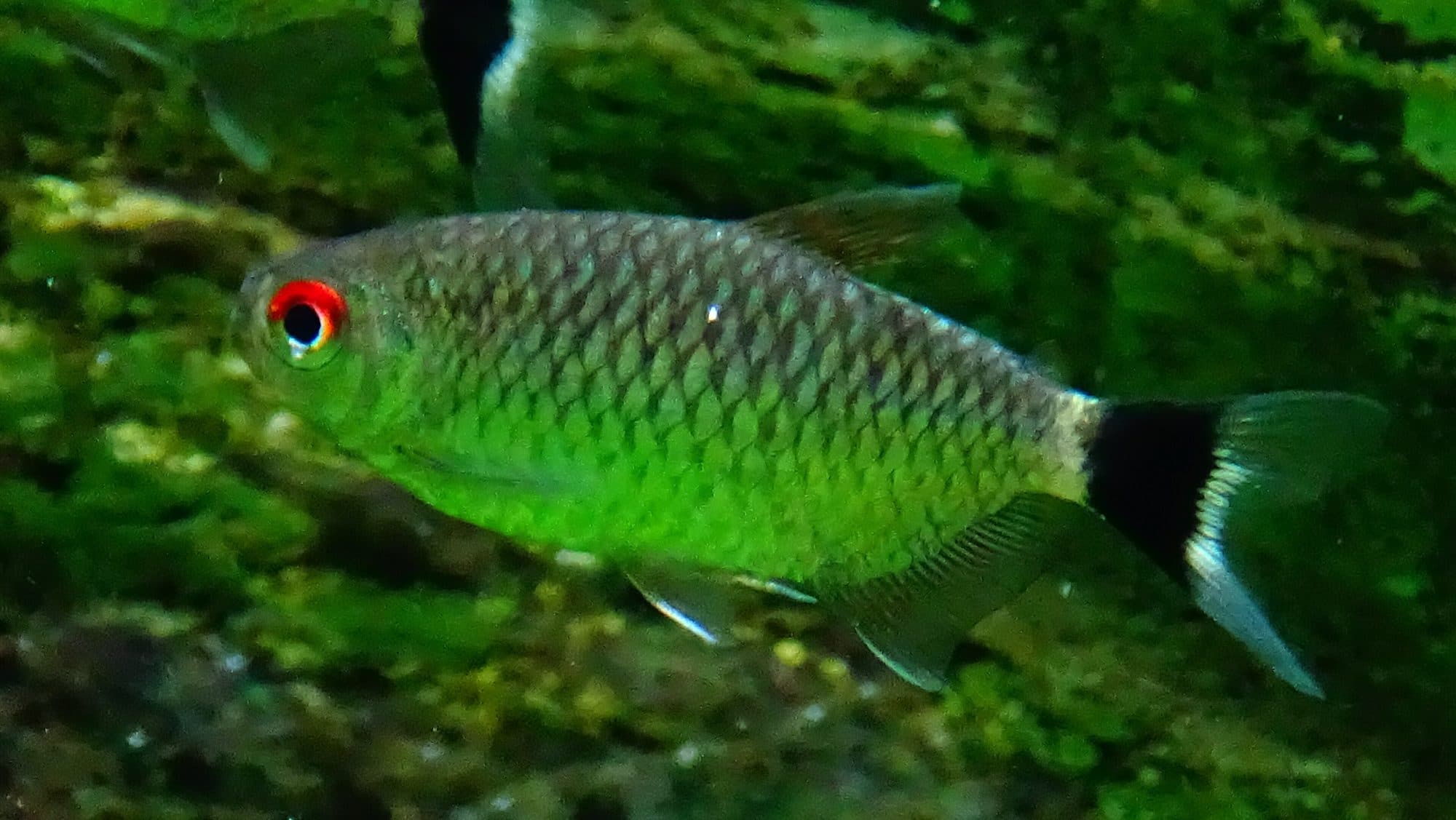
Photo: Cedricguppy - Loury Cédric, CC BY-SA 4.0, via Wikimedia Commons
Red-eye tetra
Moenkhausia sanctaefilomenae
7 cm
Adult size
130 L
Minimum volume
8
Minimum group
5 years
Lifespan
Water parameters
Understand these values- Genus
- Moenkhausia
- Diet
- omnivore
- Social life
- shoal
In the wild
Overview
The red-eye tetra, with the bright red upper part of its eye and the black-and-white band on its tail, is found in almost every pet shop. All fish in the trade are captive-bred, which makes them undemanding about water and food: an excellent choice for beginners. It is now placed in the genus Bario.
- Scientific name
- Bario sanctaefilomenae (Steindachner, 1907)Current valid name; in the hobby: Moenkhausia sanctaefilomenae
- Classification
- Characiformes › Acestrorhamphidae
- IUCN Red List
- Least concern (LC)
Natural habitat
Paranaíba, São Francisco, upper Paraná, Paraguay and Uruguay basins: Brazil, Paraguay, Argentina, Uruguay
Observations (GBIF) and localities Native countries Rivers and lakes
It lives mainly in the clear-water rivers that feed the Pantanal. Unlike the often murky waters of Amazonia, vegetation grows in abundance there: rafts of floating plants (Eichhornia, Salvinia) and vast beds of Echinodorus.
Behaviour
A good, if slightly boisterous, choice for a community tank: it can intimidate calm species (anabantoids, dwarf cichlids). Keep it with active fish: tetras of similar size, rainbowfish, large Rasbora, barbs, Danio, with Corydoras, small Loricariidae or loaches on the bottom. Keep it in a shoal. It accepts almost anything, with small live or frozen prey and a little plant matter.
Sources:FishBase Seriously Fish GBIF · Base map: Natural Earth