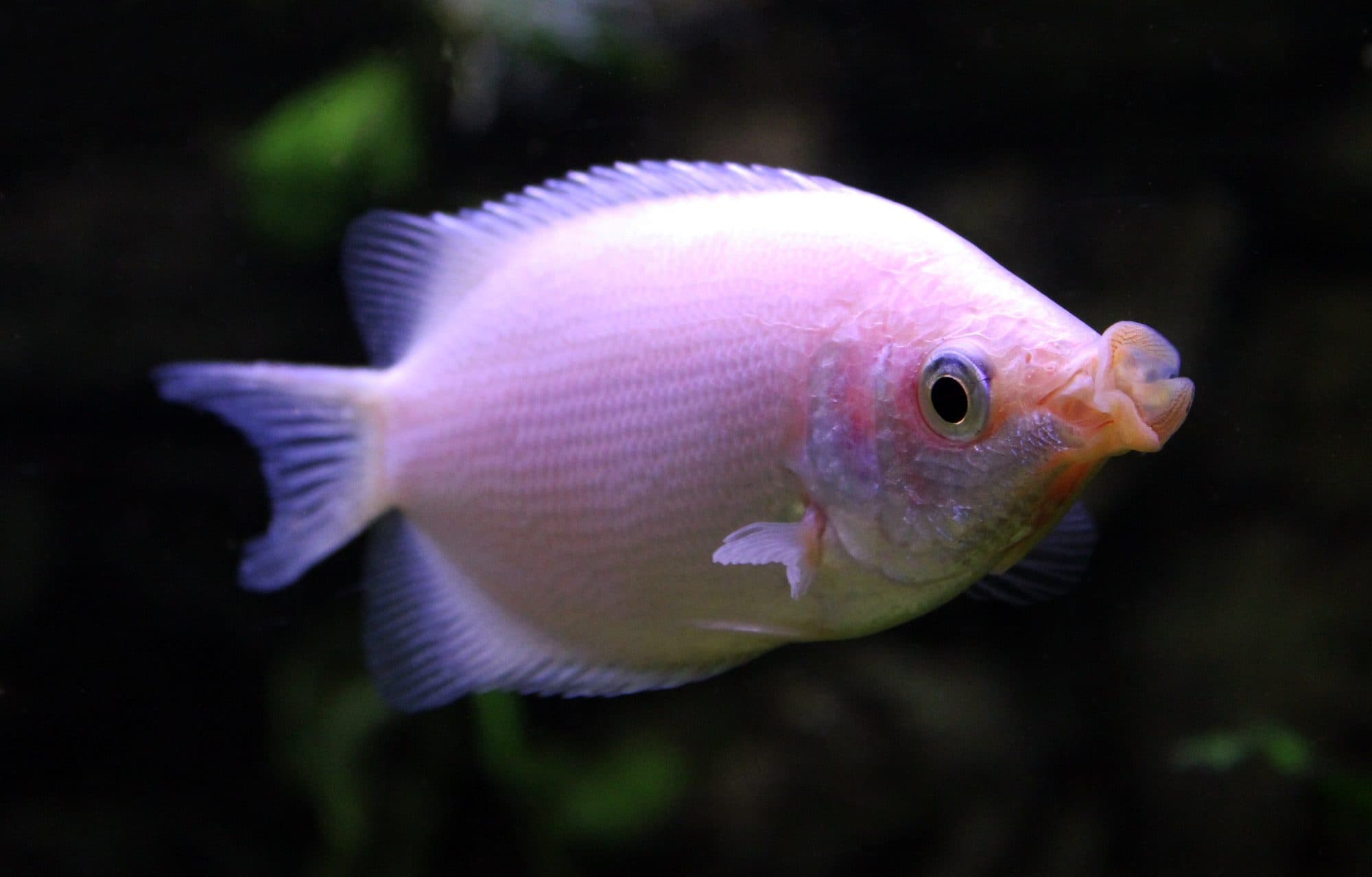
Photo: Green Yoshi, CC BY-SA 3.0, via Wikimedia Commons
Kissing gourami
Helostoma temminckii
25 cm
Adult size
400 L
Minimum volume
3
Minimum group
12 years
Lifespan
Water parameters
Understand these values- Genus
- Helostoma
- Diet
- omnivore
- Social life
- small group
In the wild
Overview
The kissing gourami owes its name to the “kisses” exchanged by two individuals, which are actually a form of confrontation. The pink form, one of the best-selling in the world, does not exist in the wild: it is a selected leucistic variety. The deliberately deformed “balloon” form should be avoided.
- Scientific name
- Helostoma temminckii Cuvier, 1829
- Classification
- Anabantiformes › Helostomatidae
- IUCN Red List
- Least concern (LC)
Natural habitat
Southern Indochina (Vietnam, Cambodia, Thailand), Peninsular Malaysia, Borneo, Sumatra and Java
Observations (GBIF) and localities Native countries Rivers and lakes
It prefers slow or still water (floodplain lakes, oxbows, marshes), black or clear, near submerged weed beds. The black water of ancient peat swamps can drop to pH 3 or 4. It breathes air at the surface.
Behaviour
It only suits large community tanks of robust fish: unable to catch prey larger than a few millimetres, it can live with shoaling cyprinids, catfish, characins, cichlids and other anabantoids of suitable size. It becomes aggressive if short of space. A specialised filter feeder, it also scrapes algae with its lips lined with horny teeth: fine food and plant matter.
Sources:FishBase Seriously Fish GBIF · Base map: Natural Earth