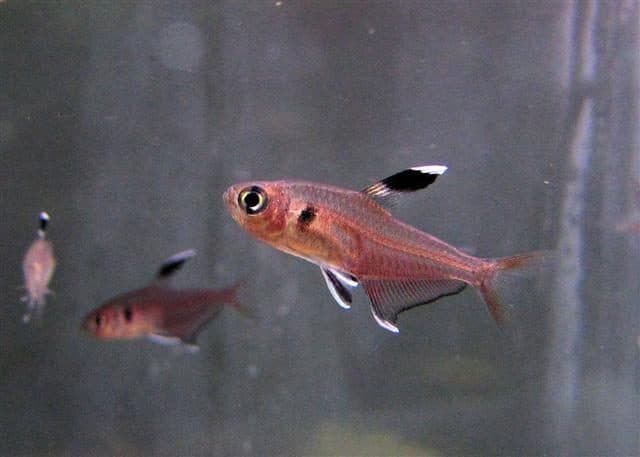
Photo: Gregoire Germeau, CC BY 3.0, via Wikimedia Commons
Copeland's tetra
Hyphessobrycon copelandi
4 cm
Adult size
60 L
Minimum volume
10
Minimum group
3 years
Lifespan
Water parameters
Understand these values- Genus
- Hyphessobrycon
- Diet
- omnivore
- Social life
- shoal
In the wild
Overview
Described in 1908 by the American ichthyologist Marion Durbin from material collected by the Thayer Expedition, this tetra is named after the ichthyologist Herbert Edson Copeland. The classification revised in 2024 places it in the genus Megalamphodus, with the red tetras of the eques group.
Its range is curiously fragmented, between the upper Amazon and the coastal rivers of the Guiana Shield. In French Guiana, “yaya” is the Creole name given to small characins of this kind.
- Scientific name
- Megalamphodus copelandi (Durbin, 1908)Current valid name; in the hobby: Hyphessobrycon copelandi
- Classification
- Characiformes › Acestrorhamphidae
- IUCN Red List
- Least concern (LC)
Natural habitat
Upper Solimões (Brazil) and Mana and Approuague rivers (French Guiana, Suriname)
Observations (GBIF) and localities Native countries Rivers and lakes
It is often found in slow-flowing water or in the backwater zones of small creeks, with clear water and a sandy bottom. In French Guiana it occupies notably the upper reaches of rivers, above the falls.
Measurements indicate tropical water at 24 to 28 °C; its range includes the upper Solimões in Brazil, the Mana and Approuague basins in French Guiana, and Suriname.
Behaviour
Its capture in large numbers in the wild reflects gregarious behaviour: it is kept in a shoal of at least ten. Peaceful, it lives with other small South American fish.
An omnivore, it accepts small live prey and dry food. Its breeding in captivity has not been documented.