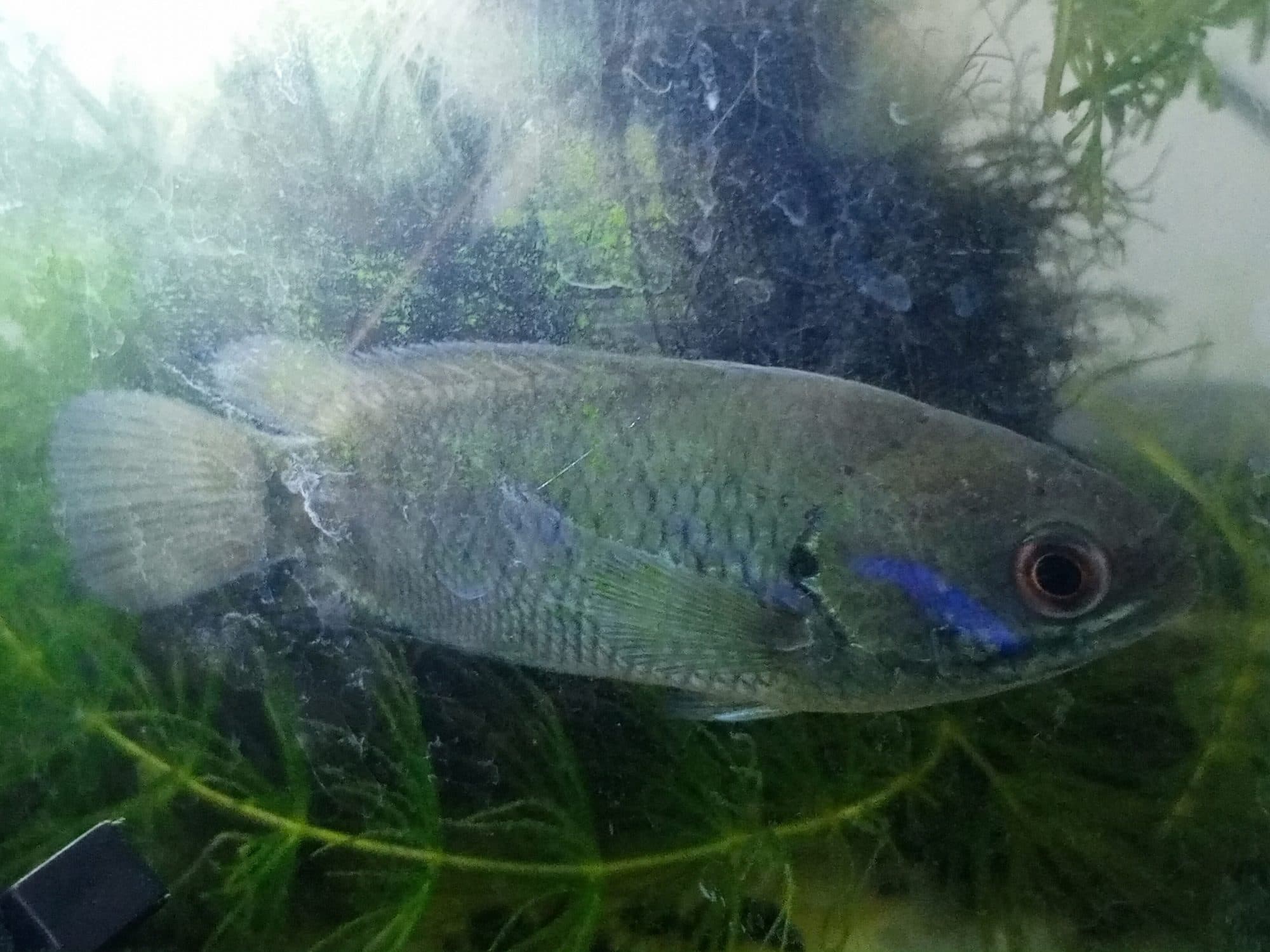
Photo: Renno Sumarsono, CC0, via Wikimedia Commons
Climbing perch
Anabas testudineus
20 cm
Adult size
300 L
Minimum volume
3
Minimum group
12 years
Lifespan
Water parameters
Understand these values- Genus
- Anabas
- Diet
- carnivore
- Social life
- small group
In the wild
Overview
The climbing perch is famous for its ability to survive out of water and to move over land from one pool to another. It must breathe air and makes audible sounds. Farmed for food in several countries, it is uncommon in the hobby despite its interest.
- Scientific name
- Anabas testudineus (Bloch, 1792)
- Classification
- Anabantiformes › Anabantidae
- IUCN Red List
- Least concern (LC)
Natural habitat
South and Southeast Asia, from India and Pakistan to southern China and Indonesia; introduced in the Philippines, Papua New Guinea and Pacific islands
Observations (GBIF) and localities Native countries Rivers and lakes
It lives in almost every freshwater habitat in its range: marshes, lakes, canals, ponds, rice fields, puddles, oxbows and rivers, often heavily vegetated, in murky still water. It tolerates extreme conditions and buries itself in mud during the dry season.
Behaviour
Its adult size and predatory instinct make it unsuitable for a community tank: much smaller fish are eaten, but sturdy cyprinids, catfish, cichlids and spiny eels of a suitable size do well in a large tank. Its aggression towards its own kind varies between reports. Mostly predatory: worms, shellfish, frozen prey and pellets.
Sources:FishBase Seriously Fish GBIF · Base map: Natural Earth