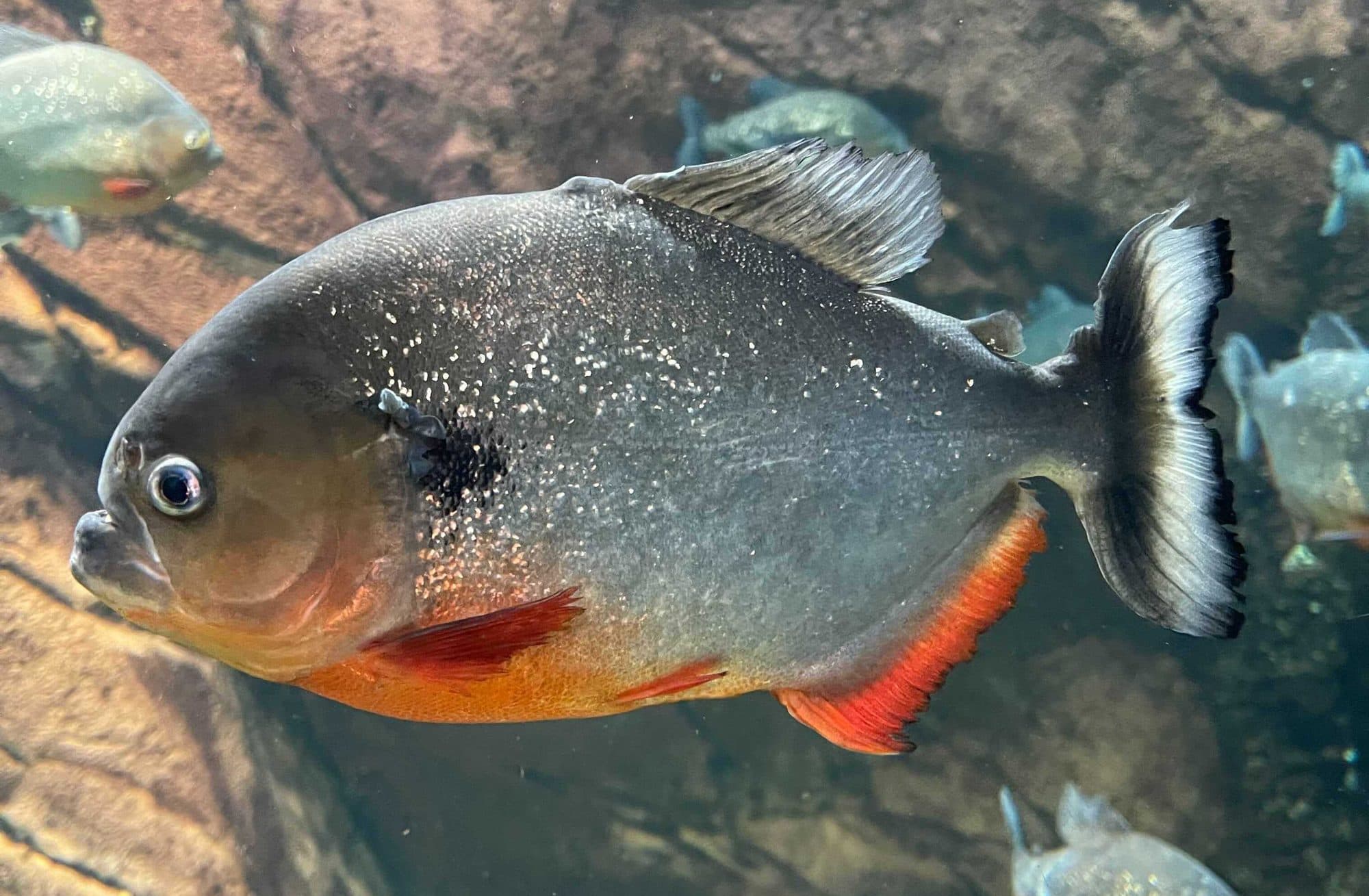
Photo: Gatorfan252525, CC BY-SA 4.0, via Wikimedia Commons
Black spot piranha
Pygocentrus cariba
30 cm
Adult size
1000 L
Minimum volume
5
Minimum group
10 years
Lifespan
Water parameters
Understand these values- Genus
- Pygocentrus
- Diet
- carnivore
- Social life
- shoal
In the wild
Overview
Described in 1821 by the German naturalist Alexander von Humboldt during his exploration of the Orinoco, the black spot (or “black-shouldered”) piranha has a large black spot behind the gill cover. Its name cariba takes up the Venezuelan name for these fish.
Specialists recognise three species of Pygocentrus: P. cariba, P. nattereri and P. piraya. Despite their reputation, serious piranha attacks on humans are extremely rare.
- Scientific name
- Pygocentrus cariba (Humboldt, 1821)
- Classification
- Characiformes › Serrasalmidae
- IUCN Red List
- Least concern (LC)
Natural habitat
Orinoco basin (Venezuela, Colombia): Inírida, Guaviare, Meta, Apure…
Observations (GBIF) and localities Native countries Rivers and lakes
It is limited to the Orinoco basin, in Colombia and Venezuela, including its large tributaries: Inírida, Guaviare, Meta, Vichada, Casanare, Apure, Guárico.
It is widespread in the lowlands and the Llanos, in channels, oxbows and lagoons, in warm, soft, acidic to neutral water.
Behaviour
Young fish live in shoals, adults in loose groups with a hierarchy: keep a single fish or a group of at least 5 to 6, with no other fish, in a very large aquarium. Even when well fed, it regards the fins of fish of its own size as food.
An opportunist, it eats fish, invertebrates, insects, seeds and fruit. Its sharp teeth inflict serious bites: take care during maintenance. Females grow larger and rounder than males.
Sources:FishBase Seriously Fish GBIF · Base map: Natural Earth