Bleeding heart tetra
Hyphessobrycon erythrostigma
6 cm
Adult size
140 L
Minimum volume
8
Minimum group
5 years
Lifespan
Water parameters
Understand these values- Genus
- Hyphessobrycon
- Diet
- omnivore
- Social life
- shoal
In the wild
Overview
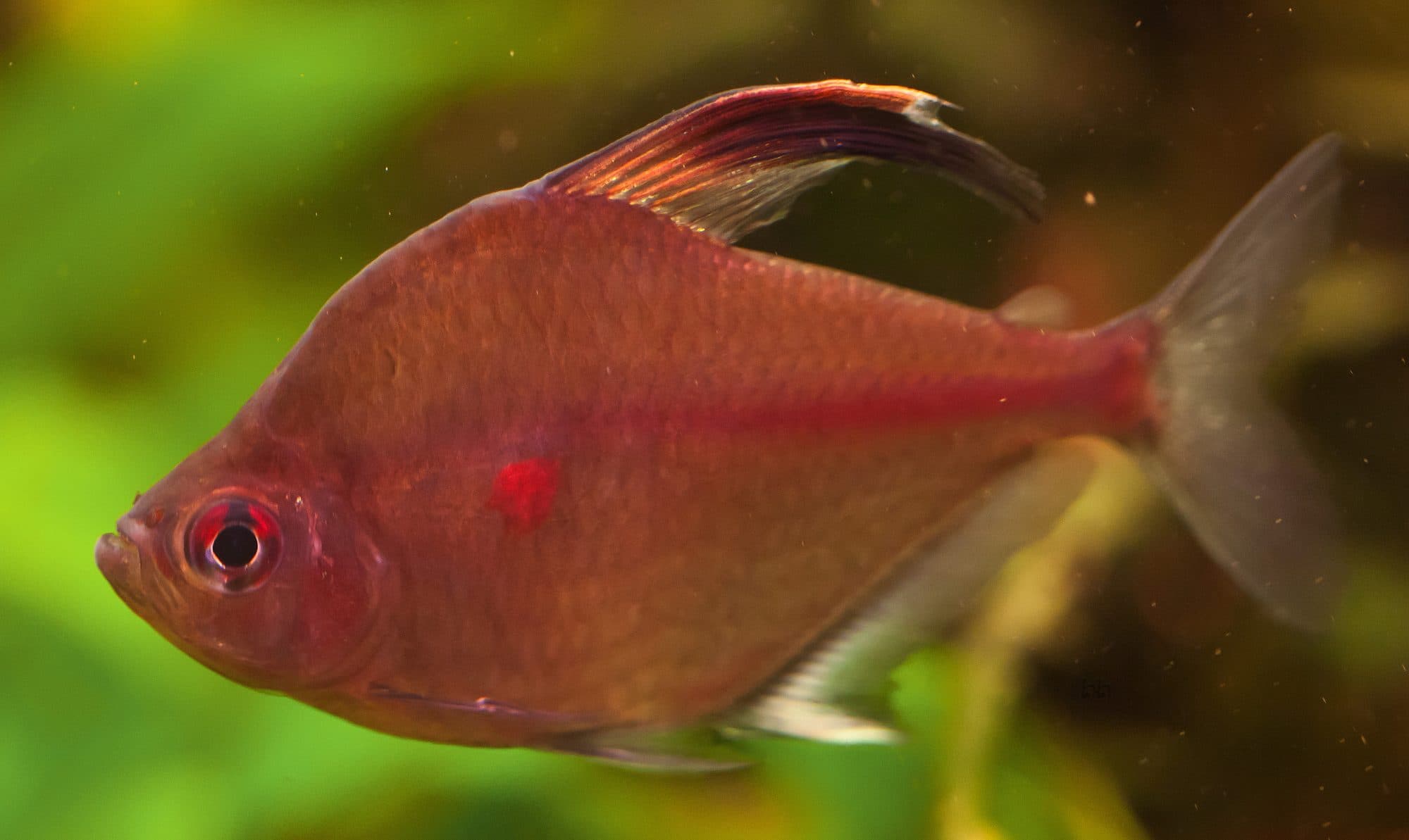
Described in 1943 by Henry W. Fowler, the bleeding heart tetra owes its name to the bright red spot on its flank, behind the gill cover; erythrostigma comes from the Greek for “red mark”. This red humeral spot exists in no other characin apart from two closely related species (H. socolofi and H. pyrrhonotus).
The classification revised in 2024 places it in the genus Megalamphodus. At over 6 cm, it is one of the largest tetras in its group.
- Scientific name
- Megalamphodus erythrostigma (Fowler, 1943)Current valid name; in the hobby: Hyphessobrycon erythrostigma
- Classification
- Characiformes › Acestrorhamphidae
- IUCN Red List
- Least concern (LC)
Natural habitat
Upper Amazon, Brazil–Peru–Colombia tri-border region, from the Rio Purus to the Río Nanay
Observations (GBIF) and localities Native countries Rivers and lakes
It lives in the upper Amazon basin, in the region where the borders of Brazil, Peru and Colombia meet, from the Rio Purus to the Río Nanay basin near Iquitos.
It frequents slow tributaries, side channels and forest lakes, near roots, fallen branches, overhanging vegetation or aquatic plants. The water, very low in minerals and stained brown, can drop below pH 4: in some igarapés, measurements found a pH of 3.8 to 6.4 and oxygen-poor water.
Behaviour
Generally peaceful, it suits a well-planned community aquarium, but adult males defend a small territory. Their displays, with dorsal, pelvic and anal fins spread, are spectacular; a mixed group of at least 8 to 10 makes it possible to watch them.
An opportunistic omnivore, in the wild it feeds mainly on fruit fallen into the water, supplemented by insects and their larvae. It is an egg scatterer that does not care for its eggs.
Sources:FishBase Seriously Fish GBIF · Base map: Natural Earth