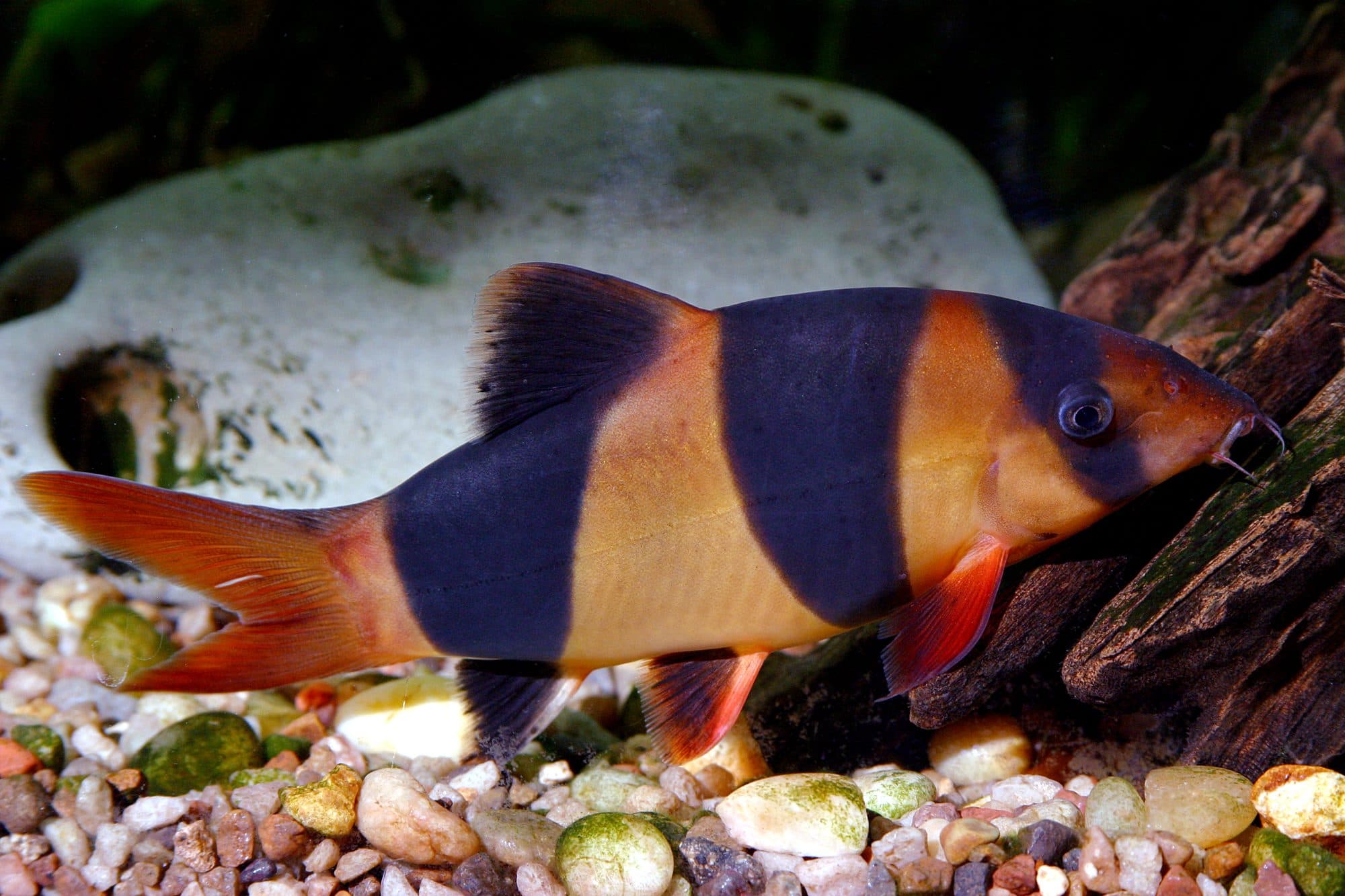
Photo: Vlad Butsky from San Jose, CA, USA, CC BY 2.0, via Wikimedia Commons
Clown loach
Chromobotia macracanthus
30 cm
Adult size
1200 L
Minimum volume
5
Minimum group
20 years
Lifespan
Water parameters
Understand these values- Genus
- Chromobotia
- Diet
- omnivore à tendance carnivore
- Social life
- small group
In the wild
Overview
Described in 1852 by Pieter Bleeker, the clown loach is the only species in the genus Chromobotia (“coloured botia”), created for it in 2004. Bright orange with three broad black bands, it can exceed 30 cm and live for more than 20 years. It belongs to the family Botiidae, split from the Cobitidae.
It makes audible clicking sounds, especially when it eats or squabbles, and sometimes lies on its side to rest, a normal behaviour that often worries beginners. Some of the fish in the trade are produced in Indonesia by hormone-induced breeding.
- Scientific name
- Chromobotia macracanthus (Bleeker, 1852)
- Classification
- Cypriniformes › Botiidae
- IUCN Red List
- Least concern (LC)
Natural habitat
Sumatra and Borneo (Indonesia)
Observations (GBIF) and localities Native countries Rivers and lakes
It lives in Sumatra (Batang Hari, Musi and Indragiri basins) and in Kalimantan on Borneo (Kapuas, Kayan). The populations of the two islands differ slightly in genetics and fin colour.
Adults live at the bottom of large channels, hidden under rocks and wood or in hollows in the mud. In the rainy season they move up into tributaries and flooded plains to spawn; the young stay there for several months, in soft, tea-coloured water among leaves and roots.
Behaviour
A gregarious fish, it forms complex social hierarchies and must live in a group of at least 5. Active and sometimes noisy, it intimidates small fish and may nip veil fins; it lives well with midwater cyprinids and other loaches.
Mostly carnivorous, it eats molluscs (it is a good snail eater), insects and worms, with a little plant matter. Its adult size calls for a very large tank (at least 1.80 m).
Sources:FishBase Seriously Fish GBIF · Base map: Natural Earth