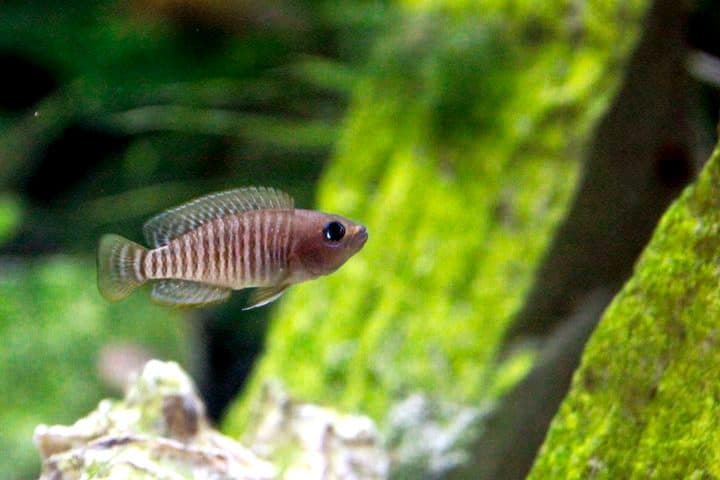
Photo: Marrabbio2, CC BY-SA 3.0, via Wikimedia Commons
Multies
Neolamprologus multifasciatus
4 cm
Adult size
100 L
Minimum volume
5
Minimum group
8 years
Lifespan
Water parameters
Understand these values- Genus
- Neolamprologus
- Diet
- carnivore
- Social life
- small group
In the wild
Overview
Described in 1906 by George Albert Boulenger, Neolamprologus multifasciatus is one of the smallest cichlids in the world: males reach 4 cm, females about 2.5 cm. Its body is barred with many thin vertical bands, hence its name.
It is a “shell-dweller”: each fish lives in an empty shell of a Neothauma snail, which serves as shelter and spawning site. Its highly structured colonies are studied by behavioural biologists.
- Scientific name
- Neolamprologus multifasciatus (Boulenger, 1906)
- Classification
- Cichliformes › Cichlidae
- IUCN Red List
- Not evaluated (NE)
Natural habitat
Endemic to Lake Tanganyika (Burundi, DR Congo, Tanzania, Zambia)
Observations (GBIF) and localities Native countries Rivers and lakes
It is endemic to Lake Tanganyika. It lives in fairly deep areas near the shore, over soft bottoms where empty snail shells accumulate.
The lake water is warm, very stable, hard and alkaline (pH 8 to 9).
Behaviour
It lives in large colonies, but each individual fiercely defends its shell and a tiny territory around it; pairs have their shells side by side. It constantly digs in the sand to bury or uncover shells, reshaping the decor.
It feeds on the plankton passing over the colony. It lives with species from other levels of the tank (small Julidochromis, Cyprichromis). The female spawns in her shell and guards the fry; provide more shells than fish.
Sources:FishBase Seriously Fish GBIF · Base map: Natural Earth