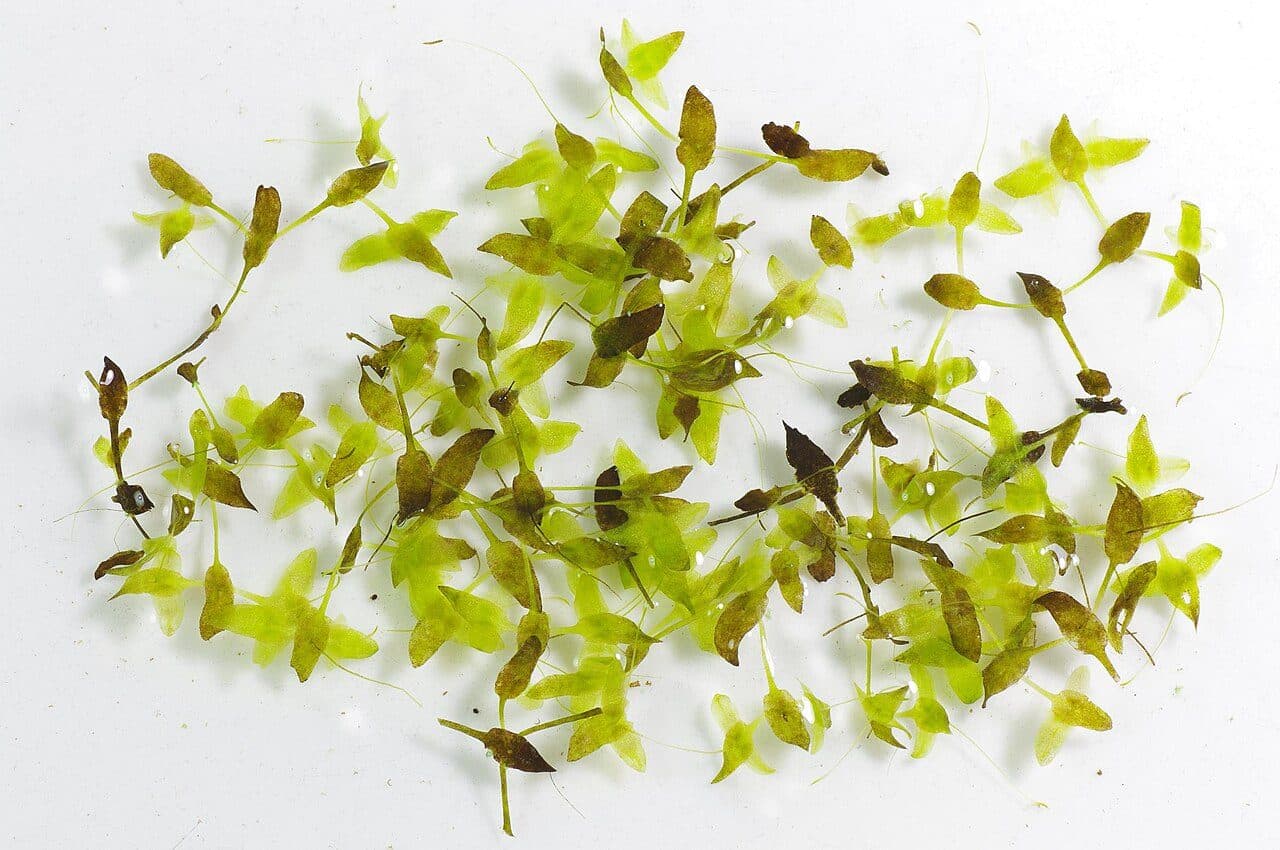
Photo: Christian Fischer, CC BY-SA 3.0, via Wikimedia Commons
Star duckweed
Lemna trisulca L.
—
Height in the aquarium
low to high
Light
low
CO₂ needs
10–22 °C
Ideal temperature
Water parameters
Understand these values- Position
- floating
- Propagation
- fragmentation, separating offshoots
- Grows emersed
- yes
In the wild
Overview
Unlike duckweeds sitting on the surface, this species forms cushions floating just below it. Its small fronds stay joined together in a branching network. It occurs naturally in calm waters and can hide under a cover of other duckweeds.
- Scientific name
- Lemna trisulca L.
- Classification
- Alismatales › Araceae
- IUCN Red List
- Least concern (LC)
Natural habitat
Africa, Europe, Asia, Australia, North America, Caribbean
Observations (GBIF) and localities Native countries Introduced in Rivers and lakes
- Native countries
- Introduced by people
Outside its native range, in 1 countries:
An aquarium plant must never reach the wild: throwing away cuttings or emptying a tank into a stream can be enough to establish it.
Countries: Kew World Checklist of Vascular Plants (WCVP). Dots: GBIF observations in the native countries.
In the aquarium
Growing in the aquarium
Let the fragments float in a calm area rather than planting them in the substrate. They make it easy to multiply the cushion. In the wild the winter form becomes shorter and can sink towards the bottom while continuing to grow slowly. Bear this in mind before writing off every submerged fragment as a lost plant.
Sources:Flowgrow GBIF POWO (Kew) · Base map: Natural Earth