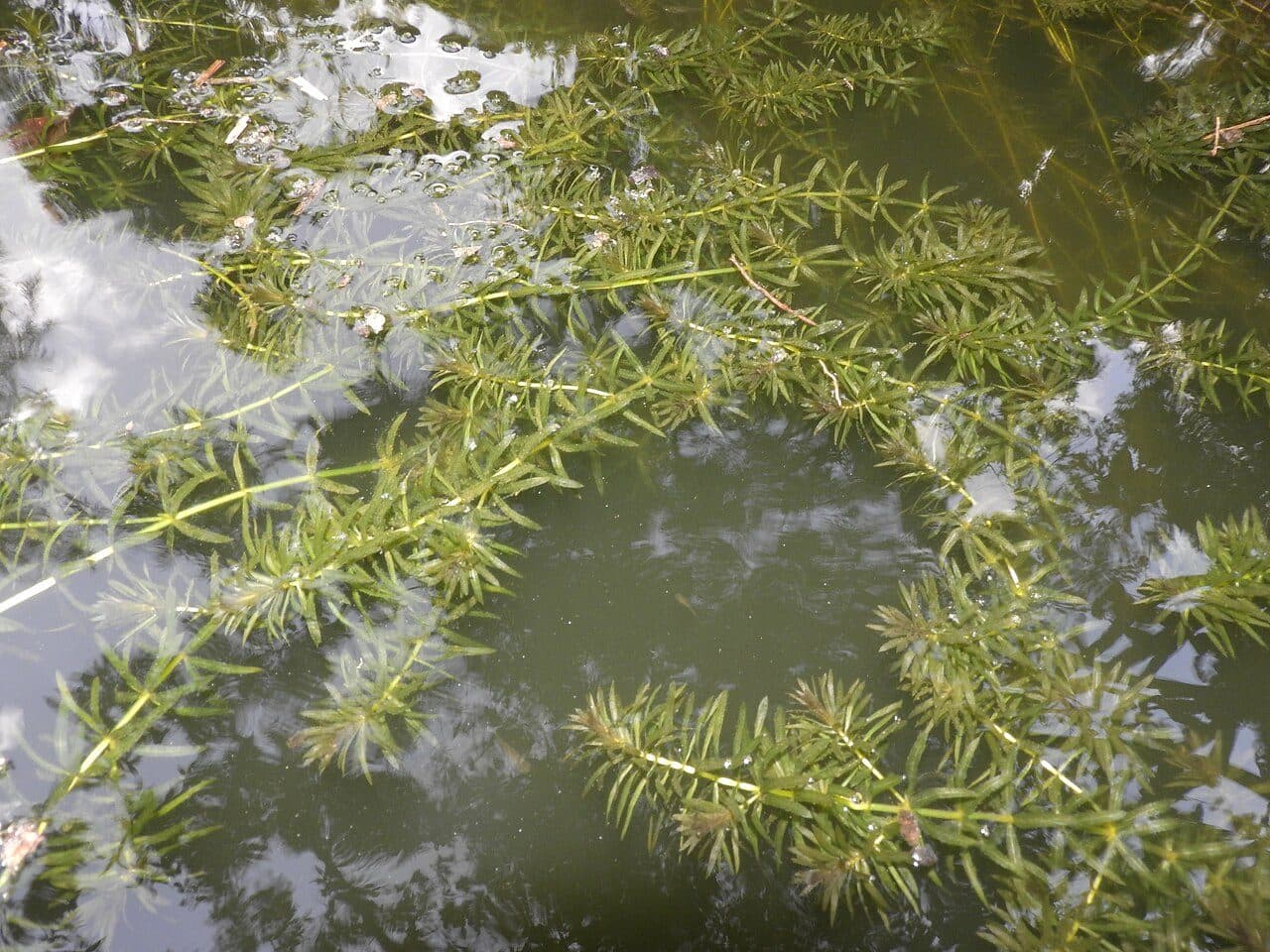
Photo: Yercaud-elango, CC BY-SA 4.0, via Wikimedia Commons
Hydrilla
Hydrilla verticillata (L.f.) Royle
—
Height in the aquarium
low to high
Light
low
CO₂ needs
20–27 °C
Ideal temperature
Water parameters
Understand these values- Position
- background
- Propagation
- fragmentation, runners, cuttings
- Grows emersed
- no
In the wild
Overview
The toothed leaves, arranged in whorls around the stems, recall those of waterweeds. This very variable plant can grow long upright shoots, creeping stems and resting buds in the soil. It is widespread and can form invasive stands when it finds favourable conditions.
- Scientific name
- Hydrilla verticillata (L.f.) Royle
- Classification
- Alismatales › Hydrocharitaceae
- IUCN Red List
- Least concern (LC)
Natural habitat
East Africa, Europe, Central Asia, South Asia, Southeast Asia, East Asia, Australia
Observations (GBIF) and localities Native countries Introduced in Rivers and lakes
- Native countries
- Introduced by people
Outside its native range, in 37 countries:
An aquarium plant must never reach the wild: throwing away cuttings or emptying a tank into a stream can be enough to establish it.
Countries: Kew World Checklist of Vascular Plants (WCVP). Dots: GBIF observations in the native countries.
In the aquarium
Growing in the aquarium
Allow room and keep the length of the stems in check by trimming. Cuttings are used to renew the planting. To identify it, look at the visible teeth on the leaves and the spacing between their whorls: Hydrilla can be confused with Egeria. Its ability to regrow from resting organs makes its growth less predictable than a simple bunch of cuttings.
Sources:Flowgrow GBIF POWO (Kew) · Base map: Natural Earth