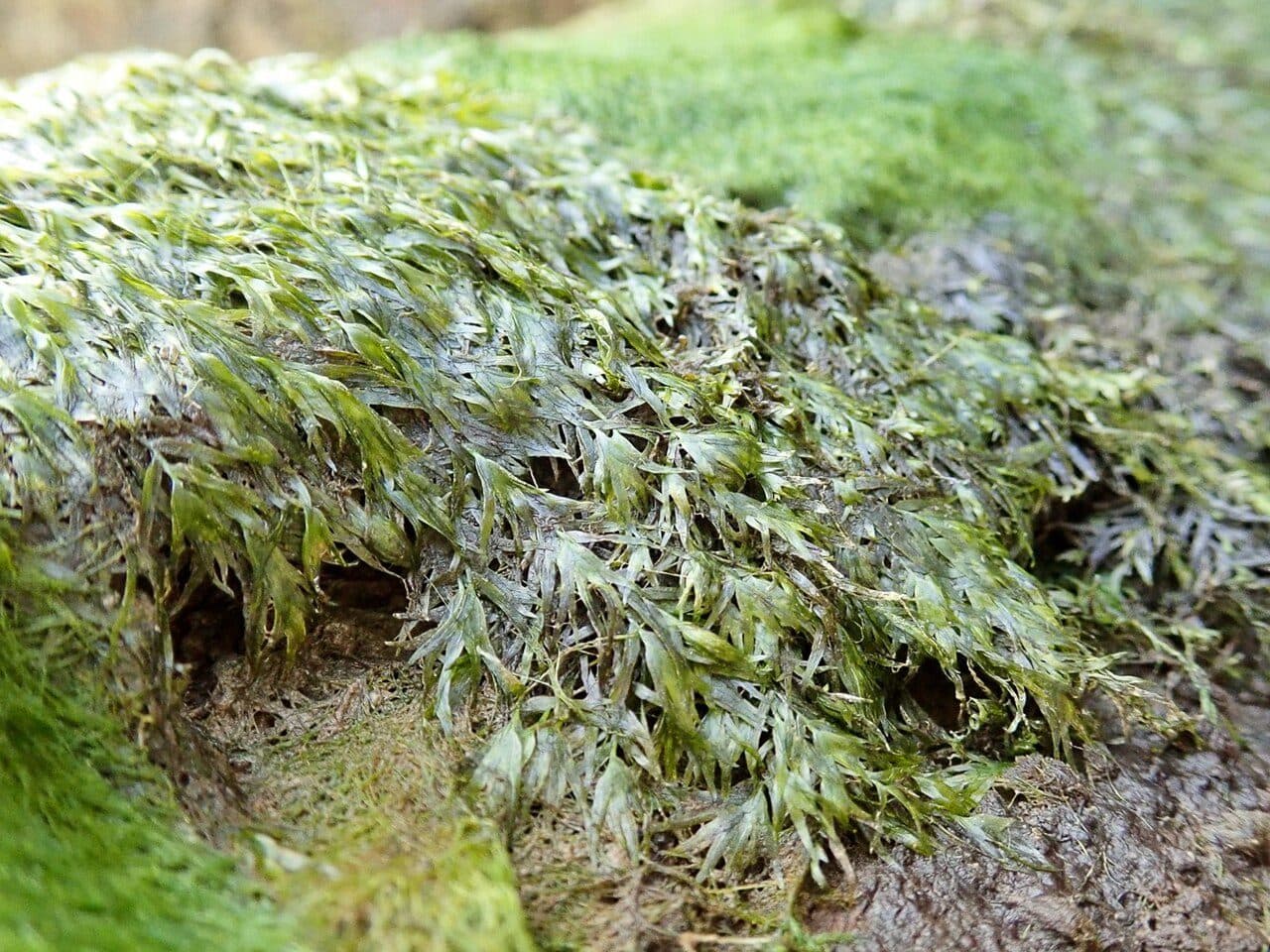
Photo: Njmeyer03, CC BY-SA 4.0, via Wikimedia Commons
Phoenix moss
Fissidens fontanus (Bach.Pyl.) Steud.
3–5 cm
Height in the aquarium
low to high
Light
medium
CO₂ needs
18–25 °C
Ideal temperature
Water parameters
Understand these values- Position
- on hardscape, midground, foreground
- Propagation
- separating offshoots
- Uses
- nano tank
- Grows emersed
- Not known
In the wild
Overview
Known in the trade as “Phoenix moss”, this truly aquatic moss bears leaves in two rows, giving each shoot the look of a small feather. Dark green and supple, it forms tufts attached to wood or stone. It grows naturally in rivers and lakes, sometimes deep in the shade.
- Scientific name
- Fissidens fontanus (Bach.Pyl.) Steud.
- Classification
- Dicranales › Fissidentaceae
- IUCN Red List
- Not evaluated (NE)
Natural habitat
Europe, North and Central America; more rarely reported in South America, southern Africa and Oceania
Observations (GBIF) and localities Native countries Rivers and lakes
- Countries where it is observed
Mosses are not in the Kew checklist of vascular plants: countries where GBIF has at least two observations on the native continents given by Flowgrow, unless a source is cited.
In the aquarium
Growing in the aquarium
It can live with little light and attaches to the decor with its rhizoids. Propagate it by separating the tufts. Handle the shoots gently and keep them damp while you work: this moss dries out quickly in the air and becomes brittle. The Asian origin of a commercial batch does not necessarily match its natural range.
Sources:Flowgrow Tropica GBIF Flowgrow — description allemande · Base map: Natural Earth