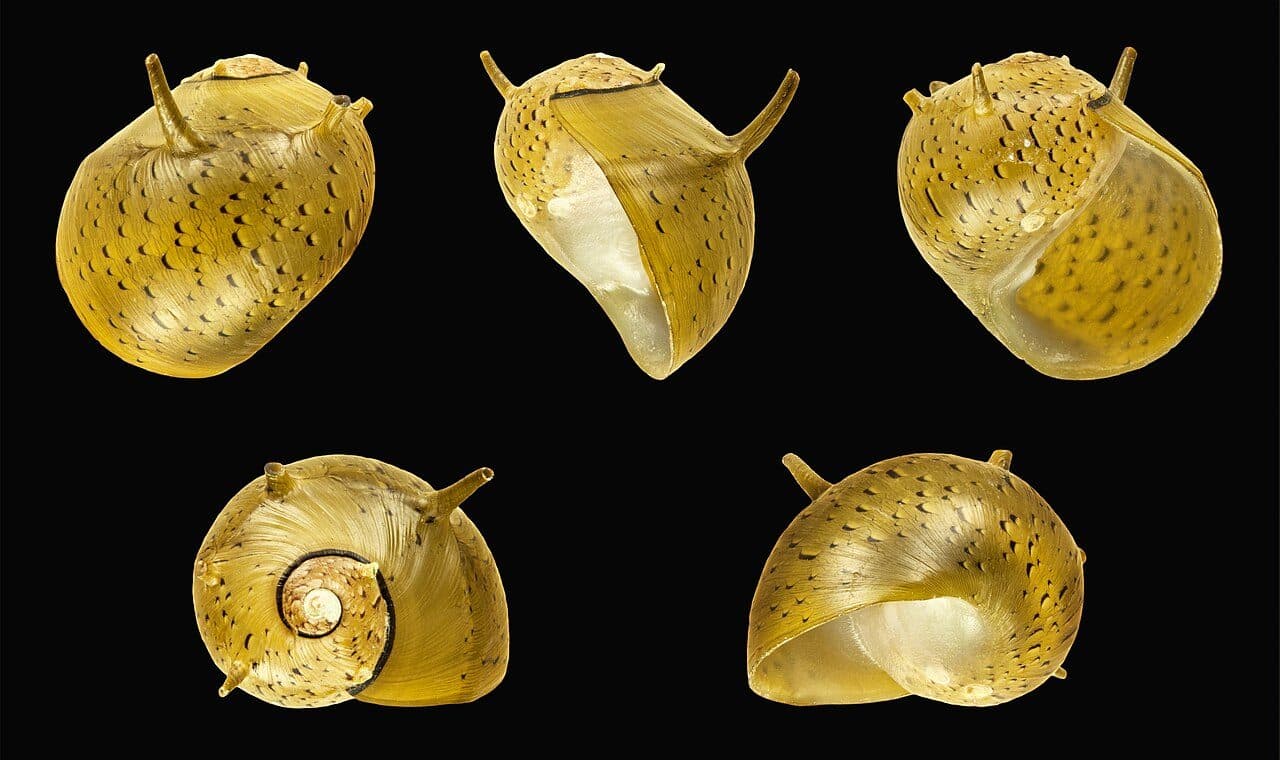
Photo: H. Zell, CC BY-SA 3.0, via Wikimedia Commons
Views: 1 — coquille ; 2 — coquille ; 3 — coquille.
Diadem nerite
Clithon diadema
1.5 cm
Adult size
10 L
Minimum volume
1
Minimum group
—
Lifespan
Size: shell height.
Water parameters
Understand these valuesHardness (GH): not given by the sources
Carbonate hardness (KH): not given by the sources
- Genus
- Clithon
- Diet
- grazer
- Social life
- solitary
- Activity
- diurnal
- Adult habitat
- fresh and brackish water
- Breeding
- larvae in the sea
In the wild
Overview
This small snail shows variable patterns, often yellow or orange and black. The horns seen on some shells are not constant: they may be missing or wear down with age. A photo of a striped nerite is therefore not enough to confirm this species.
- Scientific name
- Clithon diadema (Récluz, 1841)
- Classification
- Cycloneritida › Neritidae
- IUCN Red List
- Not evaluated (NE)
Natural habitat
Southeast Asia: Indonesia (Bali, Java), the Philippines and Thailand
Observations (GBIF) and localities Native countries Rivers and lakes
It lives near the surface in mangroves and slow-flowing streams, on rocks and submerged roots, and tolerates the large swings in salinity caused by the tides. In Indonesia these habitats are threatened by river pollution and the conversion of coastal mangroves.
Behaviour
Solitary and active by day, it grazes algae on rocks and roots without disturbing the other residents.
In the aquarium
Care and setup
Add individuals to a tank that is already mature, with algae available on the surfaces. Fit a lid and avoid fish, crabs or crayfish that hunt snails.
Feeding
It mainly grazes algae; make sure each individual has enough to eat.
Breeding
Its egg capsules do not lead to full breeding in fresh water: the larvae develop at sea.
Sources:Fishipedia GBIF · Base map: Natural Earth