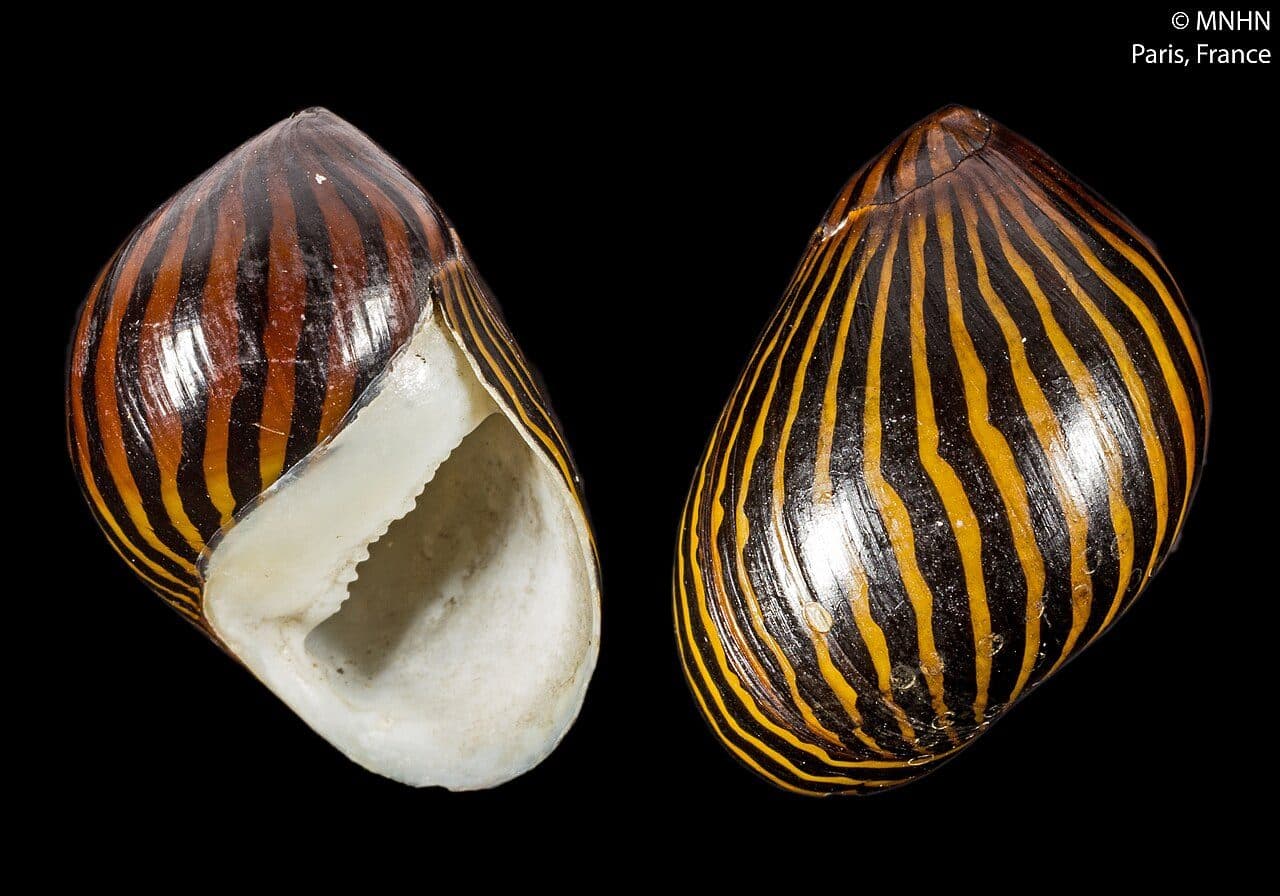
Photo: Manuel CABALLER, CC BY 4.0, via Wikimedia Commons
Views: 1 — coquille ; 2 — coquille ; 3 — coquille.
Waigeo nerite
Vittina waigiensis
2.2 cm
Adult size
50 L
Minimum volume
1
Minimum group
—
Lifespan
Size: shell height.
Water parameters
Understand these valuesHardness (GH): not given by the sources
Carbonate hardness (KH): not given by the sources
- Genus
- Vittina
- Diet
- grazer
- Social life
- alone or in a group
- Activity
- diurnal
- Adult habitat
- fresh and brackish water
- Breeding
- larvae in the sea
In the wild
Overview
The Waigeo nerite has a smooth, elongated shell with yellow, orange or reddish bands and black patterns. The markings vary greatly from one individual to another. It lives in estuaries, mangroves and coastal streams.
- Scientific name
- Vittina waigiensis (Lesson, 1831)
- Classification
- Cycloneritida › Neritidae
- IUCN Red List
- Least concern (LC)
Natural habitat
Indonesia (Sulawesi, western New Guinea) and the Philippines (Palawan)
Observations (GBIF) and localities Native countries Rivers and lakes
It lives near the surface, in the fresh and brackish water of estuaries, mangroves and slow-flowing coastal streams.
Behaviour
Alone or in groups and active by day, it grazes algae on rocks near the surface.
In the aquarium
Care and setup
Keep it in a mature, covered tank with enough algae on the surfaces. Avoid snail-eating fish; keep an eye on animals that explore the surface.
Feeding
Algae are its main food. Suitable plant food can supplement the diet.
Breeding
The egg capsules release larvae that develop at sea. The adults can live in fresh water without completing their whole cycle there.
Sources:Fishipedia GBIF · Base map: Natural Earth