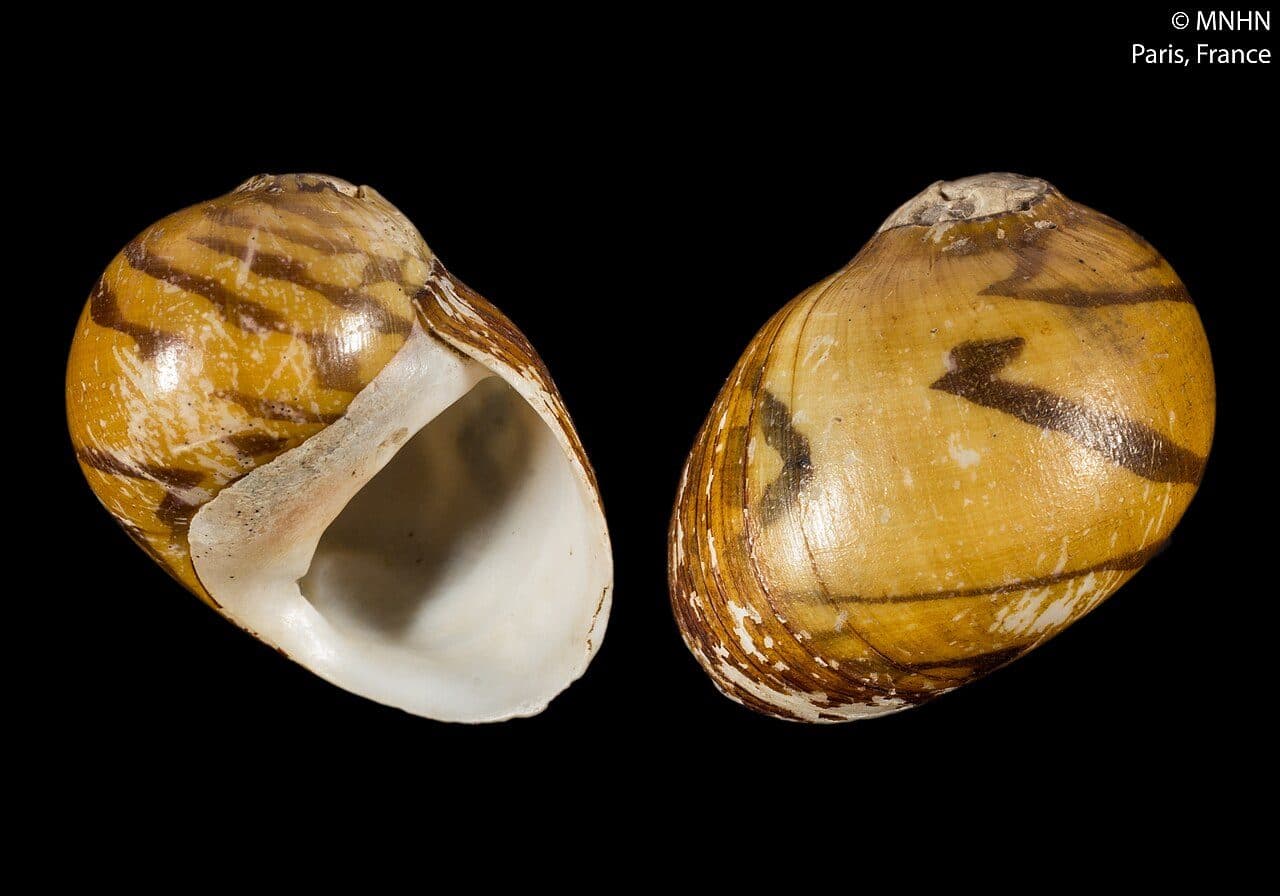
Photo: Manuel CABALLER, CC BY 4.0, via Wikimedia Commons
Views: 1 — coquille ; 2 — coquille ; 3 — coquille.
Tattooed nerite
Vittina variegata
2.3 cm
Adult size
30 L
Minimum volume
1
Minimum group
—
Lifespan
Size: shell height.
Water parameters
Understand these valuesHardness (GH): not given by the sources
Carbonate hardness (KH): not given by the sources
- Genus
- Vittina
- Diet
- grazer
- Social life
- alone or in a group
- Activity
- diurnal
- Adult habitat
- fresh water
- Breeding
- larvae in the sea
In the wild
Overview
The shell of this nerite mixes yellow and black in irregular patterns, sometimes merged into broad bands. It lives on the rocks of rivers and island streams in the Pacific. Individuals are easily confused with other nerites in the trade.
- Scientific name
- Vittina variegata (Lesson, 1831)
- Classification
- Cycloneritida › Neritidae
- IUCN Red List
- Least concern (LC)
Natural habitat
Western Pacific, from Japan to Samoa: the Philippines, Indonesia, northern Australia, Melanesia and Micronesia
Observations (GBIF) and localities Native countries Rivers and lakes
It is abundant on the rocky stretches of rivers and coastal streams, in well-oxygenated water, including strong currents, and avoids brackish water.
Behaviour
Active by day, alone or in groups, it grazes algae on rocks and withdraws into its shell when in danger.
In the aquarium
Care and setup
Provide rocky surfaces rich in algae and well-oxygenated water with some current. A new tank short on food can weaken these snails.
Feeding
It mostly grazes algae; suitable fresh vegetables can supplement the food available.
Breeding
The larvae are carried out to sea, then the young climb back up the rivers. Full breeding does not happen in fresh water.
Sources:Fishipedia GBIF · Base map: Natural Earth