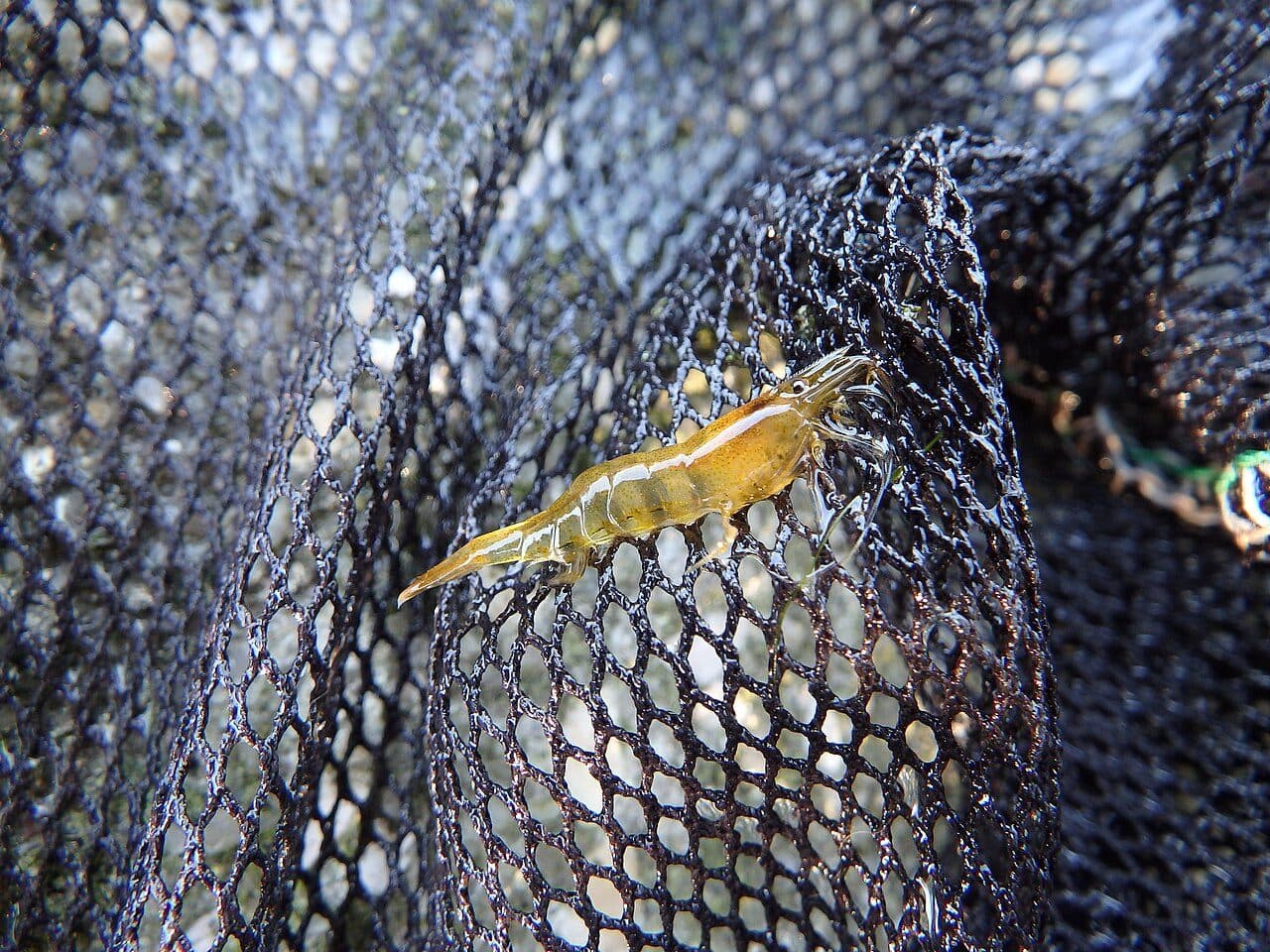
Photo: Duarte Frade, CC BY 4.0, via Wikimedia Commons
Desmarest's shrimp
Atyaephyra desmarestii
4 cm
Adult size
20 L
Minimum volume
5
Minimum group
2 years
Lifespan
Size: body length.
Water parameters
Understand these valuesHardness (GH): not given by the sources
Carbonate hardness (KH): not given by the sources
- Genus
- Atyaephyra
- Diet
- detritivore
- Social life
- colony
- Activity
- nocturnal
- Adult habitat
- fresh water
- Breeding
- in fresh water
In the wild
Overview
Found in European and North African waterways, Desmarest's shrimp lives among submerged vegetation. The young are almost transparent; adults can turn brown, red or slightly bluish. Large females often develop more visible marbling.
- Scientific name
- Atyaephyra desmarestii (Millet, 1831)
- Classification
- Decapoda › Atyidae
- IUCN Red List
- Least concern (LC)
Natural habitat
Western Mediterranean basin (North Africa and southern Europe, including Corsica and Sardinia), then much of Europe via the canals
Observations (GBIF) and localities Native countries Rivers and lakes
It lives among the vegetation of streams and rivers, in rather calcareous water (pH 7 to 8.5) and over a wide temperature range, from 6 to 28 °C. Starting from the western Mediterranean, it reached Germany and then Poland through the canals; it seems to be declining in southern France because of droughts and small streams drying up.
Behaviour
Peaceful and fairly lively, it lives in colonies near the bottom and is mostly active at night. Small and shy, it hides when larger animals are around and takes no interest in other species. It sorts through debris and biofilm on plants and decor.
In the aquarium
Care and setup
A planted species tank makes this shy, mostly nocturnal shrimp easier to watch. Roots, leaves and shelters keep it away from predators and protect moulting individuals.
Feeding
It picks algae and microorganisms off the decor and accepts food made for dwarf shrimp.
Breeding
Breeding goes through several larval stages and needs more preparation than that of Neocaridina.
Sources:Fishipedia GBIF · Base map: Natural Earth